Can Rowing Build Muscle? The Honest Truth About Erg Gains
Walk into any commercial gym, and you’ll see the rowers sitting empty while the squat racks are packed. Most people categorize the ergometer strictly as a cardio tool, assuming it eats away gains rather than creating them. But if you analyze the physique of elite male muscular rowers, you realize that assumption is dead wrong. A proper rowing machine muscle workout provides a stimulus that is unique in the fitness world: a simultaneous endurance and power challenge.
If your goal is hypertrophy (muscle growth), you can't just hop on and slide back and forth aimlessly. You need to treat the machine less like a treadmill and more like a horizontal leg press. Let’s break down how to turn this endurance tool into a muscle-building machine.
Key Takeaways: Quick Summary
- Resistance is Key: To stimulate growth, you must increase the drag factor (damper setting) to mimic a heavy boat, creating higher tension.
- Power Over Speed: Muscle growth on a rower comes from explosive drive phases, not high stroke rates.
- Volume Matters: Short, high-intensity intervals (HIIT) are superior to long, steady-state sessions for hypertrophy.
- Total Body Activation: Rowing targets 86% of muscles, specifically the posterior chain (hamstrings, glutes, back) and quads.
- Nutrition: You cannot build mass in a caloric deficit; fuel your rowing sessions with adequate protein and carbs.
The Science: Does Rowing Machine Build Muscle?
The short answer is yes, but with a caveat. Can rowing build muscle? Absolutely. However, it builds a specific type of functional, athletic muscle rather than the isolated bulk you get from a bicep curl. Rowing is primarily a concentric movement. This means you are constantly contracting muscles against resistance without the eccentric (lowering) damage that typically causes extreme soreness in weightlifting.
Because the rowing stroke starts with a massive leg drive, transitions to a hip hinge, and finishes with an arm pull, it forces the body to coordinate power generation. This creates a systemic hormonal response beneficial for growth. If you are asking, "will rowing build muscle" comparable to a bodybuilder, the answer is no. But if you want the dense, powerful look of a CrossFit athlete or competitive rower, this is the tool.
The Anatomy of the Stroke
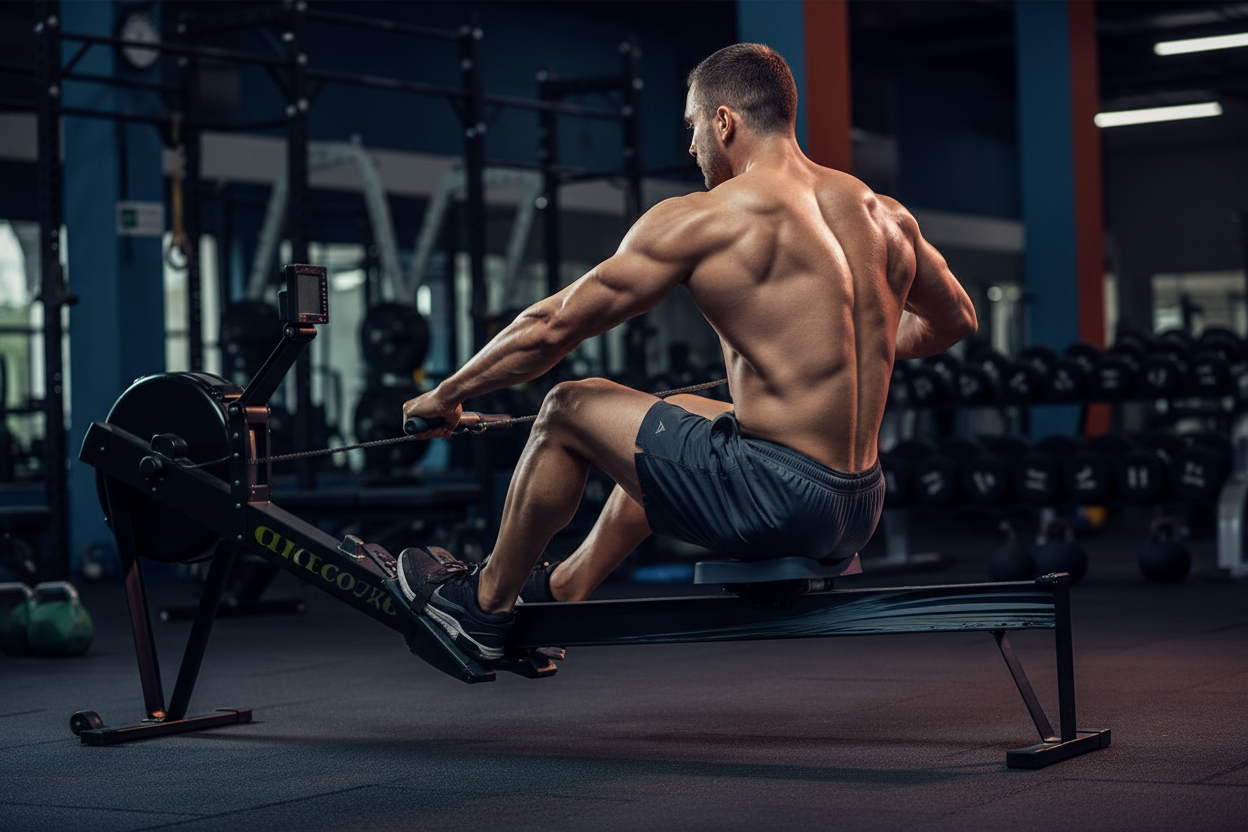
To understand the rowing machine for muscle gain potential, look at the biomechanics:
- The Catch & Drive (Legs): This is basically a squat or leg press. It builds the quads and glutes.
- The Finish (Upper Body): This acts as a horizontal row, targeting the lats, rhomboids, and rear delts.
- The Core: Your abs and erectors must stay rigid to transfer power, acting as a stabilizer throughout the movement.
How to Configure Your Rowing Machine for Muscle Mass
Most beginners sit down and start flailing. To maximize the rowing machine to build muscle, you need to adjust the mechanics.
Crank Up the Drag Factor
On a Concept2 rower, the lever on the side is the damper. For cardio, we usually keep this between 3 and 5. For a rowing machine muscle gain workout, you might want to bump this up to a 7 or 8 (depending on the cleanliness of the fan). This increases air resistance, meaning you have to pull harder to accelerate the flywheel. Think of this as adding weight to the bar.
Lower the Stroke Rate
Does indoor rowing build muscle if you are going 30 strokes per minute (s/m)? Likely not—that is cardio. To build muscle, aim for a lower stroke rate (18–22 s/m) but pull with maximum explosive power. This increases the time under tension per stroke and recruits fast-twitch muscle fibers.
Does Rowing Build Biceps and Arm Muscle?
A common question is, "does rowing build biceps?" While the rower isn't an isolated bicep row machine, the biceps are heavily involved in the finish of the stroke. However, beginners often make the mistake of pulling with their arms too early.
For the rowing machine to build muscle in the arms effectively, the arms should only engage once the legs are fully extended and the hips have opened. At that point, you are pulling against the momentum generated by your lower body. The tension is significant, and yes, it will lead to thicker, denser arm development over time.
My Training Log: Real Talk
I’ve spent years oscillating between heavy barbell work and endurance rowing. When I first tried to use the rowing machine for muscle growth, I made a classic mistake: I cranked the damper to 10 and tried to row for 40 minutes straight.
The result wasn't big muscles; it was a strained lower back and forearms so pumped I couldn't hold my water bottle. The "pump" from rowing is different than weights. It’s a burning, lactic-acid-filled tightness that feels like your muscles are suffocating.
The specific detail most guides miss is the grip. When you are rowing for power, you don't need a death grip. I learned the hard way that squeezing the handle too tight destroys your calluses—specifically the ones right at the base of the fingers. I eventually learned to hook my fingers loosely, treating my hands like hooks. This shifted the burn from my forearms directly into my lats. Also, let's be honest about the "rower's butt." If you're doing high-power intervals, the standard seat is brutal. I eventually had to buy a thin silicone pad just to maintain circulation during the rest intervals.
Conclusion
So, is rowing good for muscle building? Yes, provided you respect the machine as a resistance tool, not just a calorie burner. By increasing the drag, lowering your stroke rate, and focusing on explosive power, you can stimulate significant hypertrophy. You won't look like a Mr. Olympia contender, but you will build a wide back, powerful legs, and a rock-solid core.
Frequently Asked Questions
How long on rowing machine to build muscle?
You don't need hour-long sessions. For muscle growth, focus on High-Intensity Interval Training (HIIT). Try doing 10 sets of 500 meters with 1 minute of rest in between. Keep the intensity maximum. These sessions should take 20–30 minutes total.
Can you build muscle rowing without weights?
Yes, rowing machine bodybuilding is possible to a degree. It creates an athletic, lean, and muscular physique. However, for maximum hypertrophy (size), combining rowing with traditional resistance training is the most effective approach.
Does rowing build leg muscle effectively?
Absolutely. The rowing stroke is 60% leg drive. It is particularly effective at building the quadriceps and glutes. If you are driving correctly with your heels, you will feel a deep burn in your legs that rivals a high-rep squat session.