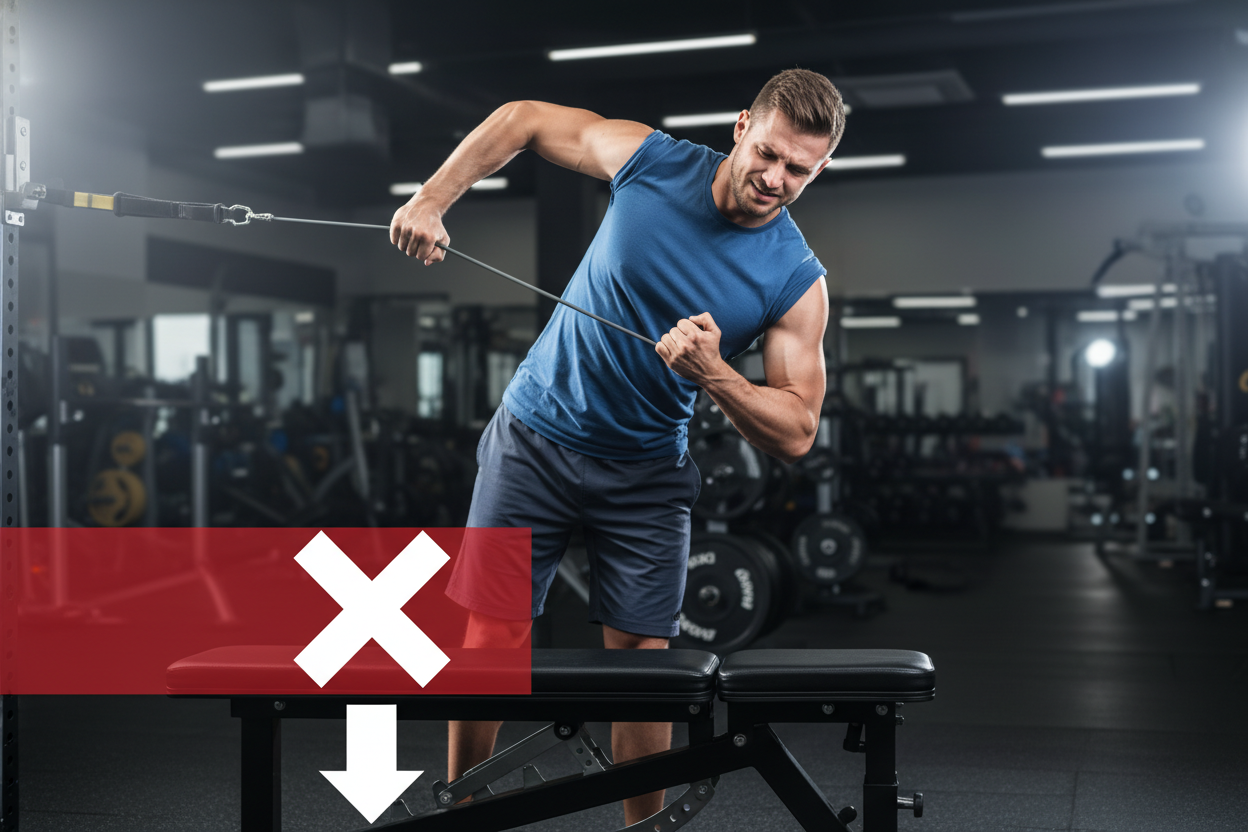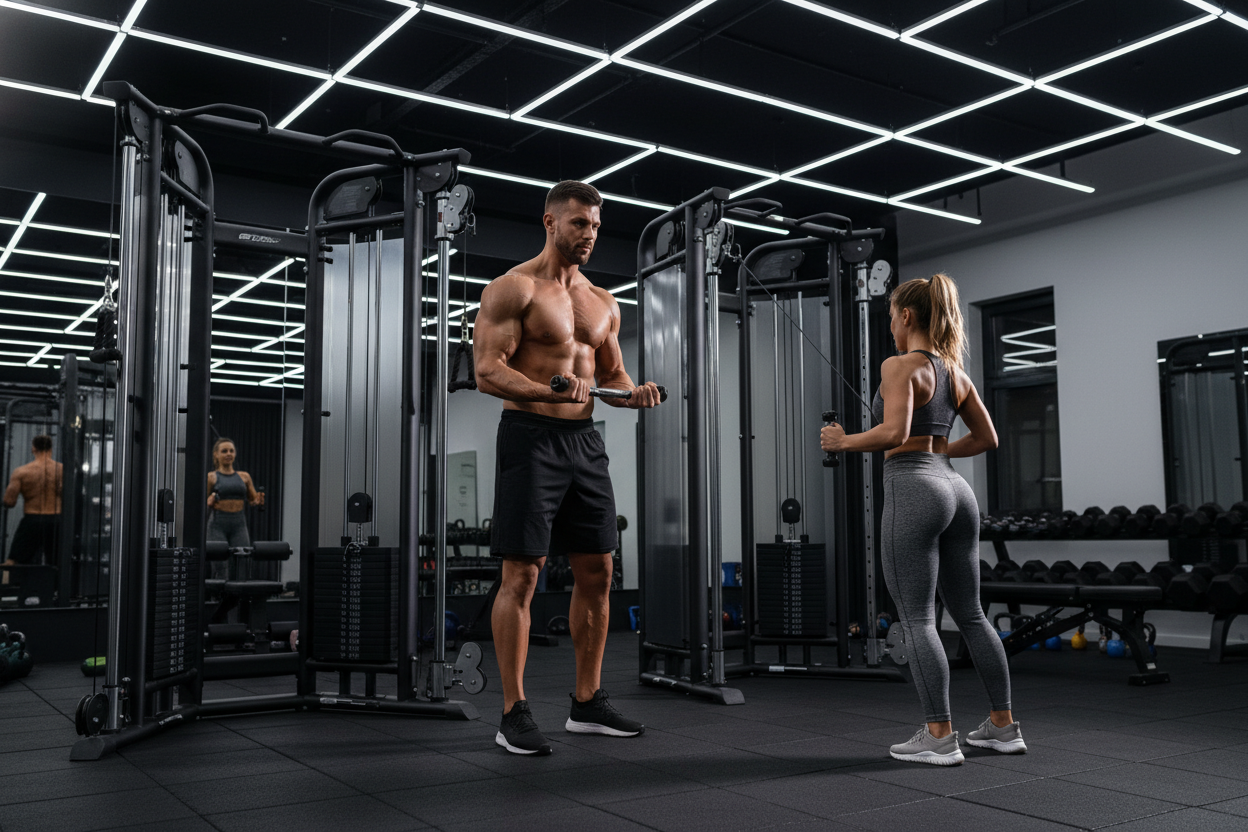
Cable Machines Home Gym Guide: Are They Worth the Space?
If you have ever hit a frustrating muscle-building plateau or found yourself battling joint pain from heavy barbell lifts, you are not alone. Many garage gym owners eventually realize that free weights, while foundational, only provide resistance in the direction of gravity. This is where integrating cable machines home gym equipment changes everything. By providing constant, fluid tension across multiple planes of motion, a quality pulley system can transform a basic garage setup into a commercial-tier training facility.
However, adding a cable exercise machine to your space is a major commitment. Between deciphering weight stack ratios, measuring ceiling clearances, and choosing between standalone towers or rack attachments, the options can be overwhelming. In this guide, we will break down exactly what you need to know to choose the perfect multi use cable machine for your specific goals and floor plan.
Key Takeaways
- Versatility: A multi function cable machine allows for hundreds of exercises, replacing bulky single-station machines.
- Footprint: Compact cable crossover machine designs now fit comfortably in standard spare bedrooms and basement corners.
- Resistance Types: Choose between cost-effective plate-loaded systems or convenient, commercial-style selectorized weight stacks.
- Safety: Cable home gym systems offer a safer alternative for training to failure without the need for a spotter.
Choosing the Perfect Pulley Workout Machine
Not all cables exercise equipment is created equal. When shopping for fitness equipment cable systems, your two primary considerations should be the resistance mechanism and the overall footprint.
Selectorized vs. Plate-Loaded Systems
If budget is a major constraint, a plate-loaded cable pull machine is an excellent entry point. These utilize the Olympic plates you likely already own, significantly reducing the shipping weight and upfront cost. However, if you prefer seamless drop sets and supersets, a selectorized weight lifting cable machine is the gold standard. The convenience of simply moving a pin cannot be overstated, though it comes at a premium price.
Space Planning for Dual Cable Machine Home Gyms
Space is the ultimate currency in a home gym. If you are eyeing a dual cable machine home gym setup, you need to account for 'working space'—not just the machine's footprint. A functional trainer might only be 60 inches wide, but you need at least 3 to 4 feet of forward clearance to perform chest flies or walking lunges. For tighter spaces, consider a wall-mounted cable pulley exercise machine or a lat pulldown/low row combo that sits flush against the drywall.
Unlocking Constant Tension Training
The primary benefit of home gym cable machines is the biomechanical advantage of constant tension. Unlike a dumbbell curl, where the resistance drops off at the top of the movement, an exercise machine with pulleys keeps the muscle engaged through the entire range of motion.
Replacing Dumbbells and Fixed Machines
An all-in one cable machine can effectively replace an entire rack of dumbbells for isolation work. From tricep pushdowns and lateral raises to cable pull-throughs and woodchoppers, a multi purpose cable machine allows you to hit angles that free weights simply cannot replicate. This makes cable machines fitness essentials for hypertrophy and rehab work.
From Our Gym: Honest Take
We recently spent six months testing a popular mid-tier compact cable crossover machine in our 400-square-foot garage lab. Right out of the gate, I noticed a massive difference in the pulley material. The aluminum pulleys on our upgrade pick provided a buttery-smooth glide compared to the standard nylon pulleys, which tended to stick slightly during fast concentric movements.
One crucial detail most product pages ignore is the cable travel length. At 6'2, I found that machines with a 2:1 ratio often bottomed out on the weight stack when I stepped forward for alternating cable presses. If you are tall or plan on doing explosive, traveling movements, you absolutely need a machine with a longer cable travel—ideally a 2:1 or even 4:1 ratio that accommodates at least 80 inches of extension. Also, do not skimp on silicone spray; a quick wipe down of the guide rods every three weeks kept our home workout cable machine running flawlessly despite the humid summer air.
Frequently Asked Questions
How much space do I need for a home exercise cable machine?
A standard functional trainer requires roughly a 5x5 foot footprint, plus an additional 3 to 4 feet of forward clearance for exercises like cable crossovers. If space is tight, a single-column cable machine equipment piece or rack-attached pulley system only requires a 2x3 foot dedicated area.
Are cable weight machines for home worth the cost?
Yes, especially if your goal is bodybuilding, joint-friendly training, or physical therapy. The sheer volume of exercises you can perform on a cable exercise machine for home makes it one of the most cost-effective investments per movement, rivaled only by a barbell and power rack.
Can an all-in one cable machine build muscle like free weights?
Absolutely. Muscle growth relies on mechanical tension, metabolic stress, and progressive overload. Home cable gym equipment provides all three, often with a safer resistance profile that allows you to push closer to failure without risking injury.