Buying a Leg Curls Machine for Sale: The Honest Home Gym Guide
Most home gym owners neglect their hamstrings until their knees start clicking or their squat stalls. You start looking for a leg curls machine for sale because you realize deadlifts aren't enough to isolate that posterior chain. But here is the hard truth: the market is flooded with wobbly, poorly designed equipment that can do more harm than good.
If the pivot point of the machine doesn't align perfectly with your knee joint, you aren't training muscles—you are grinding cartilage. Before you drop hundreds (or thousands) of dollars on a piece of equipment, you need to understand exactly what separates a gym-quality unit from a glorified coat rack.
Key Takeaways: What to Look For
- Pivot Point Alignment: The machine's axis of rotation must line up with your knee joint to prevent shear force.
- Adjustability: Look for adjustable thigh pads and ankle rollers to accommodate different femur lengths.
- Stability: A machine under 100 lbs usually needs to be bolted down; otherwise, it will tip during heavy eccentrics.
- Resistance Curve: Ensure the machine provides tension throughout the full range of motion, not just at the top.
- Footprint: Measure your space; lying curl machines take up significantly more floor space than seated versions.
The Biomechanics of a Good Machine
When browsing listings, don't just look at the price tag. Look at the geometry. The primary function of a leg curl is knee flexion. For this to happen safely, the machine needs to mimic the natural arc of your leg.
Many budget machines have a fixed pivot point that sits too far back or too high. This forces your shin pad to slide up and down your ankle as you curl. This friction isn't just annoying; it means the load is shifting, and your knee ligaments are taking the brunt of the stress rather than your hamstrings.
Seated vs. Lying: Which is Better?
You will often see a lying hamstring curl machine for sale alongside seated variants. Which one should you grab?
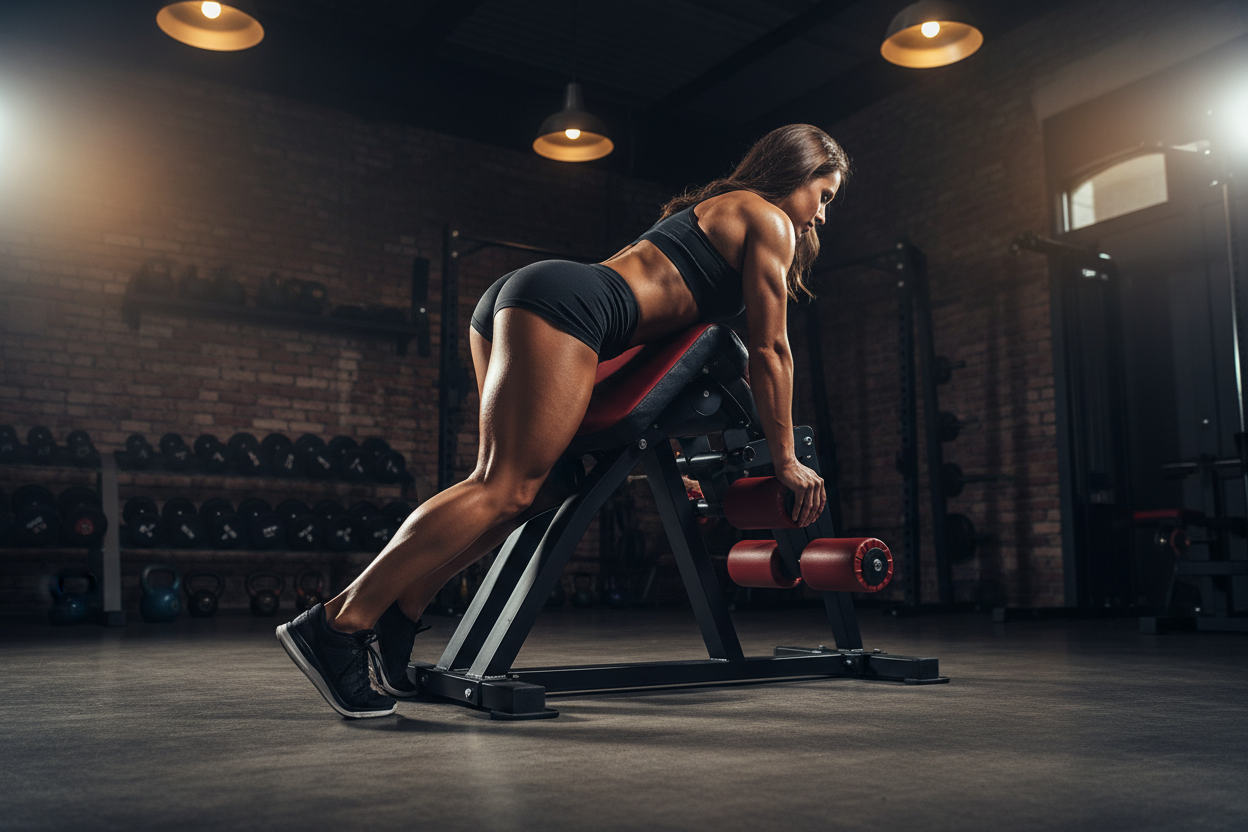
From a hypertrophy standpoint, the seated leg curl is often superior. Sitting flexes the hips, which puts the hamstrings in a stretched position at the start of the movement. A stretched muscle generally produces more force and growth. However, the lying variation offers a unique benefit: complete isolation. It is harder to cheat by using body momentum when you are lying flat on your stomach. If you have lower back issues, the lying version is often more forgiving on the lumbar spine.
Plate-Loaded vs. Selectorized Stacks
This is usually the deciding factor for home gym owners. A selectorized machine (with a weight stack) is convenient. You pull a pin, and you go. It also provides constant tension because the cable system smooths out the resistance curve.
However, plate-loaded machines are significantly cheaper and virtually indestructible. The downside? The resistance profile can be uneven. Often, the movement feels easy at the start and impossibly heavy at the top of the contraction. If you go the plate-loaded route, look for a machine that uses a cam or a linkage system to smooth out that weight curve.
My Personal Experience with leg curls machine for sale
I want to be real about the first time I bought a budget leg curl unit for my garage. It was a combo unit—leg extension and leg curl in one. On paper, it looked like a space-saver. In reality, it was a nightmare.
The specific issue wasn't the weight capacity; it was the shin pad. It used a cheap vinyl covering that got slick the moment I started sweating. Because the machine lacked a proper thigh hold-down mechanism, my hips would shoot up off the bench every time I tried to curl anything over 80 lbs. I spent more energy gripping the handles and fighting gravity than actually training my hamstrings.
Worse yet, the "axis of rotation" was off by about two inches. I could actually feel a dull ache behind my kneecap after every session. It taught me an expensive lesson: never buy a leg machine where you can't lock your hips firmly in place. If you are sliding, you aren't growing.
Conclusion
Finding the right leg curls machine for sale is about protecting your joints as much as it is about building muscle. Don't get seduced by the cheapest option. Look for adjustability, a correct pivot point, and a frame that won't wobble when you are grinding out those last few reps. Your knees will thank you ten years from now.
Frequently Asked Questions
How much space do I need for a leg curl machine?
A standard lying leg curl machine typically requires a footprint of about 3 feet by 5 to 6 feet. However, you need an additional 2 feet of clearance on the loading end if you buy a plate-loaded version to slide weights on and off comfortably.
Is a leg curl machine necessary for a home gym?
While you can do Romanian Deadlifts and Nordic curls, a machine is the only way to train knee flexion with significant load and stability. If you want complete hamstring development, a machine is a highly recommended investment.
Can I use a leg extension machine for leg curls?
Some machines are hybrids, designed to do both. However, dedicated machines are almost always biomechanically superior. Hybrid machines often compromise on the pivot point alignment to accommodate both movements, leading to a sub-par experience for both exercises.