Built by Iron: Why a Simple Barbell Set Is the Best Investment You’ll Ever Make
Most people overcomplicate fitness. They walk into a commercial facility and get overwhelmed by the rows of shiny cardio machines, the complex cable systems, and the intimidating isolation stations. But if you strip away the marketing and get down to the raw mechanics of building strength, you really only need one thing: a quality gym barbell set. Whether you are training for athletic performance or just want to carry groceries without getting winded, the barbell remains the most efficient tool for changing human physiology. It allows for infinite progression, compound movement patterns, and fits in a garage just as easily as it fits in a warehouse gym.
My Lesson in "Buying Nice or Buying Twice"
I learned the value of good steel the hard way. Years ago, when I first decided to quit my commercial gym membership and train in my basement, I tried to save a few dollars. I picked up a cheap, small barbell set from a local department store. The bar was only an inch thick, the weights were plastic shells filled with cement, and the collars were flimsy spring clips that slid around whenever the bar wasn't perfectly parallel to the floor.
It worked for about three months. Then, during a deadlift session, the plastic casing on a 25-pound plate cracked, leaking grey dust all over my floor. Worse, the bar developed a permanent bend after I loaded it past 150 pounds. That wobbly, unsafe equipment killed my motivation to train for weeks. I eventually scrapped it and invested in a proper Olympic bar weights set. The difference was night and day. The knurling gripped my hand securely, the sleeves spun freely to protect my wrists, and the iron plates made a satisfying sound that actually made me want to lift. That second purchase is still with me today, decades later, functioning exactly as it did on day one.
The Case for the Home Setup
Building a home gym centers around the barbell. While dumbbells and kettlebells have their place, barbell sets for home use offer the highest return on investment because of their loading potential. You can squat, press, deadlift, and clean with a single piece of equipment. You don't need a leg press machine or a chest fly station. A bar and a collection of plates cover every major muscle group in the body.
Space is often cited as a barrier, but this is a misconception. A weight barbell set takes up virtually no floor space when not in use. You can stand the bar in a corner and stack the plates against a wall. The footprint required to actually perform the lifts is roughly the size of a yoga mat, plus a little clearance on the sides. Compared to a treadmill or a multi-station bowflex-style machine, free weights are incredibly space-efficient.
Understanding Barbell Anatomy
Not all metal bars are created equal. When you are looking for weight bar sets, you will generally encounter two types: Standard and Olympic. Standard bars usually have a 1-inch diameter and are what I bought in my regretful early days. They are fine for very light cardio pumping, but they cannot handle heavy loads.
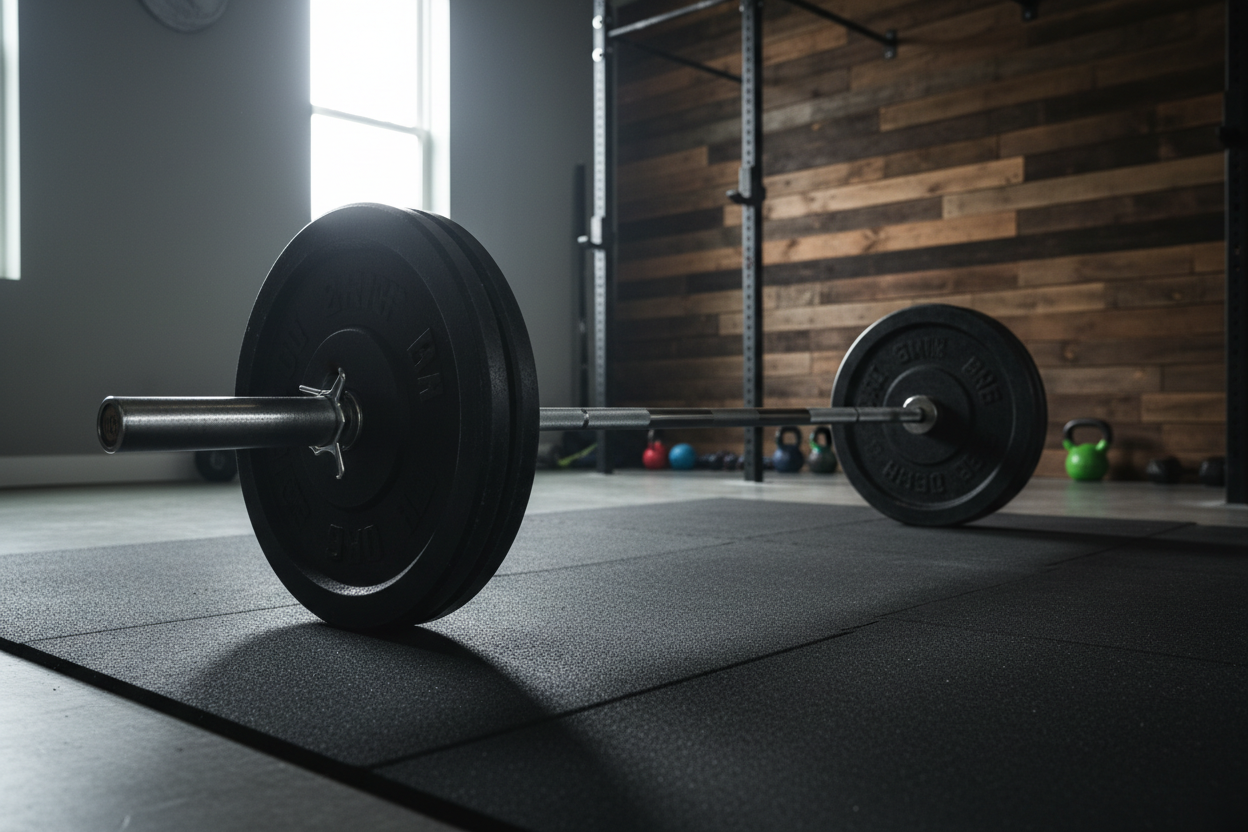
You want an Olympic set. These feature 2-inch rotating sleeves. The rotation is crucial. When you snatch or clean a weight, the plates need to spin independently of the bar. If they don't, the rotational inertia transfers to your wrists and elbows, leading to injury. A standard barbell full set will usually come with a 7-foot bar weighing 45 pounds (20kg) and a variety of plates totaling 300 pounds or more. This is enough weight for 99% of the population to train with for years before needing an upgrade.
Iron vs. Bumper Plates
Once you have decided on the bar, you have to choose your weights. If you browse listings for a barbell and weight set for sale, you will see cast iron plates and rubber bumper plates. Old school lifters often prefer the clang of iron. They are thinner, meaning you can load more of them on the bar, and they are generally cheaper per pound. They are virtually indestructible unless you drop them on concrete.
However, if you plan on doing Olympic lifting (cleans, snatches) or high-intensity interval training where the bar might be dropped from overhead or waist height, you need bumper plates. These are made of dense rubber and are designed to absorb impact. They protect your floor and the barbell itself. For a garage gym, a mix is often best: a pair of bumpers for the appropriate floor height, and iron plates to pack on the heavy load for deadlifts and squats.
Navigating the Market
Finding the right gear requires knowing where to look. During the fitness boom of the last few years, prices skyrocketed, but the market has stabilized. If you are searching for barbell weight sets for sale, check the specifications of the bar first. Look for "tensile strength"—anything above 165,000 PSI is good; anything above 190,000 PSI is commercial grade. Avoid bars that use a hex bolt at the end of the sleeve; you want snap rings, which indicate better construction.
The second-hand market is a goldmine for plates. Iron doesn't go bad. A rusty plate weighs the same as a shiny one. You can often find a bar and weights set for sale on local marketplaces for a fraction of the retail cost. Use a wire brush and some spray paint, and they will look brand new. However, be cautious buying used bars. A bent bar is worthless and dangerous. Roll it on a flat surface before handing over cash. If it wobbles, walk away.
Getting Started
There is a unique satisfaction in owning your means of production when it comes to strength. No waiting for the squat rack, no wiping down someone else's sweat, and no monthly fees. Whether you buy a pristine, high-end kit or piece together a mismatched barbell gym set from garage sales, the gravity remains the same. The bar sits on the floor, waiting for you to do the work. That simplicity is the ultimate fitness hack.
Frequently Asked Questions
What is the difference between a standard and an Olympic barbell?
An Olympic barbell has 2-inch rotating sleeves and typically weighs 45 lbs (20kg), designed to handle heavy loads and reduce torque on your wrists. A standard barbell has 1-inch fixed ends, usually weighs much less, and is only suitable for very light weights or beginners.
Do I need bumper plates for a home gym?
If you plan to perform Olympic lifts (snatch, clean and jerk) or drop the bar from any height, bumper plates are essential to protect both your floor and the bar's bearings. If you only plan to bench press and squat without dropping the weight, cheaper cast iron plates are perfectly fine.
How much weight should I buy to start?
A standard 300-lb set (which includes the 45-lb bar and 255 lbs of plates) is the industry standard starter kit. This provides enough resistance for most people to progress on squats and deadlifts for at least the first year of training.