Building Your First Home Gym: A Realistic Guide to Equipment That Actually Gets Used
Starting a home gym doesn't require a second mortgage or converting your entire living room into a commercial fitness center. The best beginner home gym equipment fits your space, matches your fitness level, and—most importantly—doesn't end up as an expensive coat rack.
After watching countless friends buy elaborate machines that gathered dust within months, I learned that the right starter workout equipment makes all the difference between a sustainable fitness routine and another failed resolution. The key is understanding what you'll actually use versus what looks impressive in product photos.
What You Really Need in an At Home Workout Starter Kit
Your first home gym should focus on versatility rather than specialization. The best starter home gym equipment allows you to perform dozens of exercises without requiring multiple pieces of gear. Think of it as building a foundation—you can always add specialized items later once you've established consistent habits.
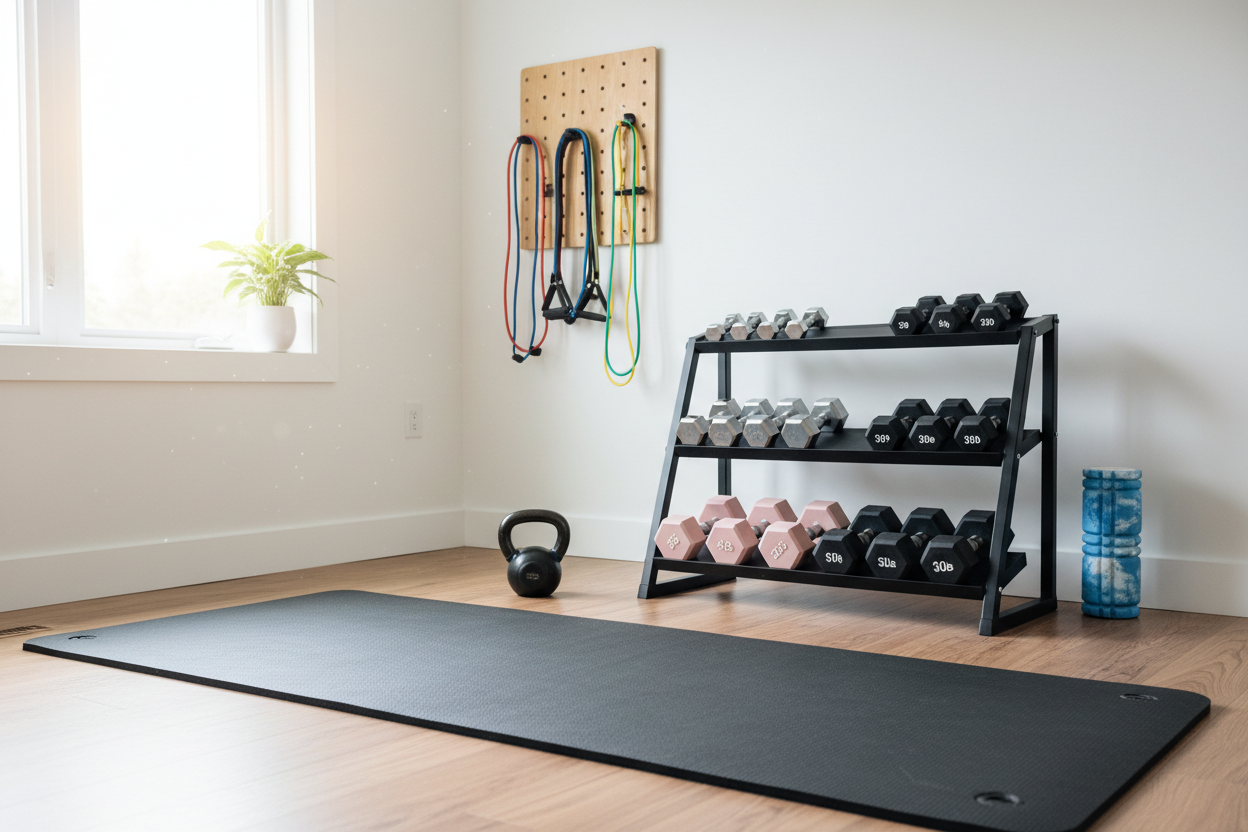
A solid beginner workout gear collection starts with adjustable dumbbells. Unlike fixed-weight dumbbells that require an entire rack, adjustable versions let you change resistance quickly and save considerable space. They're perfect for everything from bicep curls to shoulder presses, and they grow with you as you get stronger.
Resistance bands deserve a spot in every beginner's arsenal. These deceptively simple tools provide variable resistance that challenges muscles differently than free weights. They're also incredibly portable and gentle on joints, making them ideal for those just starting their fitness journey.
The Power of Bodyweight-Enhancing Equipment
Some of the most effective beginner weight lifting equipment doesn't involve weights at all. A quality yoga mat transforms any floor space into a workout area, providing cushioning for floor exercises, stretching, and core work. Don't cheap out here—a mat that slides around or compresses too much will frustrate you more than motivate you.
Pull-up bars that mount in doorways represent one of the best investments for upper body development. Modern designs install without screws and work in most standard doorframes. Even if you can't do a single pull-up yet, these bars enable exercises like hanging knee raises and assisted pull-ups using resistance bands.
A stability ball might seem like fun exercise equipment for beginners, but it's genuinely functional. Beyond the obvious core exercises, it can replace a weight bench for certain movements, serve as an office chair to improve posture, and add instability challenges to familiar exercises.
Machines Worth Considering
When people ask about the best workout machines for beginners, I usually steer them toward simpler options before complex systems. A rowing machine stands out as a gym item used for full body training that delivers exceptional value. It engages legs, core, back, and arms in one fluid movement while providing low-impact cardio.
Kettlebells occupy a unique space in home fitness. While technically a free weight, their design enables dynamic movements that dumbbells can't replicate. Starting with a single moderate-weight kettlebell opens up hundreds of exercises, from swings to Turkish get-ups. The learning curve is steeper than dumbbells, but the functional strength benefits are substantial.
Smart At Home Gym Equipment Ideas for Limited Space
Small living spaces require creative thinking. Wall-mounted folding racks provide pull-up bars and attachment points for resistance bands while disappearing when not in use. Under-bed storage containers can house foam rollers, yoga blocks, and lighter equipment.
Suspension trainers like TRX systems attach to doors or ceiling mounts and enable hundreds of bodyweight exercises in minimal space. The entire system packs into a bag smaller than a shoebox, yet provides enough resistance variety to challenge everyone from complete beginners to advanced athletes.
Jump ropes represent perhaps the most space-efficient cardio option available. A quality speed rope costs less than a single month's gym membership but delivers intense cardiovascular workouts. The coordination required takes practice, but even beginners can start with basic jumps and progress from there.
Building Your Collection Strategically
The best home workout equipment for beginners isn't necessarily the cheapest or the most expensive—it's what you'll consistently use. Start with three to five essential items rather than buying everything at once. This approach lets you discover what you enjoy before investing heavily.
My own journey began with just a set of resistance bands and a yoga mat. After three months of consistent use, I added dumbbells. Six months later came a kettlebell. This gradual approach prevented the overwhelming feeling that comes from a garage full of unused equipment.
Consider your actual workout preferences rather than aspirational ones. If you hate running, a treadmill won't suddenly make you love it. If you've never enjoyed cycling, a stationary bike probably won't change that. Choose equipment that aligns with movements you already find tolerable or enjoyable.
Quality Markers That Matter
When evaluating workout equipment for home for beginners, certain quality indicators separate worthwhile purchases from regrettable ones. Weight capacity ratings should exceed your body weight by at least 100 pounds for stability equipment. Adjustable items should have secure locking mechanisms—wobbly collars on dumbbells or loose resistance settings create safety hazards.
Warranty length often reflects manufacturer confidence. Equipment backed by multi-year warranties typically uses better materials and construction. Read reviews specifically mentioning durability after six months or a year of use, not just initial impressions.
Comfort features like grip texture, padding quality, and adjustment ease dramatically affect whether you'll use equipment regularly. A bench with inadequate padding or dumbbells with uncomfortable handles will discourage workouts regardless of their effectiveness.
Making Your Investment Count
The most expensive beginner weight lifting equipment sits unused just as easily as budget options. Success depends more on consistency than equipment cost. Set up your workout space in an area you pass frequently—visibility encourages use. Hiding everything in a closet creates friction that erodes motivation.
Track your workouts to build momentum. Whether using an app or simple notebook, recording exercises creates accountability and lets you see progress. This psychological reinforcement often matters more than the equipment itself.
Remember that commercial gyms succeed partly through social pressure and scheduled classes. At home, you're the motivator, instructor, and accountability partner. Choose equipment that makes working out easier, not harder. If setup takes fifteen minutes, you'll skip workouts. If everything's ready to go, you'll show up.
Your home gym will evolve as your fitness improves and preferences clarify. That's perfectly normal. The equipment that serves you well as a beginner might eventually get replaced or supplemented. View this as progress, not waste. The goal isn't building a perfect gym immediately—it's creating an environment that supports your health journey wherever it leads.
FAQ
How much should I spend on beginner home gym equipment?
A functional starter setup costs between $150-$400 depending on your choices. Adjustable dumbbells ($100-150), resistance bands ($20-40), a quality mat ($30-50), and a pull-up bar ($25-40) cover most beginner needs. Avoid the temptation to buy premium versions of everything initially—your preferences will become clearer after several months of consistent training.
What single piece of equipment gives the most complete workout?
Adjustable dumbbells or a rowing machine both qualify as gym items used for full body training. Dumbbells offer more exercise variety, while rowing machines provide integrated cardio and strength work. Your choice depends on whether you prefer structured machine-based workouts or the flexibility of free weights.
Do I need a weight bench as a beginner?
Not immediately. Many beginner exercises work perfectly well on the floor or using a stability ball. Once you've established consistent training habits and want to expand your chest and shoulder exercises, an adjustable bench becomes valuable. Consider it a second-tier purchase after mastering the basics with simpler equipment.