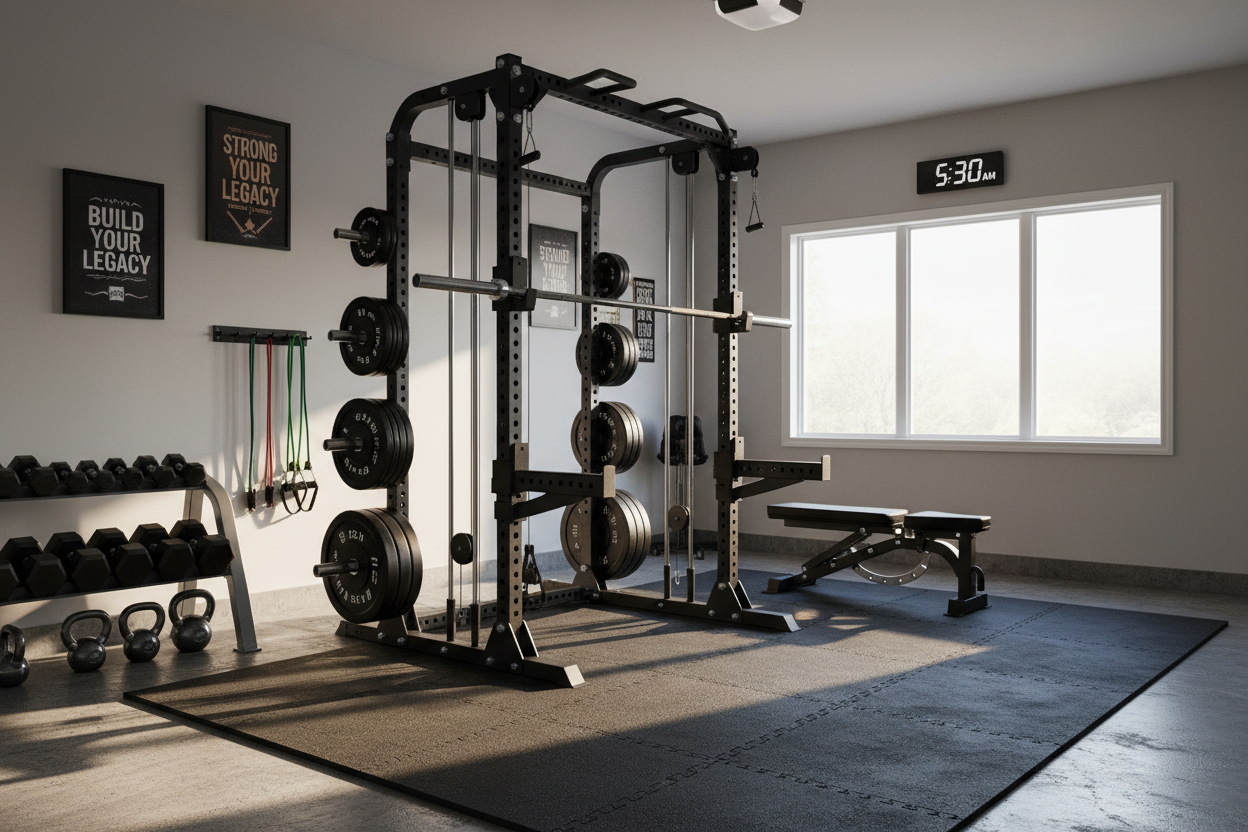
Building the Ultimate Garage Gym: Is an All-In-One Rack Worth the Hype?
Most people abandon their home gym dreams for one simple reason: space. You look at a squat rack, then eye a cable machine, maybe consider a Smith machine, and suddenly realize your two-car garage has no room for actual cars. An all-in one gym rack solves this logistical nightmare by fusing the three most critical pieces of strength equipment—a power cage, a functional trainer, and a Smith machine—into a single footprint. Instead of needing 300 square feet of floor space, you can replicate a commercial gym experience in a corner roughly the size of a large rug.
Understanding what this equipment actually offers is the first step to deciding if it fits your training style. At its core, this unit is a hybrid. It features the uprights necessary for free-weight barbell training, a guided rail system for stabilized lifting, and adjustable pulley systems for isolation work. If you are tired of waiting for equipment at a commercial facility or trying to piece together a puzzle of mismatched gear at home, this multi-functional unit is generally the most efficient path to a complete setup.
The Reality of Training in Tight Spaces
I learned the value of floor space the hard way. A few years ago, I decided to cancel my gym membership and build a sanctuary in my basement. I bought a standalone half-rack, a separate plate-loaded lat pulldown tower, and a bulky dumbbell rack. Within weeks, I realized my mistake. The room felt claustrophobic. I spent more time shuffling plates around and squeezing past equipment than actually lifting. If I wanted to do cable flys, I had to move a bench; if I wanted to squat, I was dangerously close to the wall. Replacing those separate pieces with a single, consolidated unit didn't just clear up floor space; it improved my mental focus. I could flow from heavy compound movements to accessory cable work without rearranging the entire room.
Deconstructing the Hybrid Machine
To understand the value proposition, you have to look at the mechanics. The base is almost always a power rack. This consists of four or six vertical steel uprights with holes for J-hooks and safety spotters. This is your church for heavy lifting: squats, bench presses, overhead presses, and rack pulls. It is the non-negotiable element for building raw strength.
Integrated into this frame is the functional trainer. These are the dual adjustable pulley columns usually found on the front of the rack. In a commercial gym, a cable crossover machine takes up a massive amount of space. On an all-in one gym rack, these pulleys ride up and down the existing uprights. This allows for high-pulley movements like tricep pushdowns and face pulls, as well as low-pulley movements like curls and rows, without requiring extra square footage.
The third component, often the most controversial among purists, is the Smith machine. While many powerlifters scoff at the fixed path of the bar, it has undeniable utility for hypertrophy. It allows you to push muscles to absolute failure safely without a spotter. Having this integrated into the rack means you can use it for inverted rows, calf raises, or secluded pressing movements instantly.
Versatility vs. Specialization
A common concern is whether a jack-of-all-trades machine is master of none. It is a valid question. A dedicated competition bench press will always feel slightly better than benching inside a cage. A standalone functional trainer might offer a wider range of motion than one integrated into a rack. However, for 99% of trainees, the difference is negligible compared to the convenience.
Modern engineering has closed the gap significantly. High-quality all-in-one units now use 11-gauge steel, meaning they are just as stable as commercial rigs. The pulley ratios are often 2:1, providing a smooth resistance curve suitable for explosive movements. You aren't sacrificing safety or stability; you are simply sacrificing the ability for three people to use three different machines simultaneously. For a solo home lifter, that limitation is irrelevant.
What to Look for Before Buying
Not all racks are created equal. The market is flooded with flimsy options that wobble under heavy loads. The gauge of the steel is your primary indicator of quality. Look for 11-gauge or 12-gauge steel frames. Anything higher (which implies thinner metal, like 14-gauge) might feel unstable during pull-ups or heavy racking.
Weight Stack vs. Plate Loaded
You will face a choice regarding the cable system: selectorized weight stacks or plate-loaded pins. Weight stacks are convenient. You pull a pin, choose your weight, and go. This mimics the speed of a commercial gym. However, they add significant cost and weight to the unit during shipping and installation. Plate-loaded versions require you to manually load weight plates onto the cable trolley. They are much cheaper and less complex mechanically, but they do slow down your supersets.
Hole Spacing and Attachments
Pay attention to the hole spacing on the uprights. Westside spacing (1-inch spacing through the bench zone) allows for precise J-hook adjustments, ensuring you don't have to unrack the bar from an awkward position. Furthermore, check the ecosystem of attachments. The best racks allow you to add dip handles, landmine attachments, leg press plates, and jammer arms. This expandability ensures your home gym can grow with your strength levels.
The Financial Perspective
Sticker shock is real. A high-end all-in one gym rack can cost as much as a used car. But you must view this through the lens of long-term investment. Calculate the cost of a monthly gym membership, gas money, and the value of your travel time. For many, the break-even point is around two to three years. More importantly, the resale value of quality gym equipment remains surprisingly high. If you buy a reputable brand and take care of it, you can often sell it for 70% of what you paid, drastically reducing the true cost of ownership.
Building a home gym is about removing friction. The easier it is to start working out, the more consistent you will be. By consolidating your gear into one central hub, you eliminate the clutter and chaos that often derails home training. You stop worrying about where to put the next piece of equipment and start focusing on putting more weight on the bar.
Frequently Asked Questions
What is the minimum ceiling height needed for an all-in-one rack?
Most standard units stand between 82 and 90 inches tall. You generally need at least a few inches of clearance above the rack for assembly and pull-ups. If you have low ceilings (under 8 feet), look for "short" models specifically designed for basements, but double-check that the pull-up bar height will still work for you.
Can I assemble these units by myself?
While it is physically possible, it is not recommended. These racks are heavy and involve hundreds of bolts, pulleys, and cables. Having a second person is crucial for safety, especially when standing up the main uprights and aligning the Smith machine guide rods. Plan for a full afternoon or a weekend for assembly.
Do I need to bolt the rack to the floor?
Many all-in-one racks are designed with a wide, heavy base and rear stabilizers that make bolting optional, unlike simple squat stands. However, if you plan on using heavy resistance bands or performing kipping pull-ups, bolting it down provides maximum stability and safety. Always check the manufacturer's specific recommendation for your model.