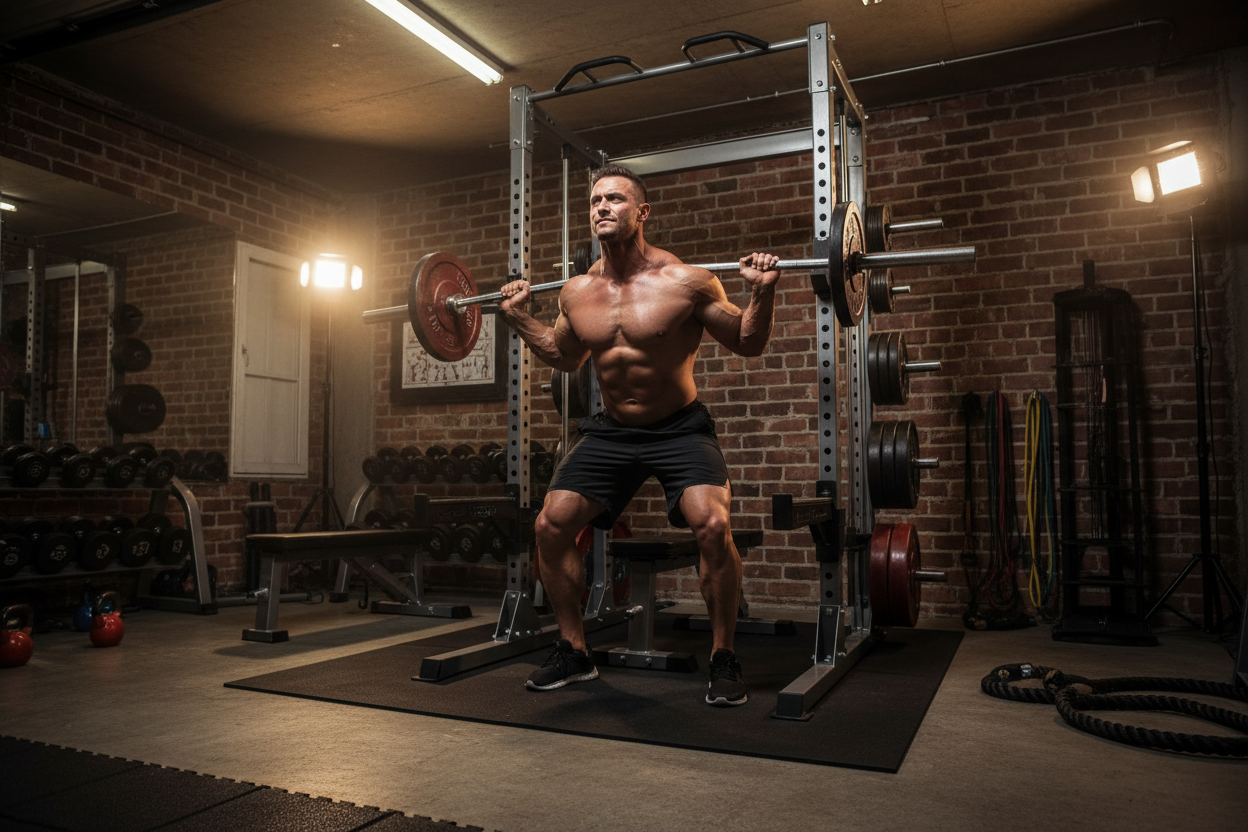
Building Real Muscle: Finding the Best Home Gyms for the Money
You have likely stared at a web browser with twelve tabs open, oscillating between a $4,000 functional trainer and a sketchy $200 power tower from a brand you can't pronounce. It is the classic paralysis of the garage gym athlete.
Finding the best home gyms for the money isn't about finding the cheapest option on the market. It is about calculating the cost-per-lift and ensuring the equipment won't turn into an expensive clothes hanger within six months. If you are serious about hypertrophy, you need gear that survives heavy loads, not just marketing hype.
Quick Summary: The Value Criteria
If you are skimming for the answer, here is what actually constitutes high value when selecting equipment:
- Weight Capacity vs. Cost: A high-value rig must support at least 500-700 lbs to future-proof your strength gains.
- Versatility Ratio: Can you perform the "Big 3" (Squat, Bench, Deadlift) and isolation movements?
- Footprint Efficiency: Does it require an entire garage, or does it fold/store vertically?
- Resale Value: Brand-name racks often retain 70-80% of their value; generic imports retain almost zero.
- The "Wobble" Factor: Stability under load is the primary indicator of build quality.
Defining "Value" in Bodybuilding Equipment
Most budget guides push resistance bands or flimsy bow-flex style machines. While those have their place, they are rarely the best bodybuilding home gym solution if your goal is significant tissue accretion.
To build a physique that looks like you train, you need progressive overload. Value comes from heavy-duty steel (usually 11-gauge) and standard hole sizing (like 1-inch or 5/8-inch) that allows you to buy attachments later. A cheap proprietary machine locks you into an ecosystem that dies when the manufacturer stops making parts.
The Power Rack: The Undisputed King of ROI
When we talk about the best home gym to build muscle, the conversation begins and ends with the power rack. It is a safety cage, a pull-up station, and a bench press stand all in one.
Why It Wins on Price
A decent half-rack costs less than a year of commercial gym membership fees. Because it has no moving parts (pulleys, cables, weight stacks), there is almost zero maintenance. You aren't paying for engineering complexity; you are paying for raw steel.
The Setup for Hypertrophy
To make a rack the best home gym for bodybuilding, you simply add a cable pulley attachment. This hybrid setup allows for the heavy compound movements required for thickness and the constant tension cable work required for detail.
All-In-One Trainers: Are They Worth the Premium?
You have seen the massive units that combine a Smith machine, functional trainer, and half-rack. The price tag usually induces mild shock. But are they worth it?
If space is your most expensive asset, yes. These units replace five separate machines. However, the "money" aspect gets tricky here. Often, these machines use a 2:1 pulley ratio, meaning 100lbs feels like 50lbs. For a strong lifter, you might max out the stack too quickly. When looking for value, check if the machine allows for "plate loading" (using your own weight plates) rather than a fixed selectorized stack. Plate-loaded machines are almost always cheaper and can handle heavier loads.
Common Money-Wasting Mistakes
I see athletes burn cash on features that look cool on Instagram but offer zero training utility. Avoid these traps:
- Proprietary Weight Plates: Never buy a machine that requires specific, branded weights. Always stick to Olympic 2-inch standard plates.
- Plastic Pulleys: Look for aluminum or nylon-reinforced pulleys. Cheap plastic cracks under the heat and friction of high-rep sets.
- Combo-Benches with Leg Extensions: Usually, the pivot point on budget leg extensions does not align with your knee, causing shear force rather than quad growth.
My Training Log: Real Talk
Let me tell you about a mistake I made so you don't have to. A few years ago, I bought a budget "all-in-one" functional trainer from a big-box store because it was $400 cheaper than the reputable brand. On paper, the specs looked identical.
The first time I loaded up the bar for a squat, I noticed the J-cups weren't lined with UHMW plastic—it was just bare metal. The sound of metal-on-metal grinding set my teeth on edge every time I racked the bar. But the real deal-breaker was the cable crossover. The friction in the pulley system was inconsistent. During a chest fly, the resistance would "stick" halfway through the concentric portion, then suddenly release. It completely killed the mind-muscle connection because I was focusing on the machine's stutter rather than my pec contraction. I sold it for pennies on the dollar three months later. The lesson? "Smoothness" is a feature worth paying for.
Conclusion
The best home gyms for the money are the ones you can use for a decade. Start with a solid foundation—usually a heavy-duty rack and a barbell—and expand from there. Don't let the allure of shiny, complex machines distract you from the iron basics that actually drive growth.
Frequently Asked Questions
What is the minimum budget for a decent home bodybuilding gym?
Realistically, for a rack, barbell, bench, and plates, you are looking at $1,000 to $1,500 for new equipment that is safe. You can drop this significantly by buying used weight plates, which rarely degrade.
Is a Bowflex or Total Gym good for building muscle?
They are excellent for general fitness and mobility, but they are rarely the best home gym to build muscle if mass is the goal. They often lack the heavy resistance required for progressive overload in the legs and back.
Do I need a cable machine for a home gym?
While not strictly necessary, a cable setup is often considered essential for the best bodybuilding home gym experience. It allows for constant tension exercises (like face pulls and tricep pushdowns) that free weights cannot replicate perfectly.