
Building Muscle After 70: 9 Safe Strength Strategies, Joint Mechanics, and Home Floor Staging
Hypertrophy Mechanics in Older Adulthood: Can You Build Muscle After 70?
A common misconception across fitness culture is that the physiological capacity to add lean tissue ceases in later decades. Skeletal muscle remains responsive to mechanical tension, progressive overload, and metabolic stimulation regardless of age. When older adults engage in structured resistance exercise, muscle fibers adapt by increasing contractile force and improving neuromuscular recruitment. For individuals asking whether building muscle after 70 is attainable, the answer is grounded in the body's natural adaptive capacity to regular, joint-conscious strength training.
While hormonal baselines and recovery rates shift over time, the fundamental stimulus for muscular growth remains consistent: placing targeted demand on muscle groups followed by adequate rest and nutritional replenishment. The primary distinction when pursuing senior muscle-building is managing joint preservation, spinal alignment, and balance stability to ensure long-term consistency.
9 Core Strategies for Building Muscle and Strength After 70
1. Prioritize Controlled Movement Tempo Over Heavy Maximum Loads
Lifting maximum weight increases unnecessary shear forces across tendons, ligaments, and cartilage. Instead, seniors can achieve comparable muscle activation by focusing on deliberate, controlled movement tempos. Emphasizing a slow eccentric lowering phase followed by a smooth concentric lift prolongs time under tension without overloading delicate joint capsules. Reviewing a build strength muscle guide illustrates how variable tempos maximize tension safely across upper-body pressing movements.
2. Emphasize Compound Multi-Joint Movement Patterns
Compound exercises recruit multiple muscle groups simultaneously, reinforcing functional movement patterns used in everyday life. Squatting motions, supported hip hinges, chest presses, and horizontal rowing movements develop coordinated full-body strength. Selecting stable stations like a dedicated strength collection apparatus helps older lifters isolate leg drive and glute activation without excessive balance constraints.
3. Leverage Machine and Cable Stability for Safer Loading
Free weights offer valuable stabilization benefits, but fixed-track machines and adjustable cable columns provide guided movement paths that significantly reduce the risk of dropped weights or awkward joint angles. Exploring versatile options in a home strength collection enables seniors to train with consistent resistance profiles while keeping the spine supported and wrists aligned.
4. Integrate Dedicated Balance and Unilateral Leg Drills
Asymmetrical strength often develops as movement patterns adapt to joint discomfort over time. Incorporating supported split squats, step-ups onto stable platforms, and single-leg balance holds reinforces ankle stability and strengthens hip stabilizers. Training one side at a time helps correct side-to-side discrepancies, which directly enhances gait mechanics and reduces fall risks during daily activities.
5. Structure Moderate-Volume Weekly Workout Splits
Recovery timelines lengthen with age, making excessive training volume counterproductive. A practical routine for older adults involves two to three full-body sessions per week, or an alternating upper-lower split, separated by at least forty-eight hours of rest. Those establishing an initial routine can consult a structured men build muscle guide to understand how gradual volume progression protects energy levels and muscular health.
6. Maintain Strict Spinal Neutrality and Core Bracing
Protecting the lumbar spine requires engaging deep core musculature before initiating any lift. Avoiding excessive spinal flexion, hyperextension, or weighted twisting under load protects vertebral discs. Practicing gentle isometric bracing, such as bird-dogs, supported planks, and pallof presses, establishes the trunk rigidity required for standing lifts and seated rows.
7. Support Muscle Protein Synthesis Through Consistent Nutrition and Hydration
Muscular growth requires sufficient dietary building blocks. Distributing quality protein sources evenly across daily meals supports steady muscle repair throughout the day. In addition, maintaining regular hydration keeps connective tissues pliable and supports joint lubrication during resistance sessions.
8. Program Active Recovery, Gentle Mobility, and Deload Cycles
Rest days should not mean complete inactivity. Gentle walking, light stretching, and deliberate joint mobility work promote blood circulation, bringing nutrients to recovering tissues. Scheduling lighter training weeks every month allows connective tissues to adapt alongside contracting muscles without accumulating chronic inflammation.
9. Establish a Secure, Impact-Absorbing Flooring Foundation
Standing strength movements require a stable, non-slip base. Exercising on slick hardwoods or plush carpeting introduces unnecessary instability that can compromise footing under load. Dense, textured exercise flooring provides both traction for confident stance positioning and moderate impact absorption to cushion ankle and knee joints.
Home Gym Floor Staging and Safety Zoning for Senior Strength Training
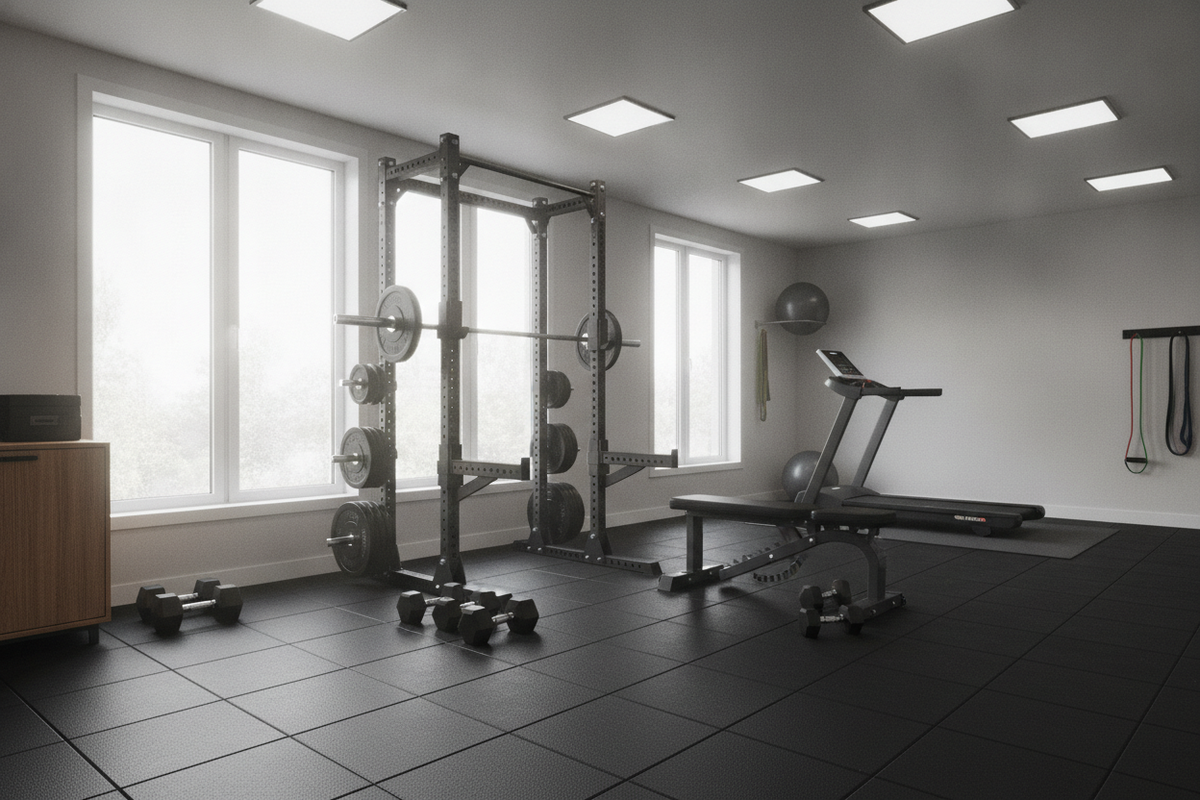
Creating a safe home training space is critical for older adults. The training surface must provide firm footing that resists bunching, shifting, or curling at the edges. High-density rubber or firm composite mats create an even platform that prevents foot sinking while offering sufficient joint relief during standing exercises and seated transitions.
- Clear Transition Zones: Ensure the borders between floor mats and bare subfloors are flush or beveled to prevent tripping hazards during movement transitions.
- Traction and Grip: Choose mat surfaces with textured micro-patterns that maintain grip even if hands or shoes become lightly damp.
- Equipment Placement: Arrange resistance machines, benches, and free weights with wide perimeter walking pathways to allow unhindered movement throughout the room.
- Subfloor Protection: High-density mats distribute the downward force of equipment, shielding underlying concrete or tile from concentrated contact points.
Mat Care, Cleaning Protocols, and Equipment Maintenance
Maintaining gym flooring preserves its non-slip qualities and prevents surface degradation over time. Routine cleaning removes dust, dirt, and sweat residues that can make surfaces slick and compromise balance.
- Daily Surface Sweeping: Use a soft-bristle broom or vacuum on bare floor settings to clear debris, lint, and loose dirt from mat seams and textured grooves.
- Neutral pH Cleansing: Wipe mat surfaces regularly with warm water and a mild, non-bleach detergent. Avoid harsh chemical degreasers or oil-based cleaners that leave slippery films.
- Air Drying and Inspection: Allow the flooring to dry fully before initiating workouts. Periodically check interlocking seams or mat edges to confirm they lie completely flat against the subfloor.
Key Takeaways: Senior Muscle-Building Framework Overview
Building strength and lean tissue in older adulthood is entirely feasible when structured around joint safety, progressive movement control, and stable environmental staging.
- Training Focus: Emphasize smooth tempos, compound movement mechanics, and machine support over heavy maximum loads.
- Recovery Protocol: Allow adequate rest between sessions, prioritize balanced protein distribution, and include active mobility work.
- Environment Setup: Use dense, non-slip flooring to provide firm footing, minimize joint stress, and maintain a secure foundation for every workout.


