Building a Strong Foundation: Your Guide to Powerful, Functional Legs
Let's cut straight to the chase: the best exercise for your legs isn't a single movement. It's a smart combination of compound lifts and targeted work that builds strength, stability, and muscle from your glutes down to your calves. The real goal of any effective leg muscle training regimen is to create a foundation that supports everything else you do, from lifting groceries to chasing after kids or excelling in your sport. A well-rounded approach that includes both heavy, foundational lifts and precise, stationary leg exercises is what delivers transformative results.
The Pillars of Powerful Legs
When we talk about fitness leg muscles, we're referring to a complex system. The quads on the front of your thigh, the hamstrings and glutes on the backside, the adductors and abductors of the inner and outer thigh, and the often-neglected calves all need attention. Ignoring any one group can lead to imbalances, poor posture, and even a higher risk of injury. The most effective leg fitness exercises are those that challenge multiple muscle groups at once, forcing your body to work as a coordinated unit. This is where compound movements earn their reputation.
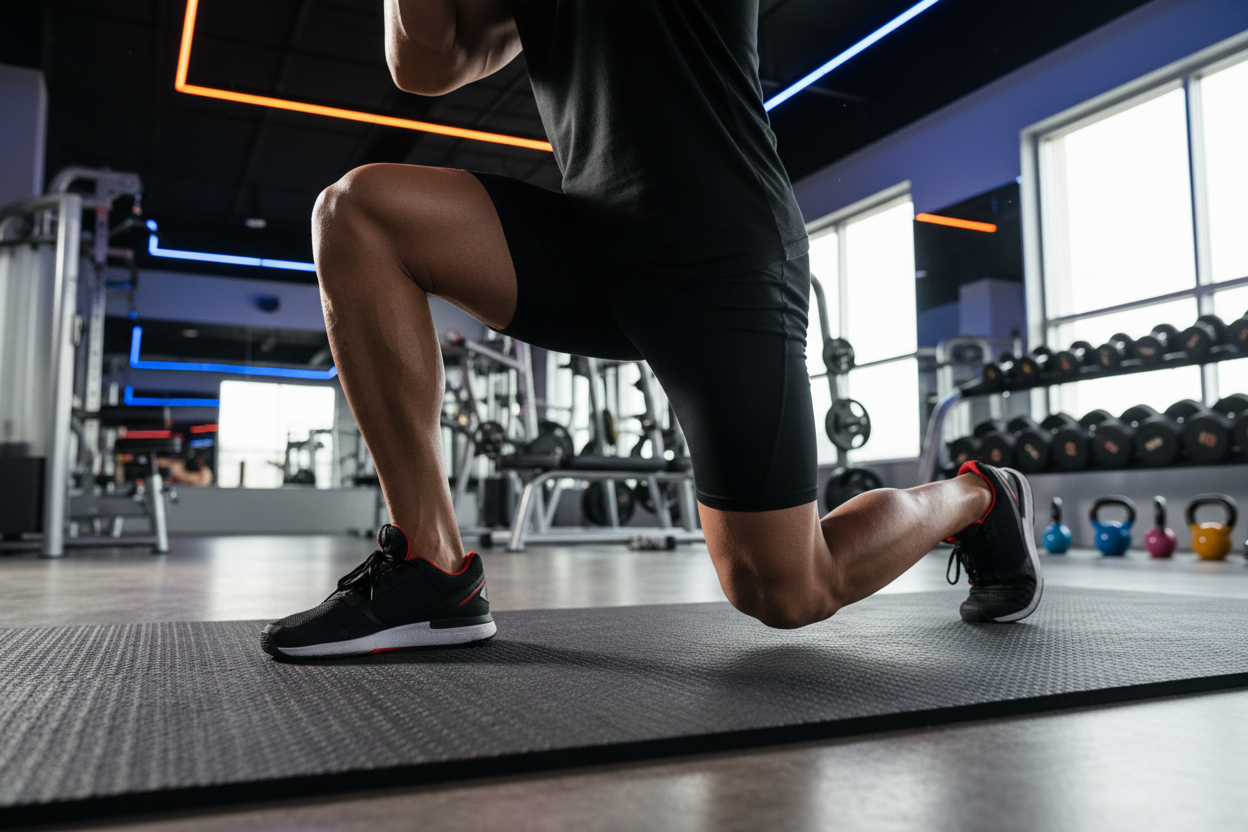
Squats, in their many variations, are arguably the king of lower body exercises. A properly executed back squat doesn't just target your quads; it heavily engages your glutes, hamstrings, and core. Deadlifts, another cornerstone, are phenomenal for developing the entire posterior chain—your hamstrings, glutes, and lower back. Lunges, whether walking, reverse, or stationary, introduce an element of unilateral training, correcting strength discrepancies between sides and improving balance. These movements form the non-negotiable core of any serious leg day.
Where Isolation and Stability Play a Crucial Role
While the big lifts build the engine, isolation and stationary leg exercises fine-tune the components. This is especially important for addressing weaknesses, rehabilitating from injury, or adding detail after your primary work is done. Leg extensions isolate the quadriceps like no other movement, allowing you to focus on the teardrop muscle just above the knee. Lying or seated hamstring curls target the back of the thigh, an area that can be underworked if you only squat.
Stationary leg exercises are also invaluable for building muscular endurance and mind-muscle connection. A set of Bulgarian split squats, where your rear foot is elevated on a bench, is brutally effective at building single-leg strength and stability. You can't use momentum; you're forced to control the movement entirely with the working leg. I've found that incorporating these after my main lifts has dramatically improved my balance and knee stability during activities like hiking. Similarly, hip thrusts, performed with your upper back on a bench, are a powerhouse for glute activation—a muscle group many people struggle to engage fully during squats.
Crafting Your Weekly Leg Routine
So, what does a practical week of leg muscle training look like? It doesn't require daily punishment. For most people, one or two dedicated lower body sessions per week is sufficient for steady progress. A sample session might begin with a compound movement like barbell squats for 3-4 sets of 6-8 reps, focusing on adding weight gradually over time. Follow this with a hinge movement like Romanian deadlifts for 3 sets of 8-10 reps to hammer the hamstrings. Then, introduce a unilateral challenge: 3 sets of 10-12 reps per leg on walking lunges or Bulgarian split squats. Finish with 2-3 sets of a calf raise and perhaps a dedicated abductor machine set to ensure no stone is left unturned.
Remember, consistency and progressive overload—gradually increasing weight, reps, or sets—are far more important than constantly searching for a magic bullet exercise. The best plan is the one you can stick with and refine over months and years. Pay close attention to your form; a shallow squat with heavy weight is less effective and more dangerous than a deep, controlled squat with a manageable load. Don't let ego write checks your body can't cash.
Beyond the Aesthetics: The Real Reward
The benefits of committing to good exercises for your legs extend far beyond the mirror. Strong legs are your body's foundation. They improve your metabolic rate, as large muscle groups burn more calories at rest. They enhance athletic performance in nearly every sport. They protect your knees, hips, and lower back from the wear and tear of daily life. There's a profound sense of confidence that comes from knowing your body is capable, from feeling stable on uneven ground, and from having the strength to handle physical demands without a second thought. That functional strength is the ultimate prize.
Frequently Asked Questions
Can I build leg muscle with just bodyweight exercises?
Absolutely. Exercises like pistol squats, shrimp squats, Nordic hamstring curls, and single-leg glute bridges are incredibly challenging and effective for building strength and muscle. However, to continue progressing over the long term, you will eventually need to add external resistance through weights, bands, or more advanced variations.
How often should I train legs each week?
For most people aiming to build strength and muscle, training legs 1-2 times per week is ideal. This allows for sufficient intensity during the workouts and adequate recovery time between sessions. Recovery is when your muscles actually repair and grow, so don't underestimate its importance.
I have bad knees. What are safe leg exercises?
Focus on movements that minimize shear force on the knee joint. Stationary leg exercises like leg presses (with proper foot placement), hip thrusts, and seated hamstring curls are often well-tolerated. Always consult with a physical therapist or qualified trainer to diagnose the specific issue and get a personalized plan.