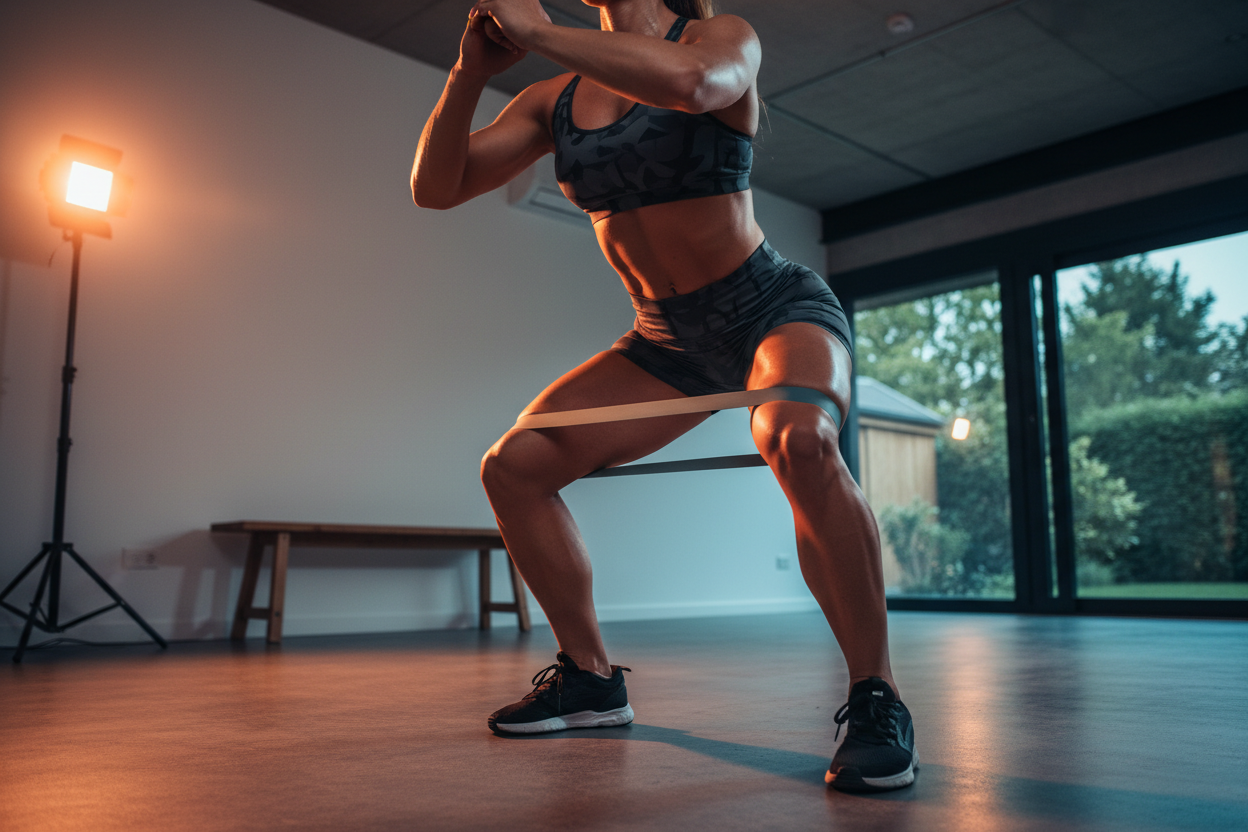
Build Powerful Legs at Home: The Ultimate No-Gym Protocol
You don't need a squat rack or hundreds of pounds of iron to build a lower body that performs as well as it looks. The common misconception is that without external load, muscle growth stops. That is simply untrue. If you are wondering how to strengthen leg muscles at home, the secret isn't just doing more reps; it's about manipulating mechanical leverage and time under tension.
Quick Summary: How to Build Legs at Home
- Master Unilateral Training: Shift to single-leg movements (like pistol squats) to double the load on the working muscle.
- Utilize Tempo Control: Slow down the eccentric (lowering) phase to 3-4 seconds to increase muscle damage without heavy weights.
- Incorporate Plyometrics: Use explosive movements like jump squats to recruit Type II fast-twitch muscle fibers.
- Focus on the Big Three: Center your routine around Squat, Lunge, and Hinge patterns.
- Shorten Rest Periods: Keep rest under 60 seconds to increase metabolic stress.
The Physics of Home Leg Training
To understand how to exercise your legs effectively without a gym, you have to understand progressive overload. In a gym, you add weight to the bar. At home, you must change the physics.
Your body doesn't know the difference between a dumbbell and your own body weight; it only understands tension. By shifting your center of gravity or reducing stability, you can make 150 pounds feel like 300. This is the cornerstone of any strong leg workout at home.
The "Big Three" Movement Patterns
Forget complicated machinery. A home exercise to strengthen legs must fall into one of these three categories to ensure balanced development.
1. The Squat Pattern (Quads & Glutes)
Standard bodyweight squats are fine for beginners, but they become endurance work too quickly. To truly learn how to make your legs stronger at home, progress to the Bulgarian Split Squat.
By elevating your rear foot on a couch or chair, you force the front leg to handle nearly your entire body weight. This fixes imbalances and places immense tension on the quadriceps.
2. The Lunge Pattern (Functional Strength)
Walking lunges or reverse lunges provide dynamic stability. If you want to know how can i strengthen my legs at home while improving athleticism, this is it. Keep your torso upright to hit the quads, or lean forward slightly to engage the glutes.
3. The Hinge Pattern (Hamstrings & Posterior Chain)
Most home workouts neglect the back of the legs. The Single-Leg Romanian Deadlift (RDL) is essential here. Stand on one leg, keep a slight bend in the knee, and hinge at the hips. You should feel a deep stretch in the hamstring. This is a vital strong legs exercise at home for injury prevention.
Advanced Intensity Techniques
When you can't add weight, you must add intensity. Here is how to build strong legs at home when the movements start feeling too easy.
Pause Reps
Stop at the bottom of a squat or lunge for a full two-count. This eliminates the "stretch reflex" (the bounce that helps you get up) and forces the muscle to generate force from a dead stop.
Plyometrics
Explosive movements bridge the gap between strength and power. Jump squats or alternating jump lunges are excellent strong leg exercises at home. However, form is paramount. Land softly to protect your joints.
My Training Log: Real Talk
I want to be honest about what this actually feels like. I spent six months training exclusively in my living room during a lockdown, and my go-to was the Bulgarian Split Squat.
The first thing you notice isn't the strength gain—it's the balance struggle. I remember trying to prop my foot on my velvet sofa, and my sock kept slipping off the cushion, ruining my set. I eventually had to do them barefoot to grip the upholstery.
Also, the "burn" from high-rep bodyweight leg work is different from heavy lifting. It's a nauseating, lactic acid accumulation that sits in your quads for minutes after you stop. There were times I had to hold onto the doorframe just to lower myself down the stairs after a session. It’s not glamorous, and you don't get the ego boost of loading plates, but the definition I got in my vastus medialis (the teardrop muscle) was actually better than when I was squatting heavy.
Conclusion
Building lower body power doesn't require a membership card. By focusing on single-leg movements, controlling your tempo, and maintaining high intensity, you can figure out how to strengthen my legs at home effectively. Consistency is your new currency. Start today, and respect the burn.
Frequently Asked Questions
Can I really build mass with just bodyweight leg exercises?
Yes, but you must push close to failure. Research shows that high-rep sets (even up to 30 reps) stimulate muscle growth similar to heavy weights, provided you are training near muscular failure.
How often should I train my legs at home?
Since bodyweight exercises generally cause less central nervous system fatigue than heavy barbell lifts, you can train legs more frequently. 2 to 3 times per week is ideal for most people.
What if I have bad knees?
Focus on the posterior chain (hamstrings and glutes) first to support the knee joint. Box squats (sitting back onto a chair and standing up) are a great regression to build strength safely.