
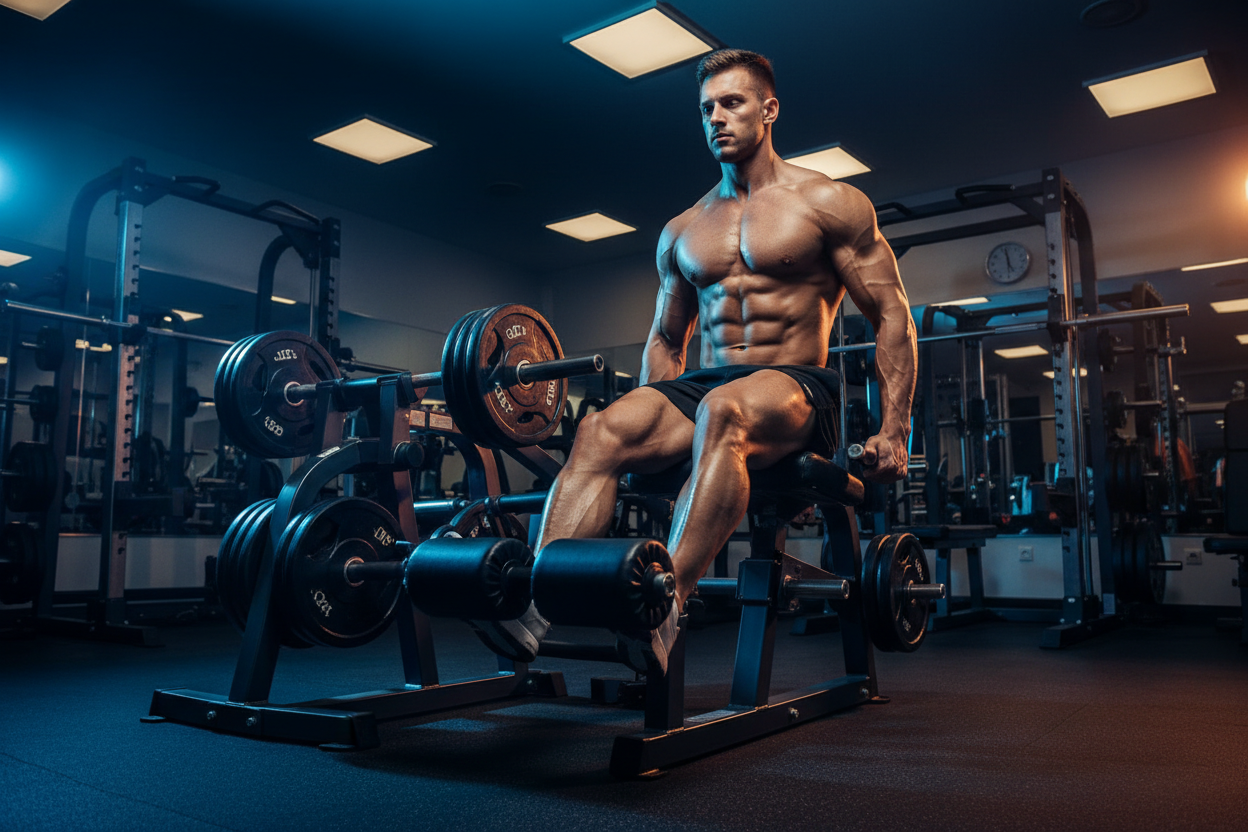
Build Massive Quads With a Plate-Loaded Leg Extension/Curl
If you train in a home gym or a garage setup, you know the struggle of leg day. Squats and lunges are foundational, but they tax your central nervous system and lower back before your quads truly fail. To achieve that specific, teardrop-muscle isolation, nothing beats a dedicated machine. Specifically, the plate-loaded leg extension/curl is the unsung hero for lifters who need commercial-grade isolation without the commercial price tag or footprint.
Key Takeaways
- Cost Efficiency: Plate-loaded units are significantly cheaper than selectorized (weight stack) machines while handling heavier loads.
- Dual Functionality: A combo leg extension/leg curl plate loaded machine saves floor space by combining two critical movements into one footprint.
- Variable Resistance: The strength curve differs from cable machines; the weight feels heaviest at the start and middle of the movement.
- Maintenance: With fewer pulleys and cables, there is less risk of mechanical failure.
Why Choose Plate-Loaded Over Selectorized?
In a commercial gym, you are used to the convenience of a pin-loaded weight stack. However, when outfitting a personal space, the leg curl extension machine plate loaded design offers distinct advantages.
First is the mechanical feel. Selectorized machines use guide rods and cables, which create friction. A plate-loaded machine relies on a simple pivot point. This provides a raw, direct connection to the weight. You feel every pound of resistance without the "drag" of a pulley system.
Second is the loading capacity. Many budget weight stacks top out at 150 or 200 lbs. If you are a strong lifter, you can easily overload a plate loaded leg curl extension unit with 45lb iron plates far beyond what a standard home-gym stack allows.
Mastering the Leg Extension Mechanics
The plate leg extension is the only exercise that effectively loads the rectus femoris (the large middle muscle of the quad) in its shortened position. But execution matters.
Knee Alignment is Non-Negotiable
The most common error I see is misalignment. The machine's pivot point (the bolt the arm swings on) must align perfectly with your knee joint. If your knee is too far forward or backward, you introduce shearing force that can cause long-term joint issues. Adjust the back pad until your knees line up directly with that axis of rotation.
The Hamstring Factor: Lying vs. Seated
Most combo units are designed as a seated extension and a lying leg curl. When switching to the leg curl machine plate loaded function, the setup changes drastically.
For the lying curl, your knees should be just off the edge of the pad to allow full range of motion. The roller pad should sit on your Achilles tendon, not your calves. Because these machines use gravity and leverage, the resistance profile drops off at the top of the curl (when your heels hit your glutes). To counter this, focus on a slow, controlled eccentric (lowering) phase.
Common Mistakes to Avoid
Ego Lifting: Because you can load these heavy, lifters often swing the weight. This uses momentum rather than muscle tension. If you have to throw your upper body backward to move the weight, strip a plate off.
Ignoring the Strength Curve: On a leg extension/leg curl plate loaded machine, the resistance is highest when the weight arm is parallel to the floor. Be careful not to "bounce" out of the bottom position, as this places high stress on the patellar tendon.
My Training Log: Real Talk
I’ve spent the last three years training exclusively in a garage gym, and I eventually bought a mid-range plate-loaded combo unit. Here is something the product descriptions won't tell you: the shin-scrape is real.
On my specific unit, the transition from extension to curl requires moving the roller pad. The pop-pin mechanism is stiff, and if you don't tighten the knob down fully after adjusting, the pad wobbles mid-rep. I specifically remember doing a drop set on leg extensions, and the vinyl roller pad actually rotated while I was grinding out the last rep, pulling my sock down and pinching my skin against the metal arm. It killed my focus instantly.
Another nuance is the "dead spot." Unlike a cable machine that keeps tension constant, when I lock out a leg extension on my plate-loaded unit, the weight arm is almost vertical. Gravity stops fighting me as much at the very top. I’ve learned I have to intentionally squeeze my quads twice as hard at the peak to compensate for that drop in mechanical tension. It’s a quirk you only notice after a few months of heavy use.
Conclusion
A plate-loaded leg extension/curl is one of the best investments for physique development. It allows you to isolate the quads and hamstrings safely without the spinal compression of heavy squats. By understanding the setup and respecting the mechanics, you can build impressive leg size in a minimal footprint.
Frequently Asked Questions
Is a plate-loaded leg extension safe for knees?
Yes, provided you align the machine's pivot point with your knee joint. Most knee pain comes from improper alignment or using excessive momentum (swinging) rather than controlled muscle tension.
Can I use standard 1-inch plates on these machines?
Most modern plate-loaded machines are designed for 2-inch Olympic plates. However, many manufacturers offer adapter sleeves or sell posts that can accommodate standard 1-inch plates, though you should check the specific model specs first.
Does the leg curl function work as well as a commercial machine?
It is effective, but the resistance curve is different. Commercial machines often use cams to keep tension constant. Plate-loaded versions are heaviest at the point of highest leverage and lighter at the contraction, requiring you to squeeze harder voluntarily.


