Build a Stronger Chest at Home with Dumbbell Workouts
Training your chest doesn’t require a gym filled with machines. In fact, using a pair of dumbbells can help you achieve an effective and balanced chest workout while improving muscle activation. Whether you’re exercising at home or supplementing your gym routine, chest exercises with dumbbells can be an efficient and versatile way to grow and strengthen your upper body.
Why Choose Dumbbells for Chest Workouts
Dumbbells allow a greater range of motion compared to barbells or fixed machines. This means your muscles, including stabilizers, are more engaged during each rep. They also make it easier to address muscular imbalances since each side works independently.
Another advantage is accessibility. You can perform a full chest workout with dumbbells in a small space, without needing complex gym equipment. As someone who often travels, I've relied on a single set of adjustable dumbbells to keep my chest training consistent even in hotel rooms or home offices.
Warm-Up and Safety Tips
Before starting chest exercises with dumbbells, it's important to warm up properly. Do 5 to 10 minutes of dynamic movements, such as arm circles or push-ups, to increase blood flow and prepare your joints. Keep your weights moderate when learning a new movement to avoid injury. Gradually progress as your form improves and your muscles adapt.
Core Chest Exercises with Dumbbells
Flat Dumbbell Bench Press
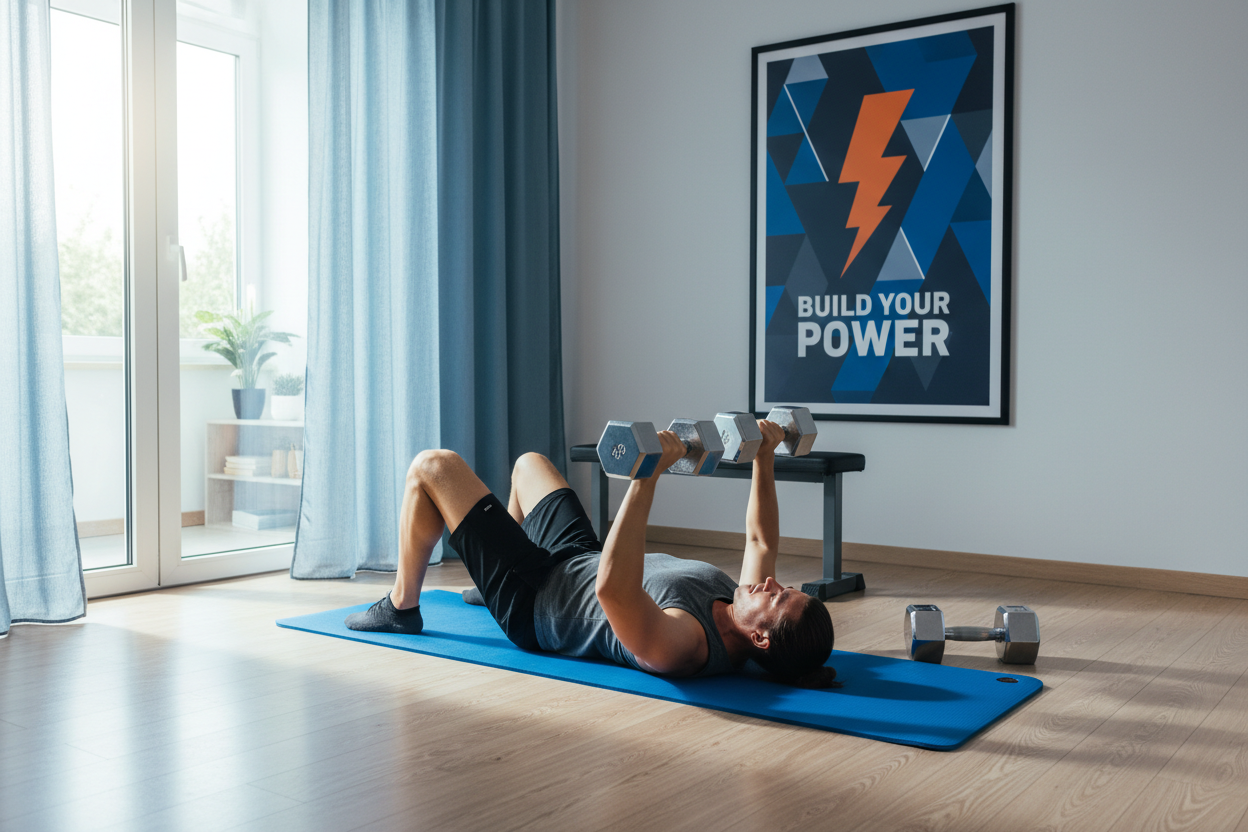
This foundational exercise targets the pectorals while engaging the triceps and shoulders. Lie down on a bench with dumbbells held at chest level, palms facing forward. Press both weights upward until your arms are straight, then lower slowly.
Tip: Keep your elbows slightly bent at the top and avoid locking your joints to protect your shoulders.
Incline Dumbbell Press
Adjust your bench to a 30–45 degree angle to put more emphasis on the upper chest. This variation helps create a more balanced chest appearance and improves strength in pushing movements.
Dumbbell Fly
The dumbbell fly focuses on stretching and contracting the chest muscles through a wide arc motion. Lie on a flat bench, holding dumbbells directly above your chest with palms facing each other. Lower the weights out to the sides until you feel a stretch, then bring them back together.
Pullover
Using a single dumbbell, lie across a bench with only your upper back supported. Holding the dumbbell with both hands, lower it behind your head and then pull it back over your chest. This strengthens the chest and also engages the lats.
Structuring Your Chest Workout with Dumbbells
A balanced chest workout with dumbbells could include 3–4 exercises, with 3–4 sets of 8–12 reps each. Start with compound presses for strength and finish with isolation moves for muscle definition. Rest 60–90 seconds between sets for optimal performance.
My Experience with Dumbbell Chest Training
When I first switched from machines to dumbbells, I noticed an immediate improvement in my chest activation and stability. The freedom of movement felt more natural, and I could adjust my wrist and elbow position to suit my comfort. Training at home became simple – no waiting for equipment, no commute, just focused work. Over time, incorporating chest exercises with dumbbells helped correct imbalances I didn't realize I had.
Progression and Variation
To keep your workouts effective, gradually increase resistance by using heavier dumbbells or slowing down the eccentric phase of the lift. Try alternating between flat, incline, and decline angles to target the chest from multiple positions.
Recovery and Nutrition
Building a stronger chest involves more than just training. Proper recovery, sleep, and nutrition are essential for muscle growth. Include proteins, healthy fats, and complex carbohydrates in your diet to fuel training sessions and repair tissues.
Final Thoughts
Dumbbell chest workouts are adaptable, effective, and convenient. Whether you're focusing on strength, muscle size, or endurance, the variety of exercises available ensures you can tailor your routine to your goals. Start light, focus on form, and progress gradually to maximize results and minimize risk.