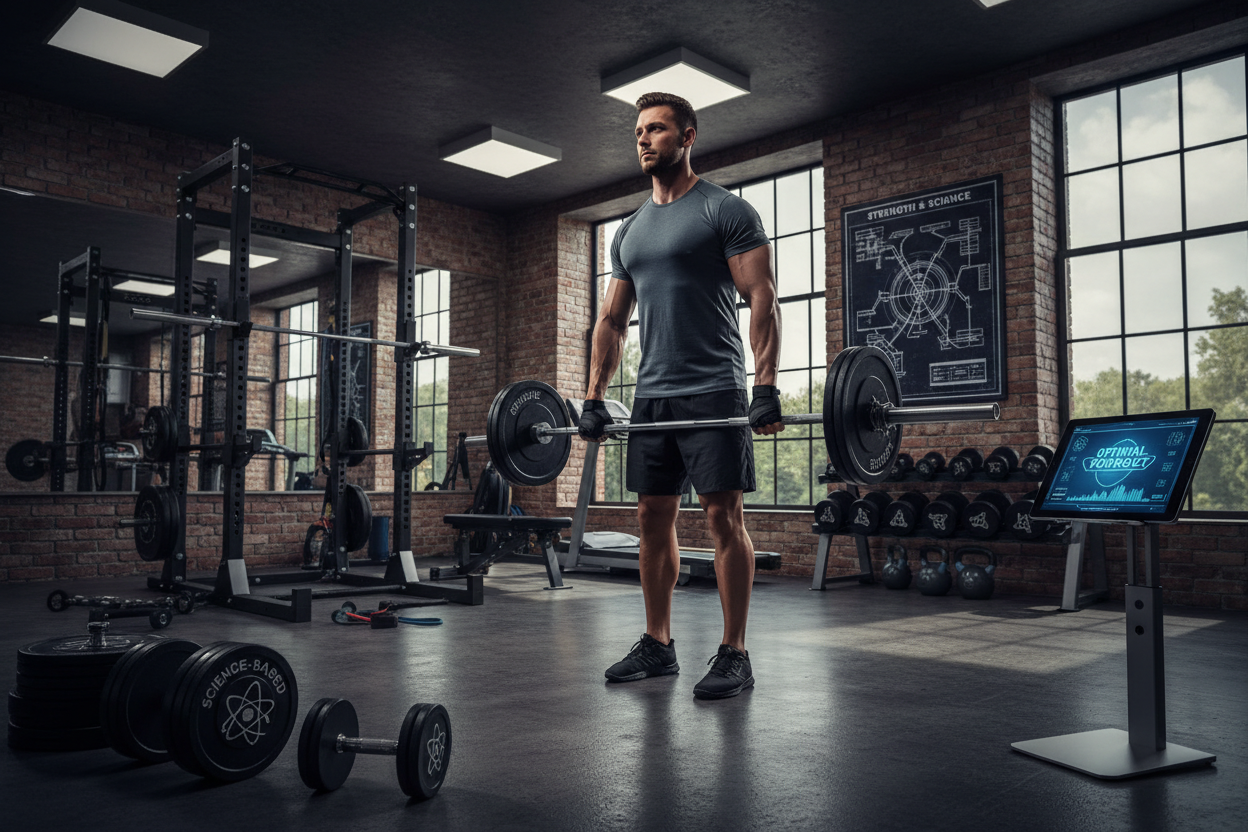
Best Workout According to Science: Home Gym Guide
If you've hit a frustrating plateau in your garage gym, you aren't alone. It is incredibly common to invest in a beautiful home setup, only to spin your wheels doing random exercises without a clear progression strategy. To truly maximize your results, it is time to stop guessing and start implementing the best workout according to science.
Whether your goal is building dense muscle mass, increasing raw strength, or simply optimizing your weekly routine for longevity, evidence-based training strips away the fitness industry fluff. In this guide, we will break down exactly how to structure your training and outfit your home gym to support it.
Key Takeaways
- Frequency Matters: Hitting muscle groups twice a week yields superior hypertrophy results compared to traditional once-a-week splits.
- Progressive Overload is King: You must consistently increase weight, reps, or time under tension to force adaptation.
- Compound First: 80% of your routine should consist of multi-joint movements like squats, deadlifts, and presses.
- Home Gym Advantage: A basic power rack, barbell, and bench are all you need to execute a fully optimized scientific routine.
Anatomy of a Science Workout Plan
Building an effective science workout plan comes down to managing volume, intensity, and recovery. Research consistently shows that total weekly volume (the number of hard sets per muscle group) is the primary driver of muscle growth, provided you are training close to failure.
Prioritizing Compound Lifts
Isolation exercises have their place, but the foundation of any scientific approach relies on compound movements. Exercises like the barbell back squat, overhead press, and Romanian deadlift recruit multiple muscle groups simultaneously. This not only saves you time in your home gym but also triggers a higher systemic response for strength adaptations.
Optimizing Rep Ranges
The old myth that you must lift heavy for strength and light for size has been heavily nuanced by recent sports science. You can build muscle across a wide variety of rep ranges (anywhere from 5 to 30 reps) as long as the set is taken near muscular failure. However, for practical home gym purposes, working in the 6-12 rep range is a sweet spot that balances fatigue management with joint health.
Equipping Your Space for a Scientific Workout Plan
You don't need a massive commercial facility packed with single-use machines to execute a highly effective scientific workout plan. In fact, a curated, minimalist home gym forces you to focus on the barbell basics that drive the majority of your results.
Essential Gear: Power Racks and Free Weights
The centerpiece of your setup should be a heavy-duty power rack. A rack with a high weight capacity ensures you can safely push your squats and bench presses to the limit without a spotter. Pair this with a high-quality Olympic barbell and cast iron or bumper plates, and you have the exact tools required to hit every major movement pattern.
Space Planning for Big Lifts
Before buying equipment to support your new routine, measure your space carefully. A standard garage gym or basement setup needs roughly an 8x8 foot footprint to comfortably accommodate a power rack and a 7-foot barbell. Don't forget vertical clearance: you need sufficient ceiling height if you plan on doing standing overhead presses.
From Our Gym: Honest Take
When I first transitioned my training from a commercial facility to my two-car garage, I worried I couldn't execute the best workout according to science without specialized leg presses and cable stacks. I was wrong. Running a strict, science-based hypertrophy block with just our heavy-duty power rack, an adjustable bench, and a barbell yielded my best results in years.
The knurling on our signature Olympic bar is noticeably more aggressive—my chalked grip held solid through heavy 400lb deadlift sets, which are the cornerstone of this routine. At 6'2, I did realize I needed at least 48 inches of clearance above the rack for standing overhead presses, something most product pages don't mention. The only minor caveat? Without machines to guide you, your form has to be dialed in, and you must be meticulous about logging your weights since you don't have a trainer doing it for you.
Frequently Asked Questions
Do I need commercial machines for a scientific workout plan?
Not at all. While machines offer great stability, free weights (barbells and dumbbells) are highly effective for building muscle and strength. A basic home gym setup is more than enough to achieve progressive overload.
How many days a week should I train?
Current sports science suggests training 3 to 4 days per week using full-body or upper/lower splits is highly optimal for natural lifters. This allows you to hit each muscle group twice a week while ensuring adequate recovery.
Can I build muscle with just dumbbells?
Yes, especially if you have heavy adjustable dumbbells. As long as you are progressively challenging the muscles and eating in a slight caloric surplus, your body will adapt and grow regardless of the specific tool used.