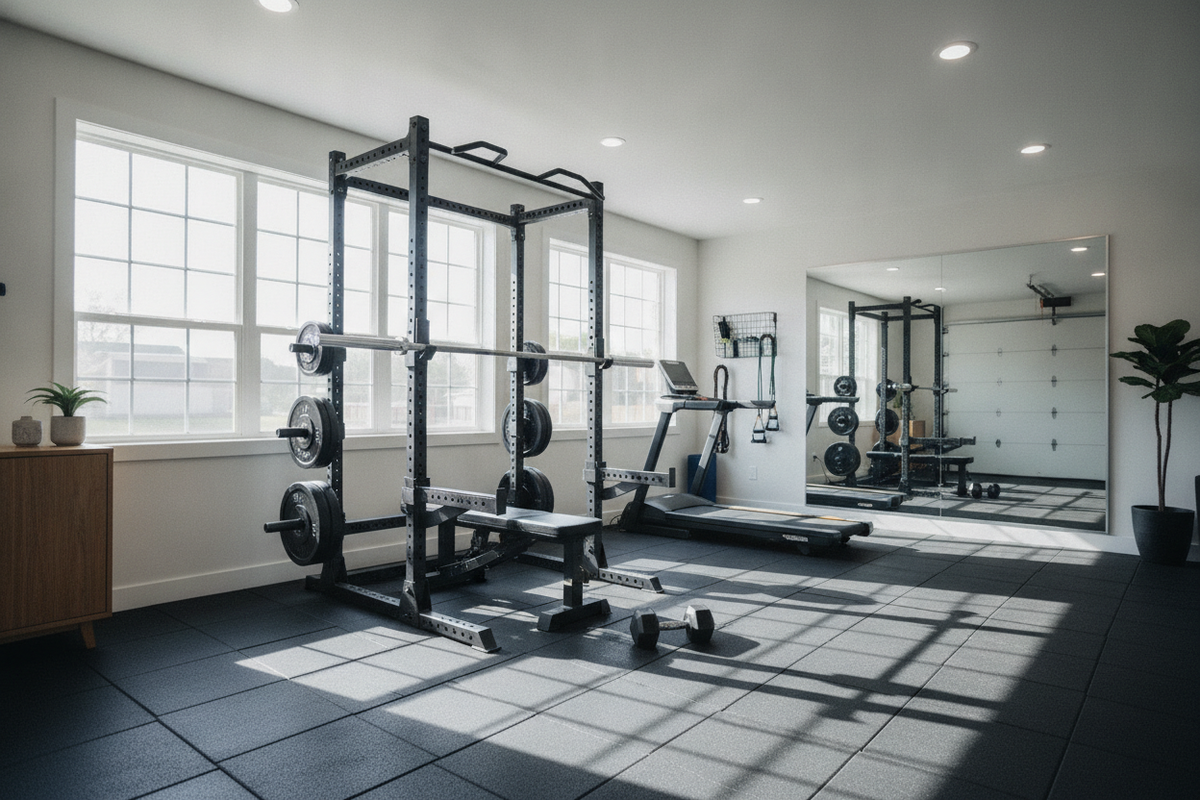
Best Upper Body Weight Training Exercises: Movement Pillars, Strength Blueprints, and Home Floor Staging
Developing a dependable upper body lifting routine involves organizing movements around fundamental mechanical patterns rather than assembling isolated exercises at random. Whether your objective centers on general conditioning, posture reinforcement, or balanced muscle balance, grouping lifts by primary movement vectors provides a clear framework for long-term consistency. Reviewing a practical workout strength training guide can also offer context on how strength training integrates with broader conditioning goals over time.
Foundational Pillars of Upper Body Weight Training
A well-structured upper body regimen typically categorizes movements across four primary vectors: horizontal pressing, horizontal pulling, vertical pressing, and vertical pulling. Organizing workouts around these opposing vectors helps balance structural loading across the shoulder girdle, chest, and upper back.
When planning the best upper body weight training exercises, multi-joint compound exercises serve as logical cornerstones. Focusing on multi-joint patterns allows trainees to practice coordinated joint movement across the shoulders and thoracic region while engaging stabilizing trunk muscles in a cohesive sequence.
Horizontal Pushing and Pulling: Core Strength Builders
Horizontal movement patterns establish foundational pressing capacity and posterior upper-torso control. They target the chest, anterior deltoids, rhomboids, and mid-trapezius structures.
- Barbell Bench Press: Widely utilized as a traditional candidate for the best exercise for upper body strength, the flat barbell bench press emphasizes controlled pressing through the chest, triceps, and shoulders. Maintaining a firm, retracted scapular position and planted feet establishes a stable foundation along the bench surface.
- Dumbbell Flat and Incline Presses: Dumbbell pressing allows each arm to move through an independent path. This individual tracking helps address side-to-side control differences while promoting balanced work across the stabilizing musculature of the shoulder.
- Barbell Bent-Over Rows: Frequently selected as a reliable best upper body strength exercise for upper back development, the bent-over row engages the lats, rhomboids, rear deltoids, and spinal stabilizers. A steady hip hinge and neutral spinal alignment are central to comfortable execution.
- Chest-Supported Dumbbell Rows: By resting the torso against an incline bench, chest-supported rows reduce lower-back demands and allow the lifter to concentrate primarily on controlled scapular retraction and lat engagement.
Vertical Pressing and Pulling: Overhead Power and Back Width
Vertical movement patterns train the shoulder girdle through overhead extension and downward pulling actions, providing balanced upper-torso articulation.
- Overhead Barbell Press: Performed standing or seated, the strict overhead press emphasizes shoulder stability and trunk control. It is often included among the best upper body exercises for men and women seeking balanced vertical pressing development.
- Pull-Ups and Chin-Ups: As primary vertical pulling exercises, pull-ups recruit the lats, upper back, and arm flexors. Alternating between overhand, underhand, or neutral hand positions varies the emphasis across the forearm flexors and back musculature.
- Lat Pulldowns: For trainees working toward bodyweight pull-ups or aiming for controlled volume, the lat pulldown provides a steady cable path with smooth eccentric control.
Targeted Accessory Exercises for Joint Resilience and Balance
While compound lifts form the primary structure of a workout, targeted isolation movements help round out joint stability and address smaller muscle groups. Exploring items from a dedicated strength training collection—such as resistance bands, specialty handles, and supportive wraps—can assist in fine-tuning these supplemental exercises.
- Lateral Raises: Isolates the lateral deltoid head to support balanced shoulder development and comfortable arm abduction.
- Face Pulls: Targets the rear deltoids, external rotators, and upper trapezius, helping counterbalance frequent horizontal pressing work.
- Triceps Extensions and Biceps Curls: Targeted elbow flexion and extension exercises support connective tissue conditioning around the elbow joint and complete upper body sessions.
Designing the Best Upper Body Strength Workout
Structuring the best upper body strength workout involves arranging major compound lifts at the start of the session, followed by complementary secondary exercises and targeted accessory work. Balancing upper body routines with scheduled lower body training ensures adequate rest periods between heavy sessions. Consulting a comprehensive upper body weight guide can assist lifters in establishing realistic set and rep structures across weekly schedules.
A well-balanced routine regularly pairs upper body training days with dedicated lower body work. Trainees can explore a focused body strength collection to ensure their home or facility layout accommodates balanced whole-body training.
Sample Upper Body Strength Blueprint
- Primary Press: Barbell Flat Bench Press – 4 sets of 5 to 6 repetitions
- Primary Pull: Barbell Bent-Over Row – 4 sets of 6 to 8 repetitions
- Secondary Press: Standing Overhead Press – 3 sets of 8 repetitions
- Secondary Pull: Weighted or Bodyweight Pull-Ups – 3 sets of 8 to 10 repetitions
- Accessory Pair: Cable Face Pulls paired with Dumbbell Lateral Raises – 3 sets of 12 to 15 repetitions
- Arm Finisher: Incline Dumbbell Curls and Triceps Rope Pushdowns – 2 to 3 sets of 10 to 12 repetitions
This structured progression supports a well-rounded approach to the best workout for upper body strength by addressing pushing and pulling vectors in a systematic, manageable order.
Home Gym Floor Staging: Bench Traction, Foot Drive, and Surface Protection
Executing upper body lifts at home requires a firm, stable surface underfoot and beneath heavy benches. During horizontal pressing, stable foot placement facilitates consistent body positioning and balanced tension across the torso throughout the movement.
Placing weight benches and free weights on a dedicated surface such as an exercise workout product helps prevent equipment shifting during heavy sets. High-density rubberized mats distribute point-load contact from bench feet, protect underlying hardwood or concrete floors from accidental dumbbell contact, and help reduce vibration when re-racking weights.
For standing overhead presses and bent-over rows, a firm mat provides a non-slip, level base that supports confident footing without unwanted mat compression. A dense, flat surface helps trainees maintain balance and stable positioning across every set.
Mat Care, Grip Maintenance, and Equipment Layout
Routine care for your training surface supports long-term equipment function and reliable traction during training sessions.
- Routine Surface Cleaning: Wipe down rubber flooring periodically with a damp microfiber mop and mild cleaner to remove dust and chalk buildup, preserving natural surface grip.
- Moisture Control: Ensure adequate room airflow to prevent moisture accumulation beneath floor mats in basement or garage spaces.
- Organized Layout: Position weight trees, racks, and dumbbell storage along reinforced floor sections to distribute static weight evenly across your home gym space.
Combining thoughtful exercise selection with a secure, well-maintained floor environment allows lifters to pursue their upper body strength training with structure, safety, and consistency.