Best Treadmill Workout for Bad Knees: A Pain-Free Guide
If you are dealing with aching joints, the thought of stepping onto a cardio machine can feel completely daunting. But giving up on your cardiovascular health isn't the answer. Finding the best treadmill workout for bad knees is all about working smarter, not harder. In this guide, we will break down exactly how to program your home gym routine to protect your joints, build lower body strength, and get your heart rate up without the high-impact pounding.
Whether you are outfitting a garage gym or a small apartment corner, understanding how to use your equipment correctly can mean the difference between a nagging injury and a triumphant fitness journey. Let's dive into the mechanics, the programming, and the hardware you need to train pain-free.
Key Takeaways
- Focus on incline walking over flat-surface running to shift the load to your glutes and hamstrings.
- Keep speeds moderate (2.0 to 3.5 mph) to maintain a controlled, low-impact stride.
- Invest in a machine with advanced deck cushioning to absorb shock and reduce joint stress.
- Avoid holding the handrails to maintain proper posture and prevent lower back strain.
- Always warm up with dynamic stretches before stepping onto the belt.
The Anatomy of a Joint-Safe Treadmill Routine
The 'Hill Climb' Strategy
Running sends shockwaves through your lower body, but incline walking shifts the mechanical load away from your anterior knee and onto your posterior chain. Set your incline between 4% and 8% and keep your speed around 2.5 to 3.0 mph. This steady-state effort elevates your heart rate while keeping impact to an absolute minimum. It is the core foundation of any joint-friendly cardio program.
Form and Posture Mechanics
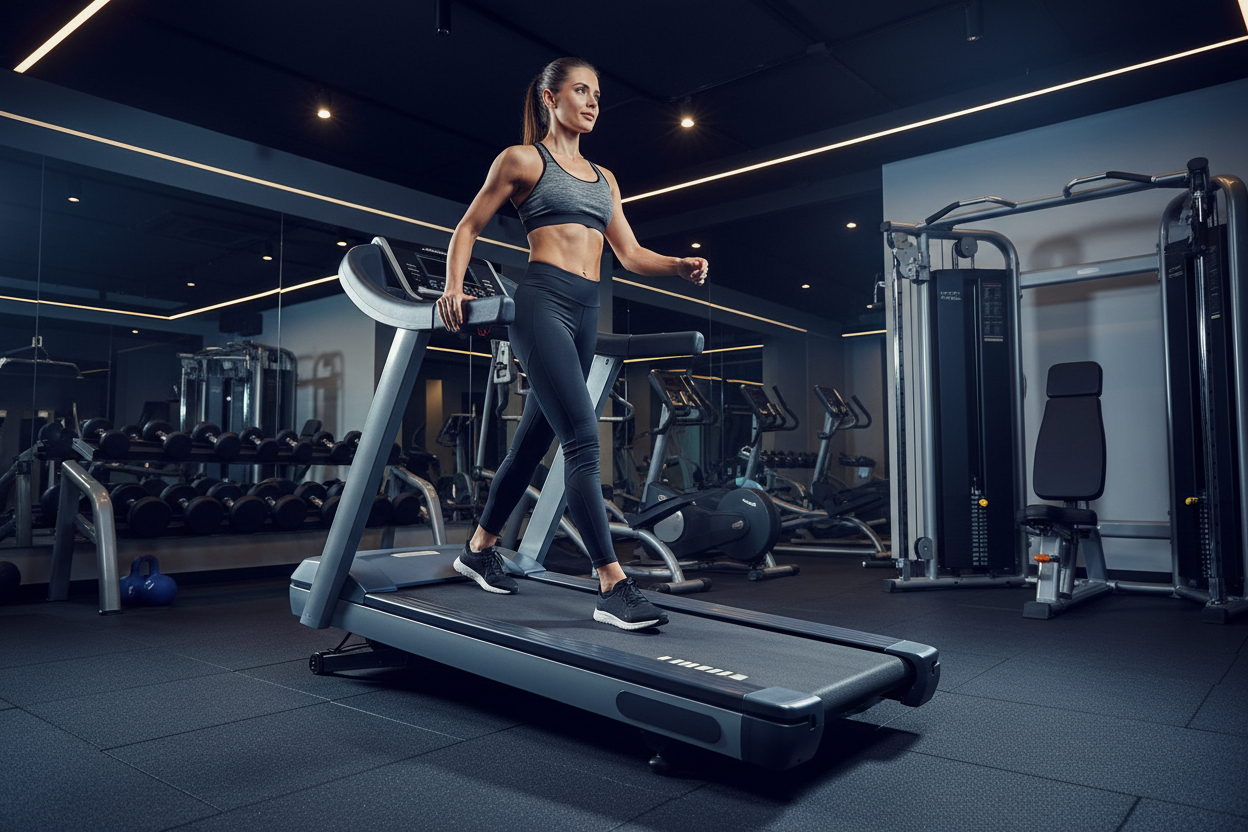
It is tempting to grab the handrails when the incline goes up, but doing so shifts your center of gravity and negates the benefits of the hill climb. Leaning back or slouching over the console can quickly lead to lower back strain. Keep your chest up, brace your core, and pump your arms naturally.
Hardware Matters: Selecting Your Machine
Your workout is only as good as the equipment you perform it on. When looking for the best treadmill for arthritis or general wear-and-tear, deck cushioning is your top priority. Standard commercial belts can feel like running on concrete, so you want a deck built with shock-absorbing elastomers.
Key Specs for Joint Protection
The best treadmill for bad joints will feature adjustable cushioning or a highly suspended deck design. If you are also searching for the best treadmill for bad back issues, ensure the machine has a solid, heavy-duty frame to prevent jarring side-to-side movements. Ultimately, the best treadmill for knees and joints is one that accommodates your natural stride length—look for a running surface of at least 20 by 55 inches so you never have to chop your steps.
Whether you need the best treadmill for your knees or the best treadmill for knee problems specifically, prioritizing a thick orthopedic belt can make a massive difference. Finding the best treadmill for knee pain means looking past the flashy touchscreens and focusing on the belt's shock absorption. Additionally, the best treadmill for your joints will have accessible speed and incline controls right on the handrails, so you don't have to break your stride to make adjustments.
From Our Gym: Honest Take
I have spent years testing cardio equipment in our facility, and my own right knee has a torn meniscus from college basketball. When I started programming a low-impact routine for myself, I realized that deck stiffness varies wildly between brands. Last month, I tested a popular budget treadmill back-to-back with a premium model featuring variable response cushioning.
The difference was night and day. On the budget model, a 30-minute incline walk left my knee throbbing by the evening. On the premium deck, my joints felt completely fine, even after multiple days of use. My honest advice? Don't skimp on the deck if you have existing pain. It is worth spending the extra $300 to $500 for a machine that won't punish your body. The only caveat is that highly cushioned treadmills tend to be heavier, so make sure you have a dedicated, permanent spot for it in your home gym.
Frequently Asked Questions
Is a treadmill or elliptical better for bad knees?
Both are excellent low-impact options. An elliptical offers zero impact, but a highly cushioned treadmill allows for a more natural walking motion. Many users find incline walking on a treadmill better for building functional, real-world glute and hamstring strength.
How long should my treadmill workout be if I have joint pain?
Start with 15 to 20 minutes of steady incline walking. Once you can complete this without pain during or after the session, gradually increase your time by 5 minutes per week, working your way up to 30 to 45 minutes.
Does walking on an incline hurt your knees?
For most people, walking on an incline actually reduces knee pain. It shifts the mechanical load away from the knee joint itself and onto the larger muscles of the legs. However, always listen to your body and lower the incline immediately if you feel any sharp pain.