Best Total Gym Workout Routine: Stop Wasting Reps
Let's be honest: having a sleek cable-and-incline trainer in your basement is only half the battle. If you're just hopping on the glideboard and pulling cables without a plan, you are leaving serious muscle gains and fat loss on the table. To break through that home gym plateau, you need the best total gym workout routine designed specifically for your equipment's unique mechanics.
Whether you're working with limited garage space or a quiet apartment setup, mastering a structured total gym full body workout routine will transform how you train. Let's dive into exactly how to program your sessions for maximum results.
Key Takeaways
- Progressive Overload is Key: Adjust your incline level to increase resistance as you get stronger.
- Focus on Compound Movements: Prioritize multi-joint exercises like squats, pull-ups, and chest presses.
- Embrace Quick Transitions: Keep your heart rate up by organizing exercises that require minimal setup changes.
- Form Over Speed: Control the eccentric (lowering) portion of the glide to maximize time under tension.
Crafting the Ultimate Routine
The beauty of incline bodyweight training is its versatility. However, that same versatility can lead to 'paralysis by analysis.' The most effective approach is a balanced, total gym full body workout routine that hits every major muscle group in a single, efficient session.
The Push-Pull-Legs Circuit
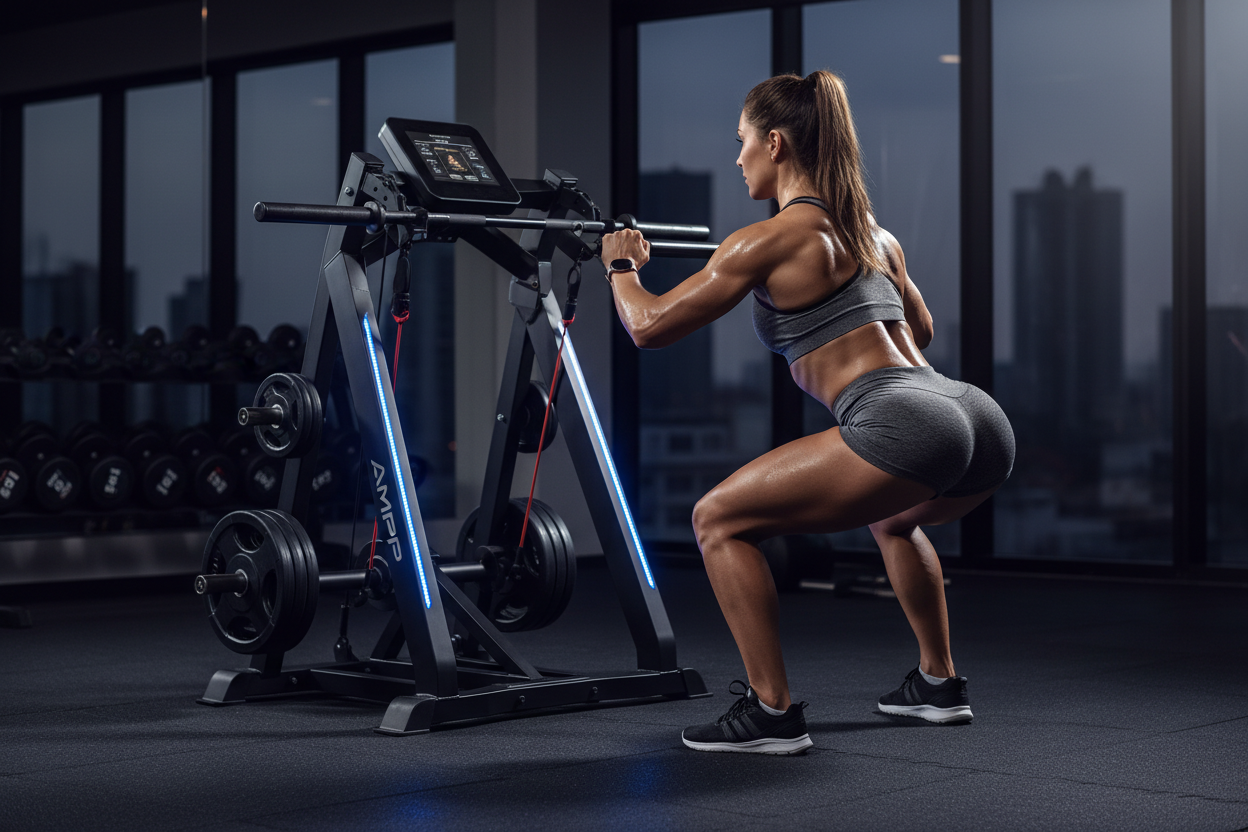
For most home gym owners, a circuit-style approach works best. Start with a lower body movement like the plyo squat using the squat stand. Move immediately into a pulling motion, such as seated rows or lat pulldowns, utilizing the cable attachments. Finish the circuit with a pushing movement like the incline chest press. Performing these back-to-back not only saves time but also provides a stellar cardiovascular stimulus.
Mastering the Glideboard for Progression
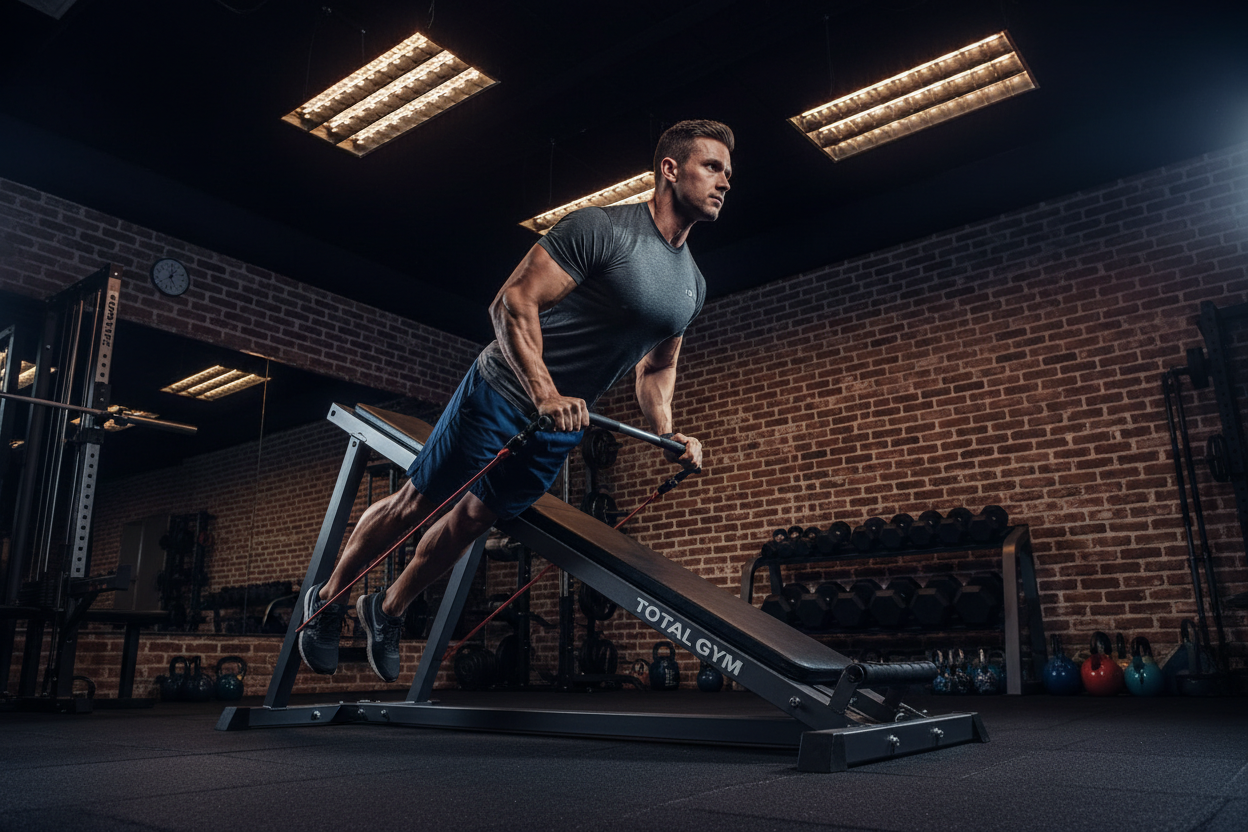
One of the biggest misconceptions about this equipment is that it's only for beginners. To make this the best total gym workout routine for your specific fitness level, you must manipulate the incline. As a rule of thumb, lower the board for exercises where you are moving your body weight away from the machine (like chest flies), and raise it for exercises where you are pulling yourself up (like pull-ups and rows).
Space Planning and Equipment Flow
When planning your routine, consider your physical space. Most North American home gym setups—whether in a cramped basement or a shared garage—require smart equipment flow.
Minimizing Setup Friction
Nothing kills workout momentum faster than constantly swapping out attachments. Group your exercises by attachment. For instance, do all your squat stand exercises first, then remove the stand and attach your wing bars for pull-ups, and finally switch to the cable handles for your arm and chest work. This grouping strategy requires less than 48 inches of clearance around the machine and keeps your workout under 45 minutes.
From Our Gym: Honest Take
I've programmed workouts on everything from commercial power racks to basic resistance bands, and I recently spent six months exclusively using an incline trainer in my garage gym. The friction-free glide on the higher-end models is fantastic for joint health, and the pump you get from high-rep cable rows is undeniable.
However, I'll be completely honest: at 6'2', the standard squat stand felt a bit narrow for my preferred wide stance, and my heels would occasionally slip off during explosive plyo jumps. I highly recommend upgrading to the extra-large squat stand if you are over six feet tall. Additionally, while the machine claims to offer hundreds of exercises, I found that sticking to the core 10-12 compound movements yielded 90% of my results. Don't get distracted by gimmicky variations.
Frequently Asked Questions
Can you build real muscle with an incline trainer?
Absolutely. Muscle growth requires mechanical tension, metabolic stress, and progressive overload. By raising the incline level and focusing on slow, controlled repetitions, you can easily stimulate hypertrophy, especially in your back, chest, and arms.
How many days a week should I do this routine?
For a full-body approach, 3 to 4 days a week is optimal. This allows for adequate recovery between sessions. If you prefer to split your days into upper and lower body, you could safely train 4 to 5 days a week.
Is this equipment enough for a complete home gym?
For general fitness, weight loss, and moderate muscle toning, yes. It is incredibly space-efficient and joint-friendly. However, if your primary goal is absolute maximal strength (like powerlifting), you will eventually need to supplement with free weights or a barbell setup.