Best Strength Training Equipment: The Complete Buyer’s Guide
Walk into any big-box sporting goods store, and you are immediately bombarded with shiny machines, complex pulley systems, and gadgets that promise six-pack abs in three minutes. It is paralysis by analysis. If you want to build actual muscle and functional power, you don't need a room full of gimmicks. You need the best strength training equipment that focuses on biomechanics, safety, and longevity.
Building a home gym or selecting the right tools isn't about spending the most money; it's about spending it on the right pieces. Let’s cut through the marketing noise and look at what actually moves the needle for your physique.
Quick Summary: The Essentials
If you are skimming for the absolute necessities to start lifting, here is the hierarchy of equipment based on versatility and muscle recruitment:
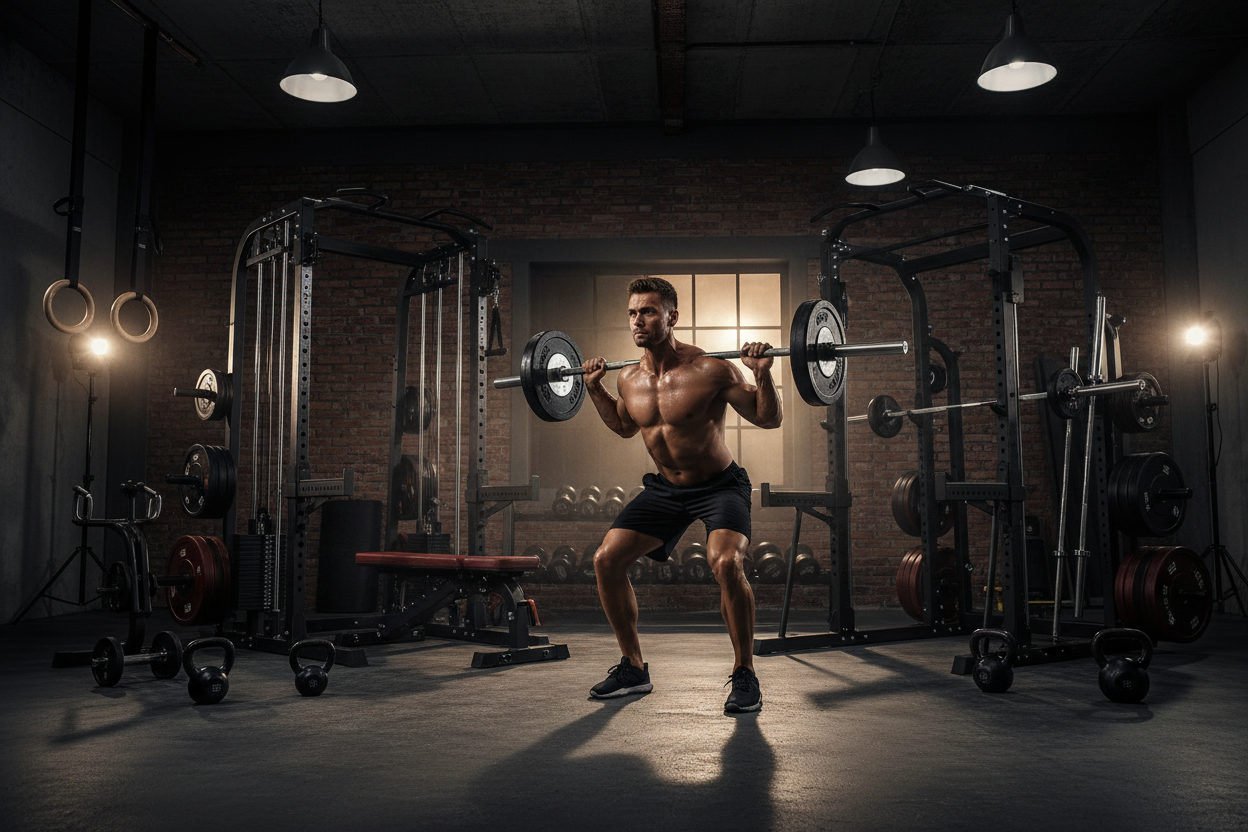
- The Power Rack: The centerpiece for safety during squats and bench presses.
- Olympic Barbell: The primary tool for compound movements (deadlifts, rows, presses).
- Adjustable Bench: Allows for flat, incline, and seated exercises.
- Weight Plates: Bumper plates for noise reduction or cast iron for durability.
- Adjustable Dumbbells: Space-saving options for isolation work and symmetry.
The "Big Three" Foundation
You cannot build a house without a foundation. In strength training, your foundation consists of a rack, a bar, and a bench. Everything else is secondary.
1. The Power Rack
This is non-negotiable for heavy lifting. A high-quality power rack acts as your spotter. Look for a rack with "Westside hole spacing" (1-inch spacing) through the bench zone. Why does this matter? Because a 2-inch gap can be the difference between successfully racking a heavy bench press and getting pinned under the bar.
2. The Olympic Barbell
Do not buy a standard 1-inch bar. You need a 2-inch Olympic barbell with rotating sleeves. The rotation is crucial physics, not just a luxury. When you snatch or clean, the plates must spin independently of the bar. If they don't, the rotational inertia transfers to your wrists and elbows, leading to injury. Good knurling (the grip texture) is also vital—it should provide friction without shredding your skin.
3. The Adjustable Bench
Stability is king here. When looking for the best weight training equipment, the bench is often where people cheap out, and it’s a mistake. You need a bench rated for at least 600-1,000 lbs. If your bench wobbles while you are pressing heavy dumbbells, your nervous system detects that instability and instinctively limits your force output to protect you. A stable bench equals a stronger press.
Resistance Tools: Plates and Dumbbells
Once the structure is in place, you need heavy things to lift.
Bumper Plates vs. Cast Iron
If you train in a garage or an apartment, bumper plates (rubber-coated) are superior. They absorb shock and protect your foundation. Cast iron is cheaper and thinner, allowing you to load more weight onto the bar, but they are loud and brittle. For most general trainees, a mix of bumpers (for the floor) and iron (for adding load) is the sweet spot.
Adjustable Dumbbells
A full rack of fixed dumbbells takes up an entire wall. For home setups, adjustable dumbbells are the gold standard. They allow you to change weight from 5lbs to 50lbs+ in seconds. This allows for "drop sets" and rapid progression without requiring 20 different pairs of weights cluttering your floor.
My Personal Experience with best strength training equipment
I want to be transparent about why I stress "buy nice or buy twice." Years ago, I bought a budget "all-in-one" bench from an online retailer to save $100. It looked fine in the photos.
The reality was different. During a heavy incline press, I could feel the back pad shifting left to right because the bolt tolerance was too loose. It was terrifying. I spent more energy stabilizing the bench than lifting the weight.
Furthermore, I bought a cheap barbell with smooth, passive knurling. When deadlifting without chalk, the bar would slowly roll out of my hands, forcing me to use straps way earlier than I should have. The moment I upgraded to a bar with aggressive "volcano" knurling, my grip strength skyrocketed because the steel actually "bit" into my calluses properly. You don't realize how much bad gear holds back your gains until you use the good stuff.
Conclusion
Investing in the best strength training equipment is an investment in your health. You do not need a commercial facility's worth of gear. A solid rack, a reliable barbell, and a stable bench will outperform a room full of cheap machines every time. Start with the basics, master the movements, and add accessories only when your strength demands it.
Frequently Asked Questions
How much space do I need for a home gym?
Ideally, you need a 10x10 foot space. This accommodates a 7-foot Olympic barbell (which needs clearance on both sides for loading plates) and a power rack. If space is tighter, look for short-bar options or wall-mounted folding racks.
Are dumbbells or barbells better for strength?
Barbells are generally superior for max strength because they allow you to load more total weight safely. However, dumbbells are the best weight training equipment for fixing muscle imbalances and improving stabilizer strength. A complete program uses both.
Is used equipment safe to buy?
Yes, especially for iron plates and dumbbells, which are virtually indestructible. Be careful with used barbells; check them for bending or seized sleeves (bearings that won't spin), as these defects can cause injury.