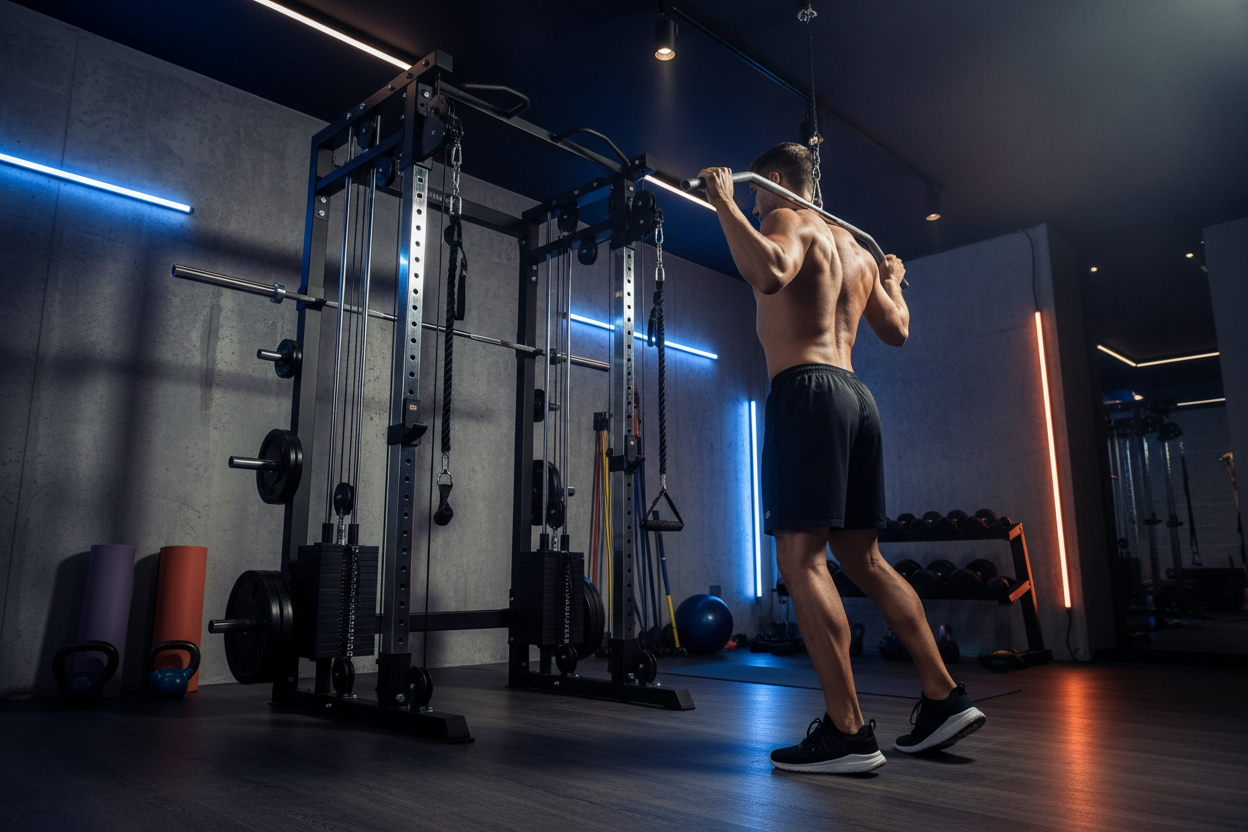
Best Pulley System for Home Gym: Why Most Get It Wrong
If you recently transitioned from a commercial facility to a garage setup, you are probably missing the smooth, constant tension of a commercial cable tower. It is the one piece of equipment that dumbbells and barbells just cannot replicate. But with limited floor space and budget constraints, finding the best pulley system for home gym spaces can feel overwhelming.
Whether you are trying to isolate your triceps, hit face pulls, or build a wider back with lat pulldowns, a high-quality cable setup is a game-changer. This guide will walk you through exactly what to look for, so you can make an informed decision without wasting money on a clunky, friction-heavy rig.
Key Takeaways
- Resistance Type: Plate-loaded systems are budget-friendly, while selectorized weight stacks offer faster drop sets.
- Cable Ratio: A 2:1 ratio is ideal for functional training and flyes, whereas a 1:1 ratio is better for heavy lat pulldowns.
- Mounting Options: Choose between rack-attached, wall-mounted, or freestanding units based on your floor space.
- Material Quality: Look for nylon-coated aircraft cables and aluminum pulleys for the smoothest operation.
Decoding the Specs: What Makes a Great Cable Setup?
Before you invest in the best home gym pulley system, you need to understand the mechanics that separate a premium machine from a frustrating, jerky one.
Weight Stacks vs. Plate-Loaded
Plate-loaded systems utilize the Olympic weight plates you already own. They are incredibly cost-effective and take up less space. However, if you love supersets, a selectorized weight stack is the ultimate luxury. It allows for instant weight changes, though it comes with a higher price tag.
Understanding Cable Ratios
Not all pulleys feel the same. A 1:1 ratio means if you load 100 pounds, you lift 100 pounds. This is standard for heavy lat pulldowns. A 2:1 ratio means 100 pounds of resistance feels like 50 pounds. This lighter, longer-travel setup is the best pulley system for functional movements and fast-paced accessory work.
Space Planning for Cable Machines
North American home gyms come in all shapes and sizes. Your layout dictates the ideal choice for your specific needs.
Garage vs. Basement Clearances
Freestanding functional trainers require a significant footprint. If you are in a tight basement, a wall-mounted tall pulley or a rack-attached system is a much smarter play. Keep in mind that ceiling height is critical; you need at least 82 to 84 inches of vertical clearance to comfortably perform full-range triceps pushdowns.
From Our Gym: Honest Take
Over the last year, we have heavily tested a wall-mounted dual pulley setup in our own facility. The versatility is unmatched, and having that constant tension for isolation work completely broke my hypertrophy plateau.
That said, I have to be honest: the nylon pulleys on most mid-tier plate-loaded systems can develop a slight squeak after a few months of heavy use. I found that applying a quick spray of 100 percent silicone lubricant to the guide rods every four weeks completely eliminated the friction. Also, at 6 foot 1, I noticed that rack-mounted systems sometimes lack the height for a true, deep lat stretch. If you are tall, definitely double-check the maximum cable travel distance before buying.
Frequently Asked Questions
Is a pulley system worth it for a home gym?
Absolutely. While barbells build foundational strength, cables provide constant muscular tension throughout the entire range of motion. They are invaluable for joint-friendly isolation exercises and targeting stubborn muscle groups.
Can I attach a pulley to my existing power rack?
Yes. Many manufacturers sell rack-mounted pulley attachments designed specifically for their uprights. Just ensure the attachment matches your rack tubing dimensions (e.g., 2x3 or 3x3 inches) and pin hole sizing.
What is the weight limit I should look for?
For a dedicated home lifter, look for a plate-loaded system with a minimum weight capacity of 250 to 300 pounds. Selectorized stacks typically max out around 200 pounds per side, which is more than enough for 95 percent of cable-based exercises.