Best Foam Play Mat Explained: What to Know Before You Buy
Whether you are outfitting a cold basement for family workouts or converting a spare room into a multi-use area, protecting your subfloor—and your joints—is non-negotiable. The challenge? Finding flooring that is durable enough for bodyweight exercises and light dumbbell work, but soft enough for active kids. If you are hunting for the best foam play mat, you have likely realized that the market is flooded with cheap, easily torn options that just do not hold up.
In this guide, we break down exactly what separates high-quality EVA foam from flimsy alternatives, helping you choose a versatile foundation that works for the entire family's fitness and recreation needs.
Key Takeaways
- Density over thickness: A high-density 0.5-inch mat absorbs more impact than a squishy, low-density 1-inch mat.
- Material safety: Always prioritize EVA foam that is certified free from BPA, phthalates, and lead.
- Surface texture: A tatami or pebble grip surface prevents slipping during dynamic stretches or playtime.
- Installation prep: Leave a 1/4-inch gap near walls to account for temperature expansion in garages or basements.
Evaluating Material and Durability
When bridging the gap between a home gym and a family recreation space, the materials you choose dictate the lifespan of your flooring. You need something that resists compression over time.
Thickness vs. Density
Many buyers assume thicker is always better. However, a 1-inch mat with low density will bottom out under the weight of a bench or heavy kettlebell, leaving permanent indentations. For a hybrid space, look for high-density EVA foam between 0.5 and 0.75 inches thick. This provides ample cushioning for floor exercises and kids' activities while maintaining enough firmness for stable footing during squats.
Toxicity and Off-Gassing
If you are looking for the best playroom mats that also double as workout flooring, non-toxic certification is crucial. Lower-quality foams often emit strong chemical odors (off-gassing) for weeks. Invest in mats that clearly state they are free of formamide and heavy metals. Your lungs will thank you during those heavy breathing HIIT sessions.
Space Planning for Multi-Use Rooms
North American homes often utilize basements and garages for these hybrid setups. These environments come with unique challenges, primarily moisture and temperature fluctuations.
Interlocking Tiles vs. Folding Mats
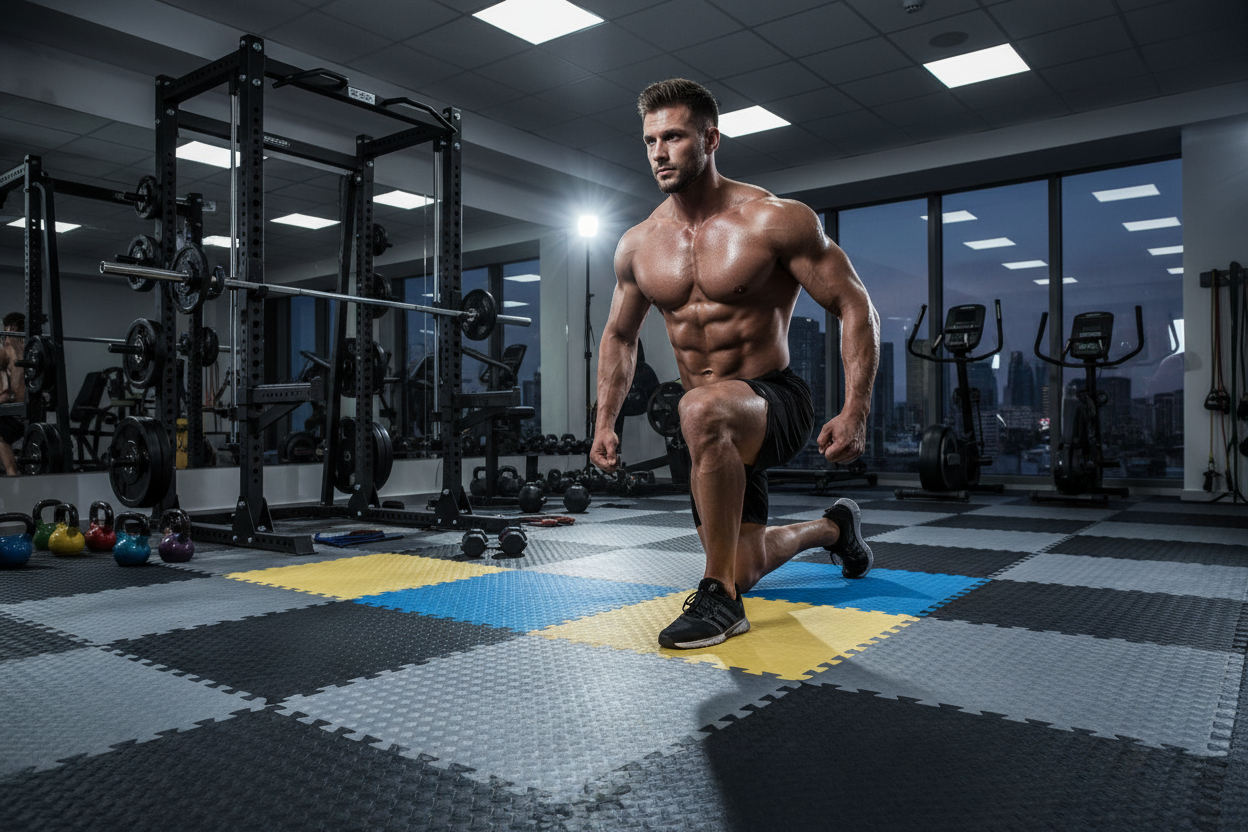
Interlocking puzzle mats are the gold standard for custom spaces. They allow you to easily navigate around support pillars or irregular room dimensions. If a single tile gets damaged by a dropped weight, you only replace that specific piece. Folding mats, on the other hand, are excellent for temporary setups in apartments where you need to reclaim your living room after a workout.
From Our Gym: Honest Take
When I converted half of my two-car garage into a hybrid training and family zone, I initially bought cheap 3/8-inch foam tiles from a big-box store. It was a mistake. Within a month, the edges began curling, and my 50-pound dumbbells left permanent craters. I upgraded to high-density, 3/4-inch commercial EVA foam tiles with a tatami texture. The difference was night and day. During my morning kettlebell flows, my grip held solid without the mat sliding beneath me. Later in the day, it provided a perfectly safe, cushioned area for the kids to roughhouse. The only caveat? High-density foam is slightly heavier to install and requires a sharp utility knife for custom wall cuts, but the long-term durability is absolutely worth the effort.
Frequently Asked Questions
Are foam play mats safe for home gyms?
Yes, provided they are high-density. While they are not meant for dropping heavy Olympic barbells (you need rubber stall mats for that), high-density foam is perfect for bodyweight training, yoga, and light free-weight exercises.
How do you clean interlocking foam mats?
Avoid harsh chemicals like bleach, which can break down the foam. Instead, use a simple mixture of warm water and mild dish soap. Wipe them down with a damp mop or cloth, and ensure they dry completely to prevent moisture buildup in the interlocking seams.
What makes the best playroom mats different from standard gym flooring?
Standard gym flooring is typically made of recycled vulcanized rubber, which is ultra-durable but can be rough on the skin and carry a strong scent. Play mats use EVA foam, which offers a softer, more skin-friendly finish and comes in brighter aesthetics while still offering decent impact absorption.