Best Exercises In Home: The Uneven Weight Strategy
I remember staring at a single 35-pound dumbbell in my cramped apartment a few years ago. I thought I needed a full rack of weights to get a decent workout. I was wrong. If you only have one dumbbell, a kettlebell, or even a heavy backpack, you actually possess the tools for the best exercises in home. The secret isn't lifting heavier; it is lifting unevenly.
Quick Takeaways
- Asymmetrical loading forces your core to work double-time to keep your spine straight.
- You can build serious strength with just one medium-weight dumbbell or kettlebell.
- Unilateral (one-sided) exercises fix muscle imbalances between your dominant and weaker sides.
- Off-balance training improves functional balance for everyday activities.
Why Asymmetrical Loading Changes Everything
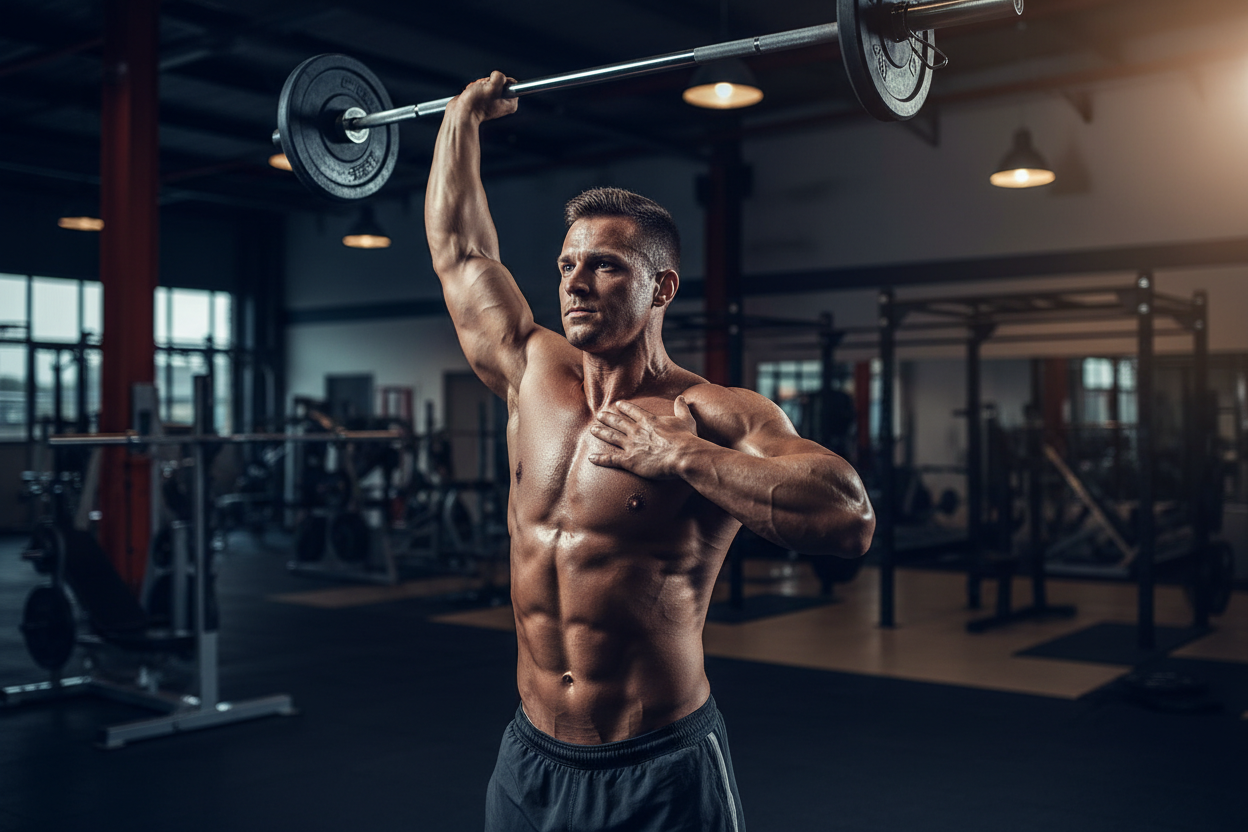
When you hold a weight on only one side of your body, gravity tries to pull you sideways. Your obliques, deep spinal erectors, and glutes have to fire aggressively just to keep you standing upright. This is called asymmetrical loading. It turns good exercises at home into intense, full-body stabilizers.
If you hold a 30-pound dumbbell in your right hand while doing a squat, your left oblique has to contract violently to prevent your torso from collapsing to the right. You are essentially getting a heavy core workout disguised as a leg day.
This approach solves the biggest problem with home workouts: lack of heavy resistance. When you cannot add more weight to the bar, you have to make the weight you do have feel heavier. Off-setting your center of gravity achieves exactly that. It is the foundation for many good exercises for at home when equipment is scarce.
Lower Body: Off-Balance Leg Builders
Training your legs with a single weight forces you to focus on form and stability. It prevents you from using momentum and ensures both legs do equal work.
The Suitcase Squat
Hold your single weight in one hand right down by your side, exactly like you are holding a suitcase. Stand with your feet shoulder-width apart and squat down until your thighs are parallel to the floor.
The challenge is keeping your shoulders perfectly level. Do not let the weighted side dip lower than the empty side. This is one of the great home exercises for building functional leg strength because it mimics how we actually pick up heavy objects in real life. Aim for 3 sets of 8 to 12 reps per side.
Contralateral Lunges
A contralateral lunge means you hold the weight in the hand opposite to the leg that is stepping forward. If your right foot steps forward into the lunge, your left hand holds the weight.
This cross-body load forces your glute medius to stabilize your hips. It prevents your front knee from caving inward. Before you dive into deep, off-balance lunges, I highly recommend doing a quick stretching workout at home to open up tight hip flexors. Tight hips combined with an uneven load can pull your lower back out of alignment.
Upper Body: Unilateral Push and Pull
Working one side of your upper body at a time is the fastest way to identify and fix strength imbalances. Most of us have a dominant pushing and pulling arm.
Uneven Floor Presses
Lie on your back with your knees bent. Hold your weight in one hand and press it up toward the ceiling. When you press with only one arm, your opposite shoulder blade has to anchor hard into the floor to keep you from rolling over.
This is much harder than a standard bilateral dumbbell press. If you are looking for effective breast exercises you can do at home, the single-arm floor press is excellent for isolating the pectoral muscles while simultaneously training shoulder stability. Keep your reps strictly controlled, lowering the weight for a 3-second count.
The Single-Arm Row
You do not need a bench for a heavy row. Stagger your stance, hinge forward at the hips, and rest your non-working forearm on your front thigh for support. Pull the weight up to your hip crease, squeezing your lat.
This is a staple among workouts that i can do at home because you can use almost anything for resistance. I have had clients use loaded water jugs, heavy toolboxes, or a single 50-pound adjustable dumbbell. The anti-rotational pull builds a thick, strong back without needing a pull-up bar.
Core Control: Anti-Rotation Mastery
Every asymmetrical lift is inherently a core exercise. However, you can target the core directly by focusing entirely on resisting rotation.
The Offset Carry
Pick up your heavy weight in one hand. Stand tall, brace your stomach, and walk slowly in a straight line for 40 to 50 feet.
This is a highly functional good home exercise. The offset carry, or single-arm farmer's walk, builds incredible grip strength, lateral core stability, and shoulder endurance. Keep your chest up and refuse to let the weight pull your posture to the side.
The Bird-Dog with Lateral Resistance
Get on your hands and knees. Extend your right arm forward and your left leg backward. Now, instead of just holding it, hold a light weight (even a soup can) in your extended hand and move it slightly out to the side.
The leverage of the weight moving laterally will try to flip you over. Resisting this twisting force builds deep spinal stability. Since you are on your knees for this, you definitely need a thick, supportive large exercise mat for home gym use to protect your joints from hard floors.
Designing Your Weekly Uneven Routine
You can easily structure these fitness training exercises at home into a balanced 3-day weekly routine. I usually program this as a full-body split done on Monday, Wednesday, and Friday.
Start your workout with the heaviest compound movement, like the suitcase squat. Move on to your upper body push (uneven floor press) and pull (single-arm row). Finish the session with your dedicated core work, like the offset carry.
Keep your rest periods around 60 to 90 seconds. Because you are working one side at a time, your cardiovascular system works continuously while the resting side recovers. It turns a standard strength session into a highly metabolic workout.
Creating a Safe Asymmetrical Workout Space
When you manipulate your center of gravity with uneven weights, your footing becomes critical. You cannot afford to slip while your spine is under an asymmetrical load.
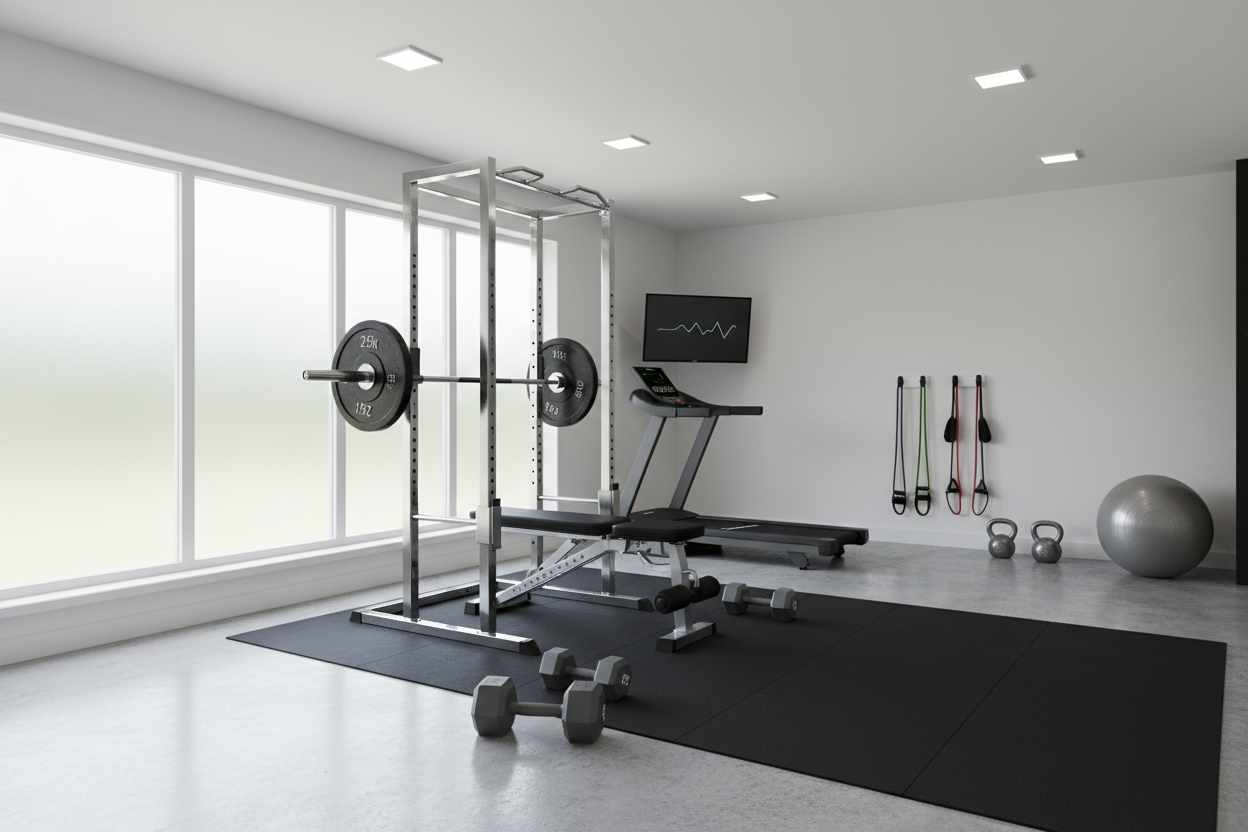
Bare floors or cheap, sliding yoga mats are dangerous when doing heavy contralateral lunges or offset carries. You need a dedicated, high-traction surface that will not bunch up under your feet. I always advise my clients to invest in a heavy-duty 6x8ft exercise mat. It provides the necessary grip to drive through your heels safely and protects your sub-flooring if you happen to drop a weight.
Trainer's Notes: My Experience with Asymmetrical Loading
Over the past five years, I have tested dozens of home gym setups. When the gyms closed a few years back, I was stuck with a single 52.5 lb adjustable dumbbell. I ran a strict asymmetrical program for 12 weeks. My core strength skyrocketed, and my persistent lower back pain vanished because I was finally training my deep stabilizers.
However, I have to be honest about one downside: grip fatigue. When you use one heavy dumbbell for suitcase squats and lunges, your grip often fails before your legs do. To get around this, I started using lifting straps for my lower body asymmetrical days, which allowed me to keep pushing my leg strength without my hands giving out.
Frequently Asked Questions
Are asymmetrical exercises safe for my lower back?
Yes, provided you start with a light weight and prioritize strict form. Resisting the uneven pull actually strengthens the muscles that protect your lower back from injury.
How much weight do I need for these exercises?
You need surprisingly little. Because the off-balance nature of the lift forces smaller stabilizing muscles to work, a 15 to 30-pound dumbbell is often plenty of resistance for most people starting out.
Should I do my weaker side first?
Always. Start your set with your non-dominant side, count the reps you achieve with perfect form, and then simply match that number on your stronger side to prevent further imbalances.