Best Exercise For Each Muscle: The Ultimate Home Gym Guide
Building a home gym is only half the battle; knowing how to use it effectively is where the real gains happen. If you find yourself staring at your power rack wondering which movements yield the highest return on investment, you aren't alone. Pinpointing the best exercise for each muscle eliminates guesswork, prevents overtraining, and ensures your home setup is delivering actual results.
This guide breaks down the optimal movements for your physique, how to program them, and the essential gear you need to execute them safely in your own space.
Key Takeaways
- Compound movements should form the foundation of your home gym routine, offering the highest return on your equipment investment.
- You don't need massive commercial machines to hit every muscle group effectively.
- A high-quality adjustable bench and a versatile barbell setup cover 90% of your biomechanical needs.
- Focusing on the best workout for every muscle reduces junk volume, saving you time and energy.
Structuring Your Home Workouts
Compound vs. Isolation Movements
When outfitting a garage or basement gym, space and budget dictate that your equipment must be versatile. Compound lifts—exercises that work multiple muscle groups simultaneously—give you the most bang for your buck. Movements like squats, deadlifts, and bench presses should make up the core of your routine, while isolation exercises can be sprinkled in using adjustable dumbbells or resistance bands to target specific weaknesses.
Essential Equipment for Full-Body Training
To execute these lifts safely, you need the right foundation. A heavy-duty power rack, a flat/incline/decline (FID) bench, and a high-capacity barbell are non-negotiable. When shopping for a rack, ensure it has a weight capacity of at least 1,000 lbs and comes with reliable safety spotter arms—crucial for pushing yourself when training alone.
Breaking Down the Optimal Movements
Upper Body Powerhouses
For the chest, the traditional Barbell Bench Press remains undisputed for overall mass, but don't sleep on the Incline Dumbbell Press for upper pectoral development. For the back, Weighted Pull-ups and Barbell Rows build incredible thickness and width. Shoulders respond exceptionally well to the standing Overhead Barbell Press, which also demands serious core stabilization.
Lower Body Foundations
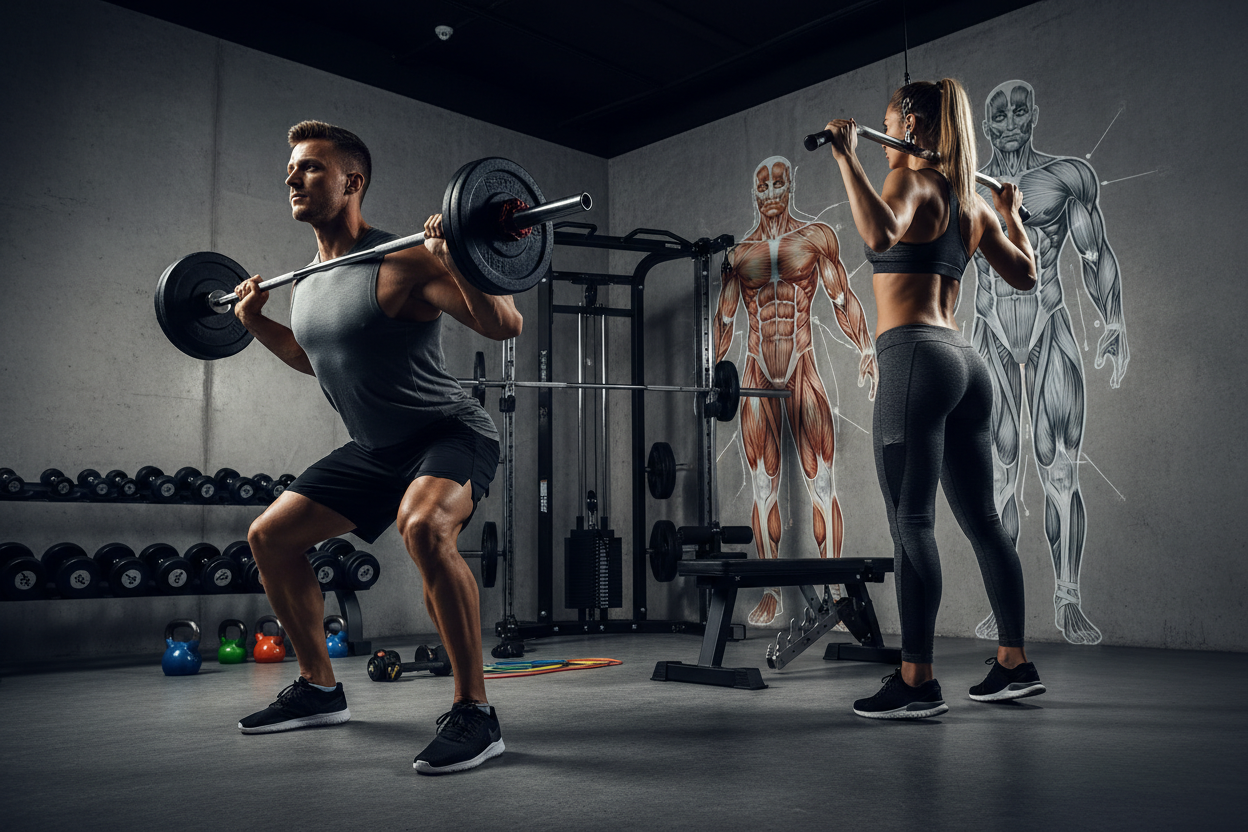
The Barbell Back Squat is often crowned the king of lower body exercises, targeting the quads, glutes, and core. For hamstrings, Romanian Deadlifts (RDLs) are unparalleled. If you have a functional trainer or a cable pulley system attached to your rack, cable pull-throughs are a fantastic low-impact finisher for the glutes.
Space Planning for Big Lifts
Clearance and Footprint
Knowing the optimal exercises is useless if you don't have the room to perform them. For overhead presses, you need to account for your height plus the radius of the bumper plates. At a minimum, a standard 8-foot ceiling is required for a 6-foot-tall lifter to press a barbell overhead safely. Additionally, ensure you have a 10x10 foot footprint for your power rack and deadlift platform to allow for adequate barbell clearance on both sides.
From Our Gym: Honest Take
I used to clutter my garage gym with single-use attachments, desperately trying to isolate every muscle fiber like I was in a commercial facility. It wasn't until I stripped my routine back to the absolute basics that my training took off. When testing our latest cerakote power bar, I committed to strict overhead presses and heavy RDLs for 12 weeks. The aggressive knurling held my chalked grip perfectly during 400lb sets, and I quickly realized you don't need a massive cable crossover machine to build a complete physique. Just a rack, a reliable bar, and consistent execution. The only caveat? If you are doing heavy RDLs at home, invest in high-density drop pads—your concrete foundation (and your neighbors) will thank you.
Frequently Asked Questions
Can I hit every muscle with just dumbbells?
Yes. While a barbell allows for heavier absolute loads, a heavy set of adjustable dumbbells can provide an incredible stimulus for every muscle group, especially if you focus on unilateral (one-sided) movements like Bulgarian split squats and single-arm rows.
How often should I train each muscle group?
For most home gym owners, training each muscle group twice a week strikes the perfect balance between stimulus and recovery. Upper/Lower splits or Full Body routines work exceptionally well in a home environment.
Do I need machines to get the best workout for every muscle?
Not at all. While machines offer guided resistance, free weights require you to stabilize the load, engaging secondary muscles and your core. A well-programmed free weight routine is more than sufficient for building elite strength and hypertrophy.