Best Exercise for Booty Growth: Movement Vector Blueprints, Tension Profiles, and Home Floor Staging
Finding the best exercise for booty growth requires understanding how muscle fibers respond to different mechanical angles, loading patterns, and resistance profiles. While many routines focus solely on a single movement pattern, glute hypertrophy relies on a balance between horizontal hip extension, deep eccentric hinge stretches, and unilateral stabilization. When designing high-yield home sessions, mastering these vector profiles alongside a stable, floor-protective training setup creates an ideal environment for progressive overload.
Understanding Glute Hypertrophy Mechanics: Tension Profiles and Vector Planes
Gluteal musculature functions across multiple planes of motion. Developing strength and muscle volume across the gluteus maximus, medius, and minimus involves applying progressive resistance across both shortened and lengthened muscle positions.
Horizontal Vector Tension: Shortened-Range Loading
Horizontal hip extension movements direct the primary line of resistance perpendicular to the torso when the hips reach full extension. In this top position, the gluteus maximus enters its fully shortened state under peak muscular contraction. Exercises utilizing this vector emphasize continuous tension at lockout without requiring an extreme stretch at the bottom of the movement.
Vertical and Diagonal Vector Tension: Lengthened-Range Loading
Vertical and diagonal vector movements place the greatest mechanical tension on the glutes when the hip joint is deeply flexed. As the pelvis tilts backward during squats, lunges, and hinge variations, the glute fibers stretch under load. This lengthened-range tension stimulates fiber recruitment through a wide range of joint motion, making it an essential complement to horizontal bridging movements.
The Core Movement Contenders: Comparing Primary Glute Exercises
Identifying the single best movement often comes down to individual biomechanics, joint comfort, and setup feasibility. Comparing the primary contenders highlights how each contributes to balanced lower-body development. Trainees seeking deeper biomechanical breakdowns can reference our exercise booty growth guide to understand how different movement patterns interact.
The Barbell or Dumbbell Hip Thrust: Peak Extension Dominance
The hip thrust is widely recognized as a premier choice for direct glute recruitment. By placing the upper back against a stable bench and driving the hips upward against gravity, the movement creates maximum mechanical tension right at terminal hip extension. Key execution cues include maintaining a neutral chin position, bracing the core, and rotating the pelvis slightly rearward at the top to prevent lower-back hyperextension.
The Romanian Deadlift (RDL): Posterior Chain Integration
The Romanian deadlift serves as the benchmark lengthened-position hinge. By maintaining a soft knee bend and pushing the hips straight back, trainees transfer load directly into the glutes and upper hamstrings. The movement requires strict spinal control and deliberate pacing during the lowering phase to ensure tension remains concentrated in the posterior chain rather than drifting into the lumbar spine.
Unilateral Variations: Bulgarian Split Squats and Step-Ups
Unilateral exercises introduce diagonal vectors and rotational stability demands. Elevating the rear foot in a split squat or driving through a sturdy platform during step-ups forces the gluteus medius to stabilize the pelvis while the gluteus maximus powers hip extension. This single-leg focus eliminates strength imbalances between sides and promotes balanced development.
Structuring the Best Workouts to Grow Booty at Home
Executing the best workouts to grow booty at home requires structured programming rather than random exercise selection. Organizing movements by stability demands, joint stress, and tension profiles ensures productive training sessions.
Exercise Sequencing Framework: Heavy Compounds to Targeted Burnouts
A balanced lower-body session generally follows a clear hierarchy:
- Primary Shortened-Range Compound: Begin with heavy barbell or dumbbell hip thrusts when central nervous system energy and stability are highest.
- Secondary Lengthened-Range Compound: Follow with Romanian deadlifts or deep squats to load the musculature through a full stretch.
- Unilateral Strength Movement: Transition to Bulgarian split squats, reverse lunges, or step-ups to target side-to-side symmetry.
- Isolation and Abduction Finisher: Conclude with seated band abductions, cable kickbacks, or side-lying leg raises to thoroughly fatigue the gluteus medius.
Weekly Split Architectures and Recovery Windows
Structuring training frequency across the week allows muscle tissue adequate time to adapt. Many lifters find success with dedicated lower-body days separated by 48 to 72 hours of recovery, or by integrating moderate-volume lower-body movements into full-body training splits. Prioritizing structured recovery between loaded sessions supports consistent effort and training consistency over time.
Home Gym Floor Staging: Equipment Placement, Footing, and Subfloor Protection
Heavy hip thrusts, deadlifts, and wide-stance lunges exert concentrated pressure on residential floors. Setting up an anchored, protective base is essential for stability and property preservation.
Anchoring Thrust Benches and Mitigating Subfloor Impact
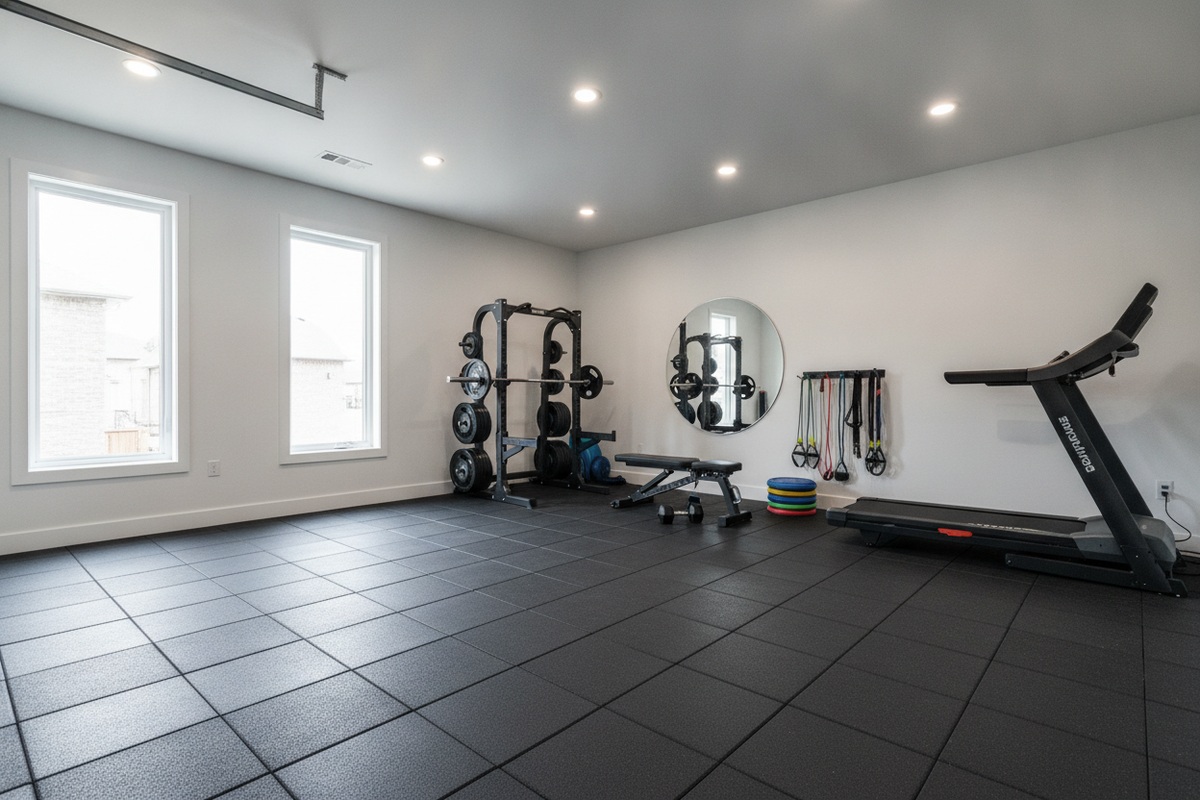
A common issue during loaded hip thrusts is backward bench slide. Setting your bench on a high-density, non-skid surface keeps the backrest securely in place when driving heavy loads upward. Setting up a dedicated base like the 6x10ft exercise mat yoga mat gym flooring for home workout creates ample surface area to anchor your bench, position heavy dumbbells or barbells, and protect hardwood or tile subfloors from point-load damage.
Slip-Resistant Grounding for Wide-Stance and Unilateral Movements
Dynamic lower-body training requires reliable traction beneath your footwear. In movements such as sumo squats, lateral lunges, and split squats, foot slippage compromises form and reduces power transfer. Staging your workout zone on a dedicated large exercise mat provides the grip needed to generate outward floor torque and maintain foot positioning through every repetition.
Gym Mat Care, Layout Optimization, and Long-Term Maintenance
Keeping your home workout floor in top condition supports hygiene and long-term durability. Trainees exploring our full exercise collection can optimize their training space by maintaining simple routine care habits:
- Sweat Management: Wipe down mat surfaces with a mild, non-abrasive detergent and damp microfiber towel after intense sessions to prevent moisture accumulation.
- Debris Clearing: Sweep the subfloor before laying down rollable mats to prevent trapped grit from pressing into delicate floor finishes beneath.
- Proper Storage: When not in continuous use, store rolled mats vertically with storage straps to keep edges flat and prevent permanent creases.
Frequently Asked Questions About Glute Training and Home Setups
Can you achieve noticeable glute growth using only home equipment?
Yes. By applying progressive overload through added resistance, increased repetitions, controlled tempo, and challenging unilateral variations like Bulgarian split squats, you can effectively train glute musculature with dumbbells, resistance bands, and a sturdy bench.
How often should you train glutes each week?
Most programming structures recommend training the glutes two to three times per week. Distributing volume across multiple sessions allows you to train with higher movement quality while providing sufficient recovery time between workouts.
What is the most common mistake during hip thrusts?
The most frequent error is hyperextending the lower back at the top of the movement. Keeping the ribs pulled down, maintaining a neutral neck, and focusing on posterior pelvic tilt ensures that mechanical tension remains focused entirely on the glutes.