
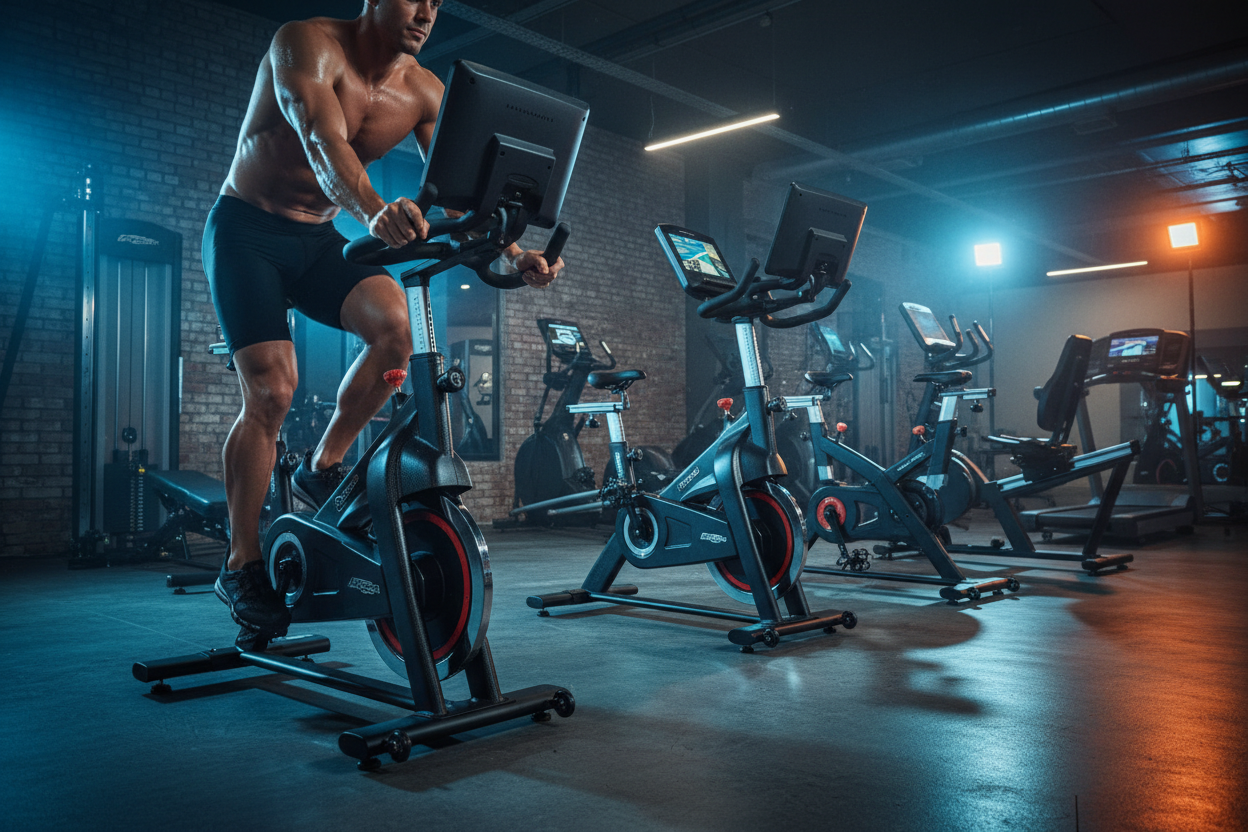
Best Commercial Exercise Bikes: What to Know Before You Buy
If you have ever pushed hard through a sprint interval only to feel your budget stationary bike wobble beneath you, you know the frustration. Cheap home cardio equipment often means noisy chain drives, inconsistent resistance, and a frame that feels like it might snap under heavy load. If you are serious about your indoor cycling, upgrading to the best commercial exercise bikes is a game-changer.
This guide breaks down exactly what separates a true studio-grade cycle from a flimsy home model, helping you make an investment that will outlast your toughest training blocks.
Key Takeaways
- Magnetic Resistance is King: Look for magnetic resistance over friction pads for a silent, maintenance-free ride.
- Heavier Flywheels Matter: A perimeter-weighted flywheel (typically 30-50 lbs) ensures a smooth, road-like pedal stroke.
- Micro-Adjustability: Commercial frames offer four-way adjustability (seat and handlebars) to fit multiple users perfectly.
- High Weight Capacities: True commercial bikes support 300 to 350+ pounds, indicating a thicker, reinforced steel frame.
What Separates True Commercial Quality?
When you step into a high-end spin studio, the bikes feel planted. That stability does not happen by accident; it is the result of over-engineered components designed to handle thousands of hours of abuse.
Resistance Mechanisms and Flywheels
Entry-level bikes often rely on felt pads for friction resistance. While cheap, they wear out, create dust, and require constant lubrication. The top commercial models utilize eddy current magnetic resistance. This system uses magnets that move closer to or further from a metal flywheel to create drag. Because nothing physically touches the wheel, it is virtually silent and never wears out.
Built to Last: Durability and Maintenance
A major reason people seek out the best commercial exercise bike for their home is the buy-once, cry-once mentality. You want a machine that requires minimal upkeep.
Drive Belts vs. Chains
Commercial bikes have almost entirely transitioned from chain drives to Poly-V or Kevlar belts. Chains require regular oiling and tensioning, and they sound like a lawnmower in a quiet basement. A high-quality belt drive requires zero maintenance and offers a completely silent, buttery-smooth pedal stroke.
Fitting Commercial Gear in Your Home Gym
One oversight many buyers make is underestimating the sheer mass of commercial equipment. While the footprint of a studio bike is relatively compact—usually around 4 feet long by 2 feet wide—the weight is a different story.
Footprint and Power Requirements
These bikes often weigh upwards of 130 pounds. If you are putting one in a spare bedroom or an upstairs apartment, ensure you have a heavy-duty equipment mat to protect your floors from both the weight and corrosive sweat. Additionally, check if the bike's console is self-powered (via your pedaling) or if it requires a dedicated wall outlet, which will dictate where you can place it in your garage gym.
From Our Gym: Honest Take
We recently spent six months testing a flagship commercial studio bike in our uninsulated warehouse gym. The build quality was immediately apparent. The four-way aluminum seat posts did not rust despite the humid environment, and the magnetic resistance held up perfectly to daily HIIT intervals.
However, there is a minor catch. Because it is a true commercial unit, it is incredibly heavy. Moving it around the gym floor by myself to make room for deadlifts was a chore, even with the front transport wheels. Also, the built-in monitor is basic compared to the giant touchscreens on modern consumer bikes. But if you value indestructible build quality over flashy tablet screens, a commercial unit is absolutely the way to go.
Frequently Asked Questions
Is a commercial exercise bike worth it for a home gym?
Yes, especially if multiple people will use it or if you ride more than three times a week. The upgraded ergonomics, silent operation, and zero-maintenance drivetrain make it a superior long-term investment.
How much space do I need for a commercial indoor cycle?
Most bikes require a footprint of about 48 inches by 24 inches. However, you should leave at least 24 inches of clearance on all sides for safe mounting, dismounting, and adequate ventilation during intense rides.
What is the average weight limit on a commercial bike?
True commercial models typically support between 300 and 350 pounds. This high weight capacity is a direct indicator of the frame's structural integrity and the quality of the bottom bracket bearings.

