Beginners Workout Schedule At Home: The Energy-Tier Method
I have seen it a hundred times. A new client sets up their living room space, buys a shiny set of 5-52.5 lb adjustable dumbbells, and prints out a rigid 5-day-a-week calendar. By Wednesday of week two, they miss a session because the toddler got sick or work ran late. Guilt sets in, and the whole program goes in the trash. Finding a beginners workout schedule at home that actually sticks requires throwing away the calendar. Instead, I teach my clients the Energy-Tier method.
When you train in your living room or garage, the boundaries between daily life stress and workout time blur. You cannot rely on the motivation of driving to a commercial facility. You need a system that flexes with your unpredictable life, not one that punishes you for it.
Quick Takeaways
- Ditch the rigid Monday/Wednesday/Friday calendar for daily auto-regulation.
- Categorize your days into Green (High), Yellow (Medium), and Red (Low) energy levels.
- Focus on heavy compound movements only on Green Days.
- Use Yellow Days for mobility flows and active recovery to keep the habit alive.
- Treat Red Days as strategic rest, critical for central nervous system recovery.
Why Traditional Home Workout Calendars Fail Beginners
Most standard programs dictate exactly what you should do on specific days. Monday is leg day. Tuesday is upper body. But life does not care about your spreadsheet. When you force a heavy squat session on a day when you slept four hours, your form breaks down. You risk tweaking your lower back, and frankly, the session feels miserable.
A successful workout plan for beginner at home must account for daily life stress. Stress is cumulative. Your central nervous system does not differentiate between a heavy set of deadlifts and a screaming match with your boss. If your stress bucket is overflowing from work and life, adding maximum physical exertion is a recipe for burnout.
The rigid calendar creates a pass/fail dynamic. Miss a day, and you feel like a failure. This all-or-nothing mindset is the number one reason beginners quit before the 30-day mark. You need a schedule that adapts to your actual physiological state.
The Energy-Tier Concept Explained
Instead of asking, "What day is it?" I want you to ask, "How is my battery today?" This is called auto-regulation. It is a technique professional athletes use to adjust their training based on their daily physical and mental readiness. We adapt this for the home gym by using three simple tiers: Green, Yellow, and Red.
A Green Day means you slept well, your nutrition is on point, and you feel mentally sharp. This is when you push the intensity. A Yellow Day means you are tired, a bit stiff, or mentally drained. You still move, but you drop the intensity. A Red Day means you are completely exhausted, sick, or dealing with extreme life stress. You rest. Completely.
By categorizing your days, you remove the guilt of skipping a heavy session when you are exhausted. You are not failing; you are simply executing a Yellow or Red day protocol. Once you master this fluid approach, you might look into a more structured workout schedule for beginners to slowly scale your frequency. But for the first three months, the Energy-Tier method is your safety net.
Building Your 'Green Day' Strength Routine
When you wake up feeling like a 10 out of 10, it is time to capitalize. Green Days are reserved for your core resistance training protocol. Because you are training at home, you need to maximize your effort on compound movements that recruit multiple muscle groups at once. You want to aim for 3 to 4 sets of 8 to 12 repetitions for each exercise. Rest for a full 90 seconds between sets. Do not rush.
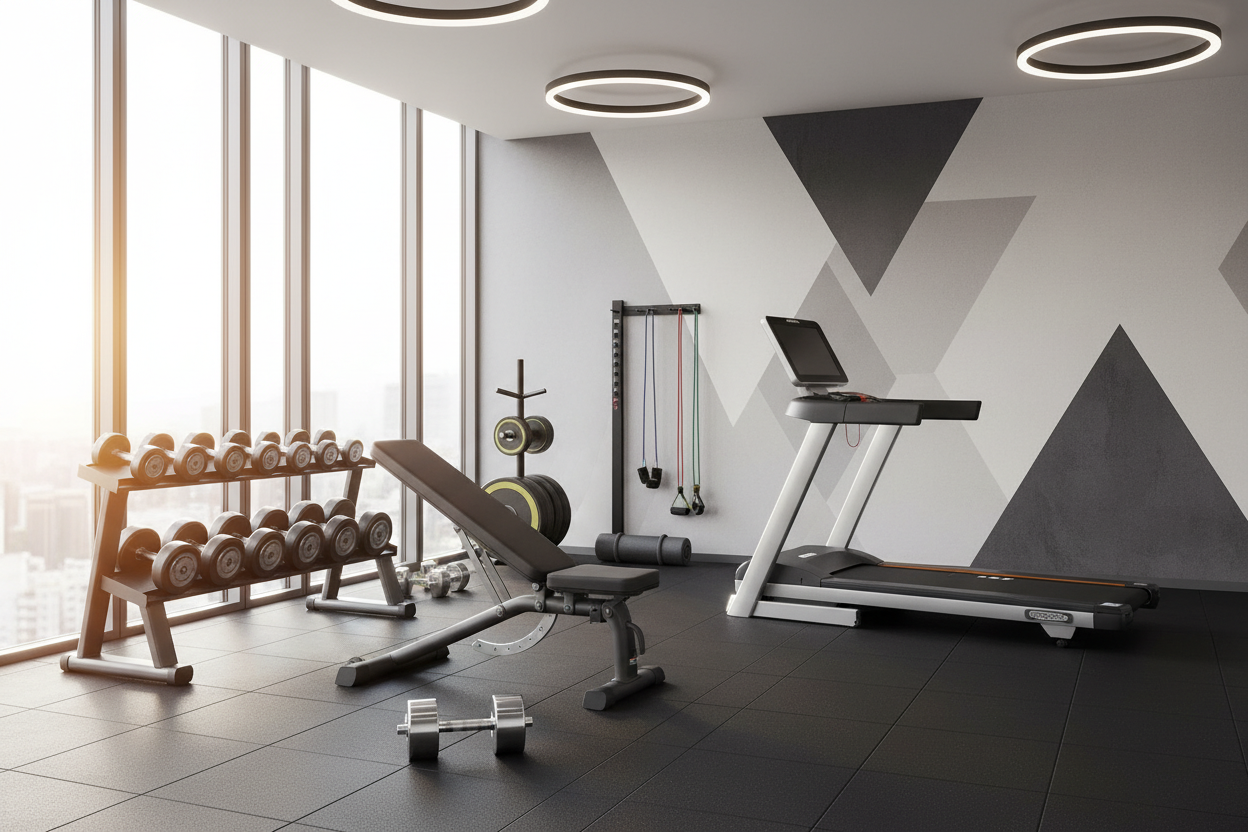
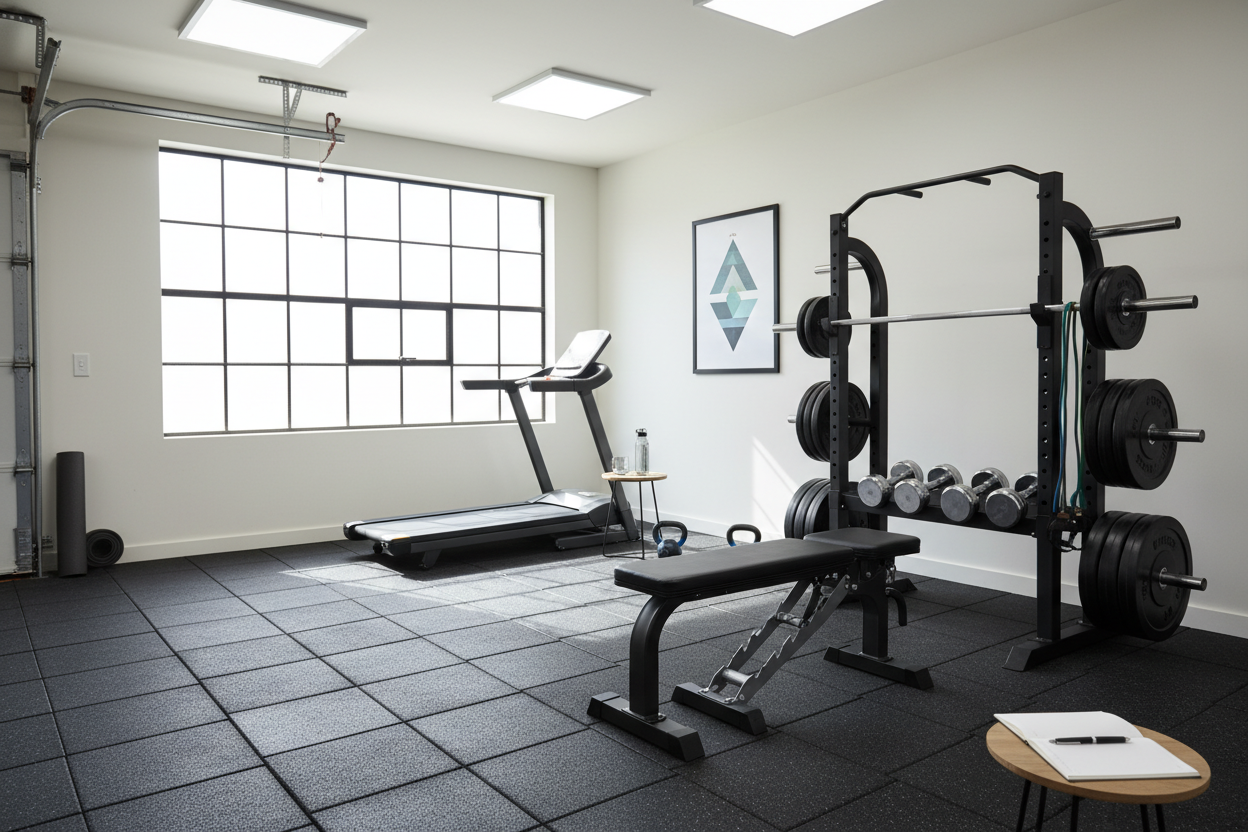
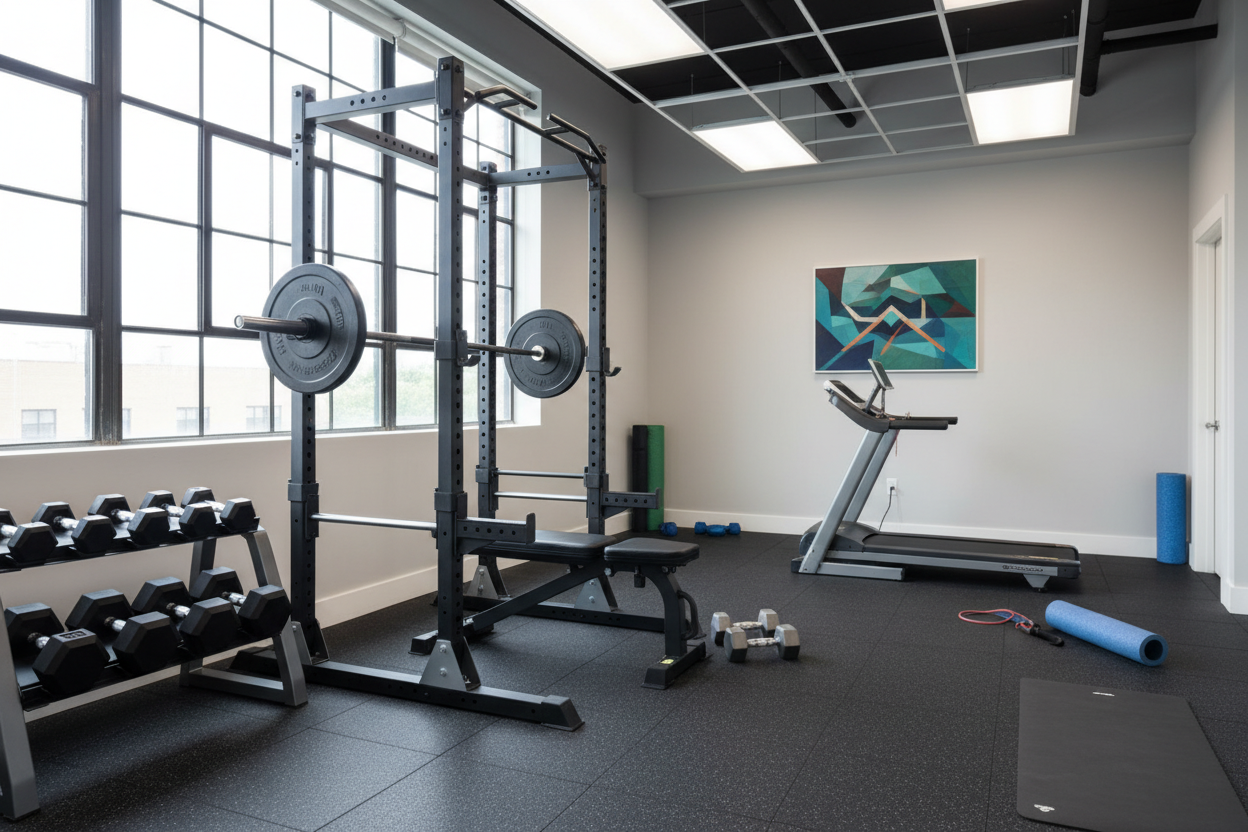
Heavy lifting requires stability. Trying to do reverse lunges on a slippery hardwood floor or a squishy 10mm yoga mat is going to ruin your mechanics. I always tell my clients to invest in proper 6x8ft gym flooring for home workouts. The dense rubber or high-density foam provides the necessary joint support and traction to push heavy weights safely. It also dampens the noise, so you are not waking up the whole house when you set down a 30-pound dumbbell.
Essential Movements for High-Energy Days
Keep your Green Day exercise selection simple. You need a squat variation, a pushing movement, and a pulling movement. For squats, grab your heaviest dumbbell or kettlebell and perform Goblet Squats. Keep your chest tall and sink until your elbows track inside your knees.
For your push, strict push-ups or floor presses work perfectly. If you want to isolate the deltoids after your main chest work, I highly recommend integrating a zero equipment shoulder workout module to finish off the upper body.
For the pull, bent-over dumbbell rows or inverted bodyweight rows using a sturdy table or suspension straps will target your lats and rhomboids. Execute these three or four movements with maximum focus. A Green Day session should only take 35 to 45 minutes.
Designing Your 'Yellow Day' Mobility Flow
Not every day can be a Green Day. In fact, most days for a busy adult fall into the Yellow category. You slept okay, but your lower back is tight from sitting at a desk, and you do not have the mental bandwidth to lift heavy. This is where the mobility flow comes in.
The goal of a Yellow Day is active recovery. You want to lubricate the joints, increase blood flow, and maintain the habit of dedicating 20 minutes to your body. Since you will be spending a lot of time on the floor rolling through stretches, a large exercise mat for home gym use is a lifesaver. You need enough space to spread out without half your body hanging off the edge onto cold tile.
Focus on dynamic stretches. The World's Greatest Stretch, cat-cow transitions, and deep 90/90 hip rotations are perfect here. Move slowly and breathe deeply. You should finish a Yellow Day feeling better than when you started, not exhausted.
Handling 'Red Days': The Art of Strategic Rest
Beginners often struggle with Red Days because they feel like they are losing progress. Let me be clear: muscle is not built while you are lifting weights. Muscle is built while you are recovering on the couch.
When you wake up feeling completely drained, your central nervous system is waving a white flag. Listen to it. A Red Day requires zero structured exercise. Do not force a workout. Do not feel guilty. Use the 30 minutes you would have spent training to take a hot shower, prep a healthy meal, or simply sleep. Strategic rest is a vital component of any successful program.
Measuring Progress Without a Rigid Calendar
If you are not checking off boxes on a Monday-through-Friday calendar, how do you know if you are making progress? Change your metrics. Instead of aiming for four workouts a week, aim for a specific number of Green Days per month.
I usually challenge my beginner clients to hit eight Green Days in a 30-day period. That averages out to twice a week, but it allows for natural fluctuations in your schedule. Track your weights on those Green Days. If you used a 20-pound dumbbell for your squats last month, and you are using a 25-pound dumbbell this month, you are getting stronger.
Trainer Notes: My Experience Testing Home Setup Protocols
Over the last six years, I have helped design over 50 home gyms, ranging from cramped 10x10 bedroom corners to massive basement setups. The one thing I learned early on is that equipment does not create consistency; the environment does. I used to prescribe rigid 5-day dumbbell splits. My clients would inevitably fail.
It was not until I started testing the Energy-Tier method on myself during a particularly brutal season of 14-hour workdays that it clicked. The only downside to this auto-regulation method is that it requires radical honesty. You have to be truthful with yourself about whether it is truly a Red Day, or if you are just feeling a little lazy. But once you lock in that self-awareness, your consistency will skyrocket.
Frequently Asked Questions
How long should a Green Day workout last?
Aim for 35 to 45 minutes. Because the intensity is high and you are performing heavy compound movements, you do not need to drag the session out for an hour.
Can I have two Green Days in a row?
It is possible, but I do not recommend it for beginners. Your central nervous system needs at least 48 hours to fully recover from heavy resistance training. Follow a Green Day with a Yellow or Red Day.
Do I need heavy weights for this method to work?
You need enough resistance to challenge your muscles in the 8 to 12 rep range. A solid pair of adjustable dumbbells ranging from 5 to 52.5 lbs is usually perfect for the first year of training.