Beginners Workout Regimen: Why Patterns Matter More Than Sweat
I still remember a client, Mark, who came to me after throwing up in his cramped apartment during a popular high-intensity home video. He thought that was what fitness was supposed to be. It is not. A solid beginners workout regimen is not about leaving you in a puddle of sweat on your living room floor. It is about building physical competence.
As a personal trainer who has built and tested dozens of home gym setups, I constantly see new clients equating exhaustion with progress. They jump into complex routines with zero foundation, end up with screaming joints, and quit by week three. We need to shift the mental focus from destroying muscles to mastering movement.
If you are a training beginner, your primary goal is skill acquisition. You are teaching your nervous system how to fire correctly. Let us break down how to build a sustainable, pain-free routine based on human movement patterns.
Quick Takeaways for Your First Routine
- Focus on movement quality and motor control, not just elevating your heart rate.
- Master the five basic human movements: squat, hinge, push, pull, and carry.
- Train three non-consecutive days a week to allow adequate central nervous system recovery.
- Create a safe, high-traction home space before adding any external resistance.
Stop Chasing Sweat and Start Building Skills
The biggest mistake I see in almost every starters workout plan is the relentless pursuit of fatigue. People think that if they are not gasping for air, the workout did not count. This mindset leads to sloppy form, joint pain, and inevitable burnout.
Instead, I teach a pattern-first perspective. Think of your body like an instrument you are learning to play. You would not smash the keys on a piano until your fingers bled and call it a good practice session. You would practice scales. A comprehensive beginners workout guide should prioritize these physical scales.
When you focus on skill rather than sweat, you build a foundation of competence. You learn how to stabilize your core while your limbs move. You discover how to engage your glutes instead of straining your lower back. This approach builds functional strength that translates directly into your daily life.
A true fitness beginner program gives you the grace to practice. It allows you to rest between sets so your nervous system can recover. The goal is to perform each repetition with the exact same precision as the first. When you finish a session, you should feel energized and capable, not completely wrecked.
The 5 Foundational Patterns of Every Beginner Training Routine
Every effective beginner training routine is built on five essential human movement patterns. These are the mechanical actions your body was designed to perform. Mastering them ensures balanced muscle development and injury prevention.
First is the squat. This is simply the act of sitting down and standing back up. It targets your quads, glutes, and core. Whether you are getting out of a chair or hovering over a public toilet, you need a strong squat pattern.
Second is the hinge. This involves pushing your hips back while keeping a neutral spine, like you are shutting a car door with your glutes. It is the safest way to pick heavy things off the floor, heavily recruiting your hamstrings and lower back.
Third is the push. This covers moving objects away from your body, either horizontally (like a push-up) or vertically (like an overhead press). It builds your chest, shoulders, and triceps.
Fourth is the pull. This is pulling objects toward you, such as opening a heavy door or pulling yourself up over a ledge. Pulling patterns are crucial for counteracting the hunched posture most of us develop from sitting at desks all day.
Finally, we have the carry or brace. This is the ability to hold a heavy, awkward object while walking or simply resisting movement through your core. Think of carrying heavy grocery bags up a flight of stairs. Easy workout routines for beginners often skip this, but it is the glue that holds your functional strength together.
Why Isolation Exercises Should Wait
When establishing a workout regime for beginners, complex full-body patterns must take precedence over bicep curls and calf raises. Isolation exercises target a single muscle group across a single joint. While they have their place in advanced bodybuilding, they are an inefficient use of time for a beginner.
Compound movements teach your muscles to work together in harmony. If you prefer strict isolation because you are worried about balance, you might eventually explore a machine-only workout program for beginners. However, using free weights or bodyweight for your foundational patterns builds essential stabilizers that machines ignore.
Structuring Your First Beginners Workout Regimen
Effective workout planning for beginners does not require complicated spreadsheets or daily two-hour sessions. A reliable fitness plan beginners can stick to usually involves a simple three-day weekly schedule. Monday, Wednesday, and Friday work perfectly, giving you 48 hours of recovery between sessions.
In each session, you will perform one exercise for each of the five patterns. For example, a Monday workout might consist of bodyweight squats, glute bridges (hinge), wall push-ups (push), dumbbell rows (pull), and a farmer walk with two light dumbbells (carry). Aim for 3 sets of 8 to 10 repetitions per exercise.
Rest is critical. Take 90 seconds between each set. If you are breathing heavily, wait until you can hold a normal conversation before starting the next set. To find specific, scalable exercise variations to slot into your new pattern-based schedule, I highly recommend checking out a dedicated workout hub.
Consistency beats intensity every single time. By hitting these five patterns three times a week, you are giving your nervous system 15 opportunities to practice and refine these movements. That repetition is where the real magic of a training program for beginners happens.
Setting Up Your Practice Environment
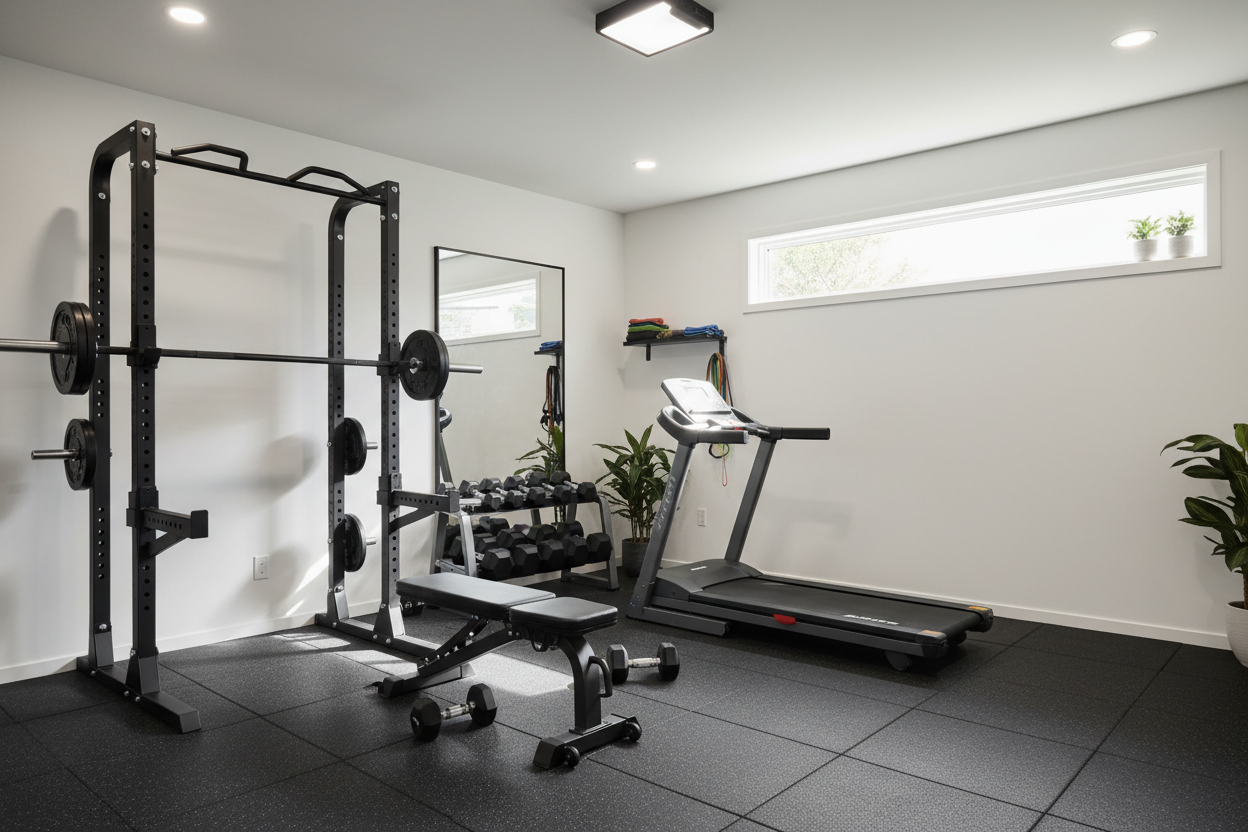
You do not need a massive garage to execute a beginner fitness program, but you do need a safe practice environment. Practicing a lunge or a push-up on a slippery hardwood floor or a plush, unstable living room rug is a recipe for a rolled ankle or a tweaked wrist.
I always have my home-based clients establish a dedicated physical zone. A high-traction surface is non-negotiable. I recommend laying down a 6x8ft exercise mat in your living room or basement. It provides enough space for all five movement patterns, protects your joints during floor work, and rolls up easily if you are in a tight space.
Progressing Your Very Beginner Workout Plan
Knowing when to make a very beginner workout plan harder is just as important as knowing how to start. You have mastered a pattern when you can perform 3 sets of 12 to 15 repetitions with absolute control, no pain, and a steady breathing tempo.
Once bodyweight feels effortless, it is time to add resistance. Start small. A single 10-pound kettlebell or a pair of 5-pound dumbbells is often enough to challenge your nervous system all over again. Workout program beginners should increase weight by no more than 5 to 10 percent per week.
Eventually, you will outgrow the light weights in your living room. Your squat will demand more load than you can comfortably hold in your hands. When that day comes, you are no longer a novice. Transitioning to a commercial facility and following a structured La Fitness workout plan becomes the logical next step to continue building strength.
Trainer Notes: The Reality of Pattern Training
Over the years, I have tested dozens of minimal home gym setups, from simple resistance bands to 5-52.5 lb adjustable dumbbells. The absolute truth is that the equipment matters far less than your dedication to the patterns. When I trained my client David in his 10x10 office space, we used nothing but a mat and a single 15 lb kettlebell for three months. He built more functional strength than guys spending two hours a day on gym machines.
I will be honest about one downside: pattern-first training can feel incredibly boring during the first few weeks. You are doing the same five movements repeatedly. There is no flashy choreography. But that repetition is exactly what builds the durable, injury-proof body you are looking for.
Frequently Asked Questions
How long should a beginner workout last?
A standard session focusing on the five movement patterns should take between 30 and 45 minutes. This includes a brief warm-up and 90-second rest periods between sets.
Will I be extremely sore after these workouts?
You will experience mild muscle soreness (DOMS) for the first week or two, but it should never be debilitating. If you cannot walk up stairs the next day, you pushed too hard.
Do I need heavy weights to see results?
Not initially. Bodyweight is more than enough resistance to master the movement patterns. Once your form is locked in, light dumbbells or kettlebells will provide plenty of stimulus for months.