Basic Workout Schedule for Beginners: Mapping Energy
I remember a client, Sarah, who worked chaotic 12-hour nursing shifts. She would get off at 7 PM, completely exhausted, but her downloaded fitness app told her it was 'Leg Day.' She pushed through twice, felt miserable, and quit by week two. If you are exhausted from trying to force rigid gym routines into an unpredictable life, you need a different approach. A basic workout schedule for beginners shouldn't dictate your life; it should adapt to your body's natural battery life.
Quick Takeaways
- Audit your weekly energy levels before touching a dumbbell.
- Map heavy compound lifts to natural high-energy peaks.
- Use low-energy valleys for active mobility and form practice.
- Keep a permanent workout space to eliminate setup friction.
- Pivot on the fly when unexpected fatigue hits to avoid quitting.
Why Traditional Monday-Wednesday-Friday Schedules Fail
Most cookie-cutter programs assume you live in a vacuum. They tell you to train Monday, Wednesday, and Friday, completely ignoring how you actually feel on those specific days. If Tuesday was a brutal day at the office and you slept four hours, forcing a heavy Wednesday session usually leads to a skipped workout.
Once you skip one day, guilt creeps in. By Friday, the entire week feels like a wash, and the program is abandoned. I see this cycle constantly with new trainees. Instead of fighting your fatigue, you need an at home workout schedule for beginners that flexes with your actual capacity.
Rigid 3-day splits ignore a beginner's nervous system recovery, which is often slower than a seasoned lifter's. When you copy a rigid template, you aren't building a habit; you are just setting a trap for yourself.
The Core Concept of Energy Mapping
Energy mapping is the process of auditing your week to identify personal high-energy, moderate-energy, and low-energy windows. Rather than assigning a workout to a day of the week, you assign a workout to an energy state.
Start by observing your current habits without trying to change them. Keep a notepad by your bed or use the notes app on your phone. For seven days, rate your energy on a scale of 1 to 10 at three points: morning, noon, and evening. You will quickly notice patterns. Maybe you discover that Thursday mornings are consistently your peak energy window because of your Wednesday night sleep schedule. Conversely, maybe Tuesday evenings are always a dead zone due to back-to-back afternoon meetings.
Once you have this data, you stop guessing. You stop trying to do heavy goblet squats on a day when your battery is at 15 percent. This biological approach respects your stress levels, digestion, and sleep hygiene. It transforms fitness from a chore you dread into an activity that actually matches your physical readiness.
Building Your Basic Workout Schedule for Beginners
Now it is time to draft your week. When looking at traditional weekly workout plans for beginners, the goal is usually three to four active days. We are going to take that same volume but float it across your energy map.
Look at your audit and circle your two highest energy windows. These are your non-negotiable strength days. Next, circle two moderate or low energy windows. These are your recovery and movement days. You now have a four-day framework that works with your life, not against it. You aren't tied to Tuesday at 6 AM. If your energy shifts, the workout simply slides to the next available matching window.
High-Energy Days: The Foundation Movements
Reserve the 1-2 days you feel absolute best for compound, full-body movements. These exercises—like squats, deadlifts, push-ups, and rows—require the most physical and mental bandwidth. Because your central nervous system is primed, you can safely push your rep ranges and focus on progressive overload.
During these peaks, grab your 5-52.5 lb adjustable dumbbells and get to work. Aim for 3 to 4 sets of 8 to 12 reps per movement. You want to maximize the time your battery is fully charged. If you need specific routines to plug into these peak days, you can explore our workout hub for structured compound sessions that give you the biggest return on investment for your effort.
Low-Energy Days: Active Mobility and Form
What happens on the days you feel completely drained? You do not skip the habit. Instead, you utilize low-energy days by focusing strictly on light stretching, mobility, or unweighted form practice. The goal here is blood flow, not muscle breakdown.
Spend 15 to 20 minutes working through deep lunges, thoracic spine rotations, and hip openers. Practice your hip hinge with a PVC pipe or broomstick to dial in your deadlift form without taxing your nervous system. By showing up and doing something incredibly low-stress, you reinforce the identity of someone who works out consistently, even when the tank is nearly empty.
Setting Up Your Environment for Fluid Scheduling
Energy mapping only works if you can strike while the iron is hot. If you have a spontaneous high-energy window but it takes 15 minutes to clear toys, move a heavy rug, and dig your weights out of a closet, the moment will pass.
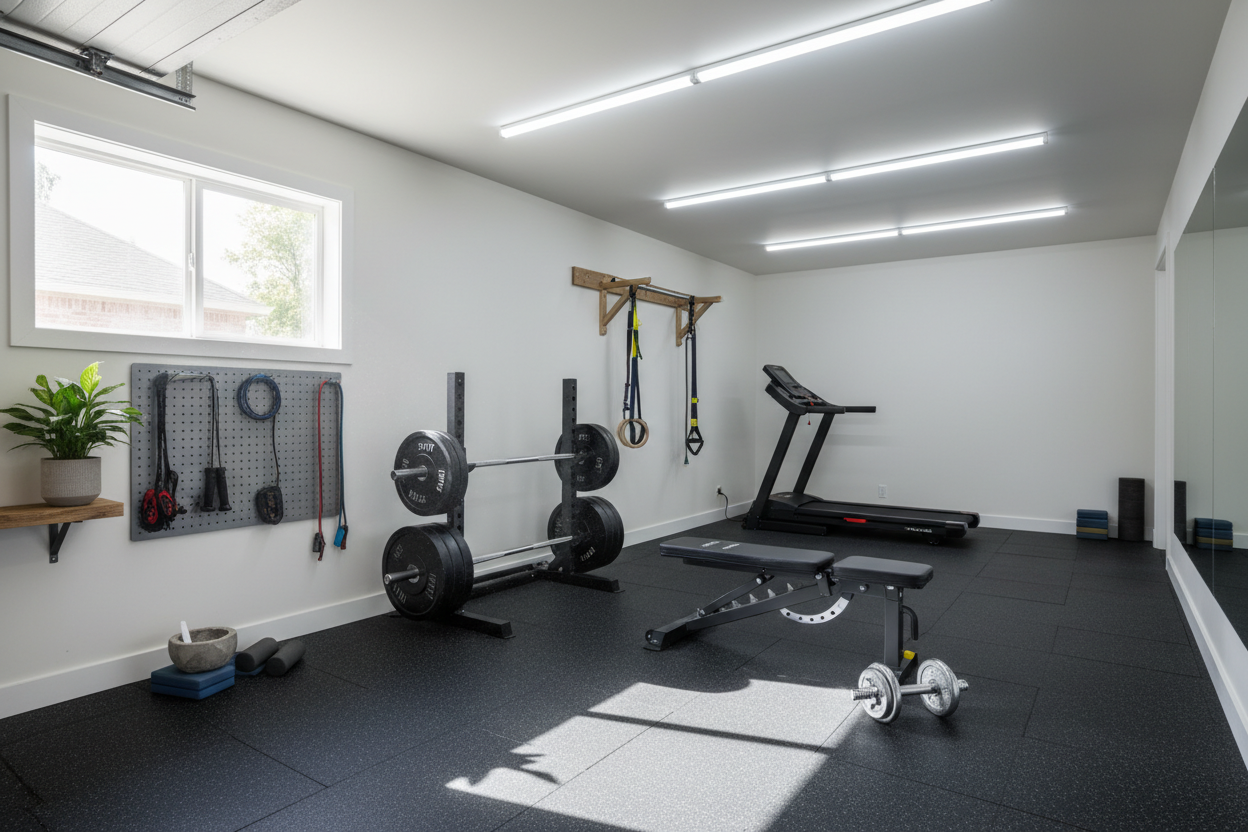
Over the years of building dozens of home gyms, I have learned that friction kills consistency. Having a permanent, dedicated workout space is critical. You need an area that is always ready. I highly recommend laying down a large, dedicated flooring solution, like a 6x8ft exercise mat for home workouts, right over your living room carpet or garage concrete.
I tested a massive high-density mat in my own 10x10 garage space last year. The one downside to heavy-duty rubberized flooring is that it initially smells a bit industrial for the first 48 hours. However, the payoff is huge. It completely deadens the sound of dropping a 30-pound dumbbell, protects your joints, and visually designates a specific zone for training. When you see the mat, your brain knows it is time to work.
Pivoting When Your Energy Suddenly Crashes
Life happens. You might have a high-energy day mapped out for Thursday, but the dog gets sick Wednesday night and you sleep three hours. When your scheduled high-energy day turns into an unexpected low-energy crash, you have to pivot.
Do not force the heavy session. Instead, swap it with a low-energy mobility day, or modify the intensity of the planned workout. Drop the weight by 50 percent, or reduce the range of motion. For instance, many home workout plans for beginners utilize partial reps or shortened ranges of motion specifically to keep the muscles engaged when full exertion is unsafe due to fatigue.
The worst thing you can do is attempt a heavy set of squats while sleep-deprived. Give yourself the grace to downshift. The flexibility of energy mapping means you can simply push the heavy session to Saturday when you have caught up on rest.
Next Steps to Solidify Your New Routine
Before you commit to a new program, take the next seven days to simply track your energy. Write down how you feel morning, noon, and night. Do not lift a single weight yet.
Once you understand your natural biological rhythms, you can map out a schedule that actually fits your life. By matching your hardest workouts to your highest peaks, you will build a sustainable, frustration-free routine that lasts long past the first few weeks.
Frequently Asked Questions
How long should a beginner workout last?
If you are mapping to your energy peaks, a solid beginner workout only needs to last 30 to 45 minutes. Focus on high-quality compound movements rather than dragging the session out for two hours.
Can I work out every day if I map my energy?
While you can do light mobility or stretching daily, beginners should avoid heavy lifting every day. Your central nervous system needs 48 hours to recover from high-energy compound sessions.
What if I never have high-energy days?
If your audit reveals constant low energy, focus entirely on 15-minute mobility and bodyweight form practice while addressing the root causes, such as sleep deprivation, dehydration, or high stress levels.