Basement Gym Flooring Explained: Don't Ruin Your Subfloor
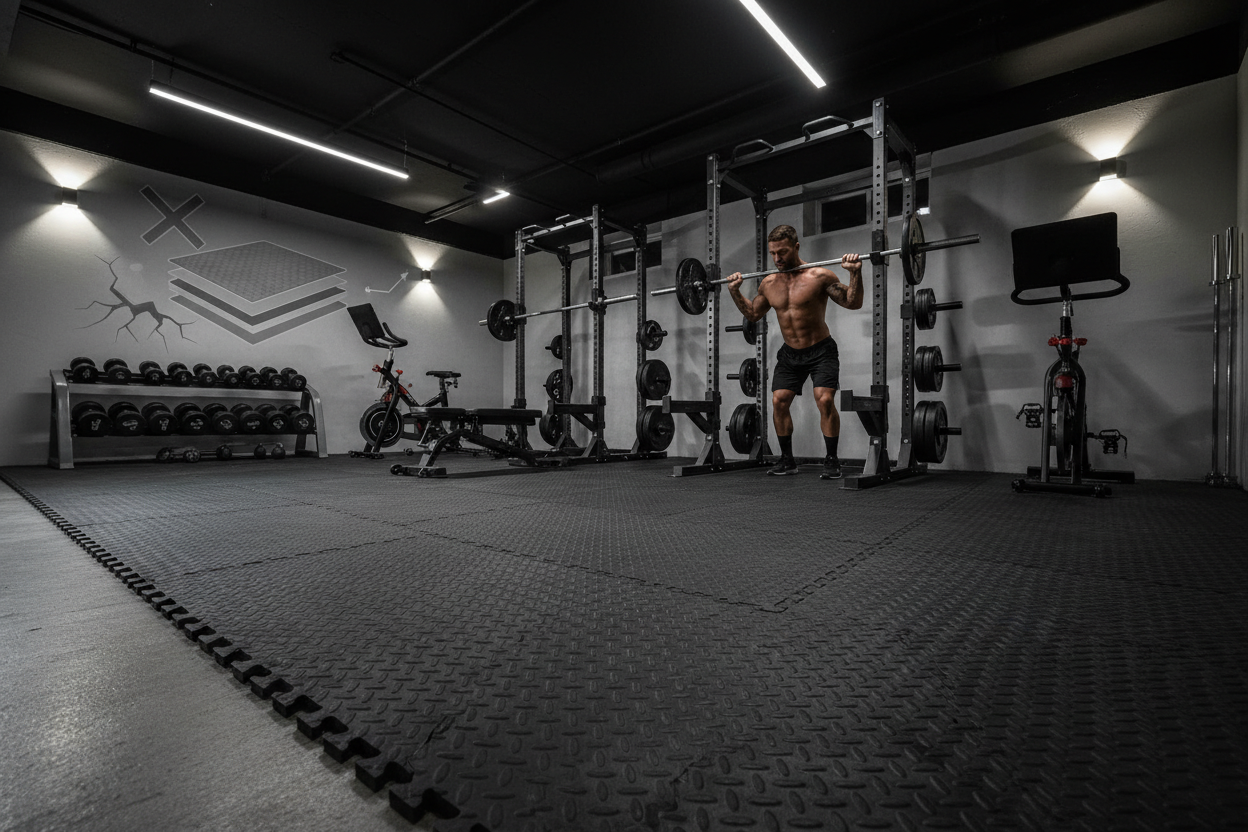
Building a home gym is exciting, but nothing kills that excitement faster than dropping a heavy dumbbell and hearing the sickening crack of your concrete foundation. If you are setting up your iron paradise underground, choosing the right basement gym flooring is the most critical decision you will make.
It is not just about aesthetics; it is about protecting your equipment, your joints, and your home's structural integrity. In this guide, we will break down the materials, thickness requirements, and moisture-control tactics you need to build a foundation that lasts.
Key Takeaways
- Thickness matters: Aim for at least 3/8-inch rubber for general use, and 3/4-inch for heavy lifting areas.
- Skip the foam: EVA foam compresses under heavy racks and poses a tripping hazard. Stick to vulcanized or recycled rubber.
- Moisture is the enemy: Always assess your concrete for dampness and consider a vapor barrier before laying mats.
- Format dictates function: Rolled rubber offers a seamless look, while interlocking tiles provide easier DIY installation.
Why Your Concrete Floor Needs Protection
The Impact of Heavy Lifting
Concrete seems indestructible, but repeated impact from deadlifts, dropped dumbbells, or even a vibrating treadmill can cause micro-fractures. Quality basement workout room flooring absorbs this shock, dispersing the kinetic energy before it reaches your foundation. It also protects your expensive bumper plates and iron hex dumbbells from premature wear and tear.
Moisture and Temperature Control
North American basements are notoriously damp and cold. Raw concrete holds moisture that can quickly rust your power rack and barbells. The right flooring for basement gym setups acts as an insulating layer, keeping the space warmer during winter workouts and providing a buffer against ground moisture.
Choosing the Right Material and Format
Rubber vs. Foam
Let us settle this debate immediately: cheap EVA foam puzzle mats are for children's playrooms, not serious training. Foam compresses permanently under heavy loads, meaning your squat rack will sink and wobble. Vulcanized or recycled rubber is the gold standard for durability, offering high-impact resistance and superior grip even when you are sweating.
Rolled, Tiles, or Stall Mats?
When selecting flooring for gym in basement environments, you have three main options. Rolled rubber provides a clean, commercial look with fewer seams, but it is heavy and hard to install alone. Interlocking rubber tiles are DIY-friendly and easy to cut around support beams. Horse stall mats (typically 4x6 feet and 3/4-inch thick) offer the ultimate budget-friendly durability for heavy lifters, though they can be cumbersome to move.
From Our Gym: Honest Take
When I first built out my basement setup in Ohio, I made the classic mistake of using 1/4-inch interlocking foam mats to save a few bucks. Within three months, my power rack had punched permanent divots into the foam, and the mats separated every time I did lateral lunges.
I eventually ripped it all out and upgraded to 3/4-inch vulcanized rubber stall mats over a 6-mil plastic vapor barrier. The difference is night and day. My footing holds steady on heavy deadlifts, and dropping 315 pounds feels completely secure. One caveat: fresh rubber mats smell terrible for the first few weeks. I highly recommend scrubbing them down with a mixture of water and Simple Green, then leaving your basement windows open with a box fan running before you bolt down your equipment.
Frequently Asked Questions
How thick should gym flooring be?
For general fitness, cardio, and light dumbbells, 8mm (about 5/16-inch) to 3/8-inch rubber is sufficient. If you are doing Olympic weightlifting, heavy deadlifts, or dropping weights, you need at least 3/4-inch thickness, ideally paired with a dedicated lifting platform.
Do I need a moisture barrier under my gym floor?
If your basement has a history of dampness or if you live in a highly humid climate, yes. A simple 6-mil polyethylene plastic sheet laid over the concrete before your rubber flooring will prevent trapped moisture from causing mold or rusting the underside of your equipment.
Can I put rubber flooring directly over carpet?
It is not recommended. Placing heavy rubber mats over plush carpet creates an unstable, squishy surface that is dangerous for heavy squats and overhead presses. If you have low-pile, industrial carpet, you might get away with rigid interlocking tiles, but ripping up the carpet to expose the subfloor is always the safest bet.