Balancing Upper and Lower Chest Development for a Stronger Physique
When training the chest, athletes and fitness enthusiasts often compare the upper chest and lower chest, debating which area deserves more attention. While some prefer a big upper chest, others value a more developed lower chest. Understanding the anatomy, the role each section plays, and how to target them through focused training can help achieve a balanced and aesthetic chest.
Upper Chest vs Lower Chest – Anatomy and Function
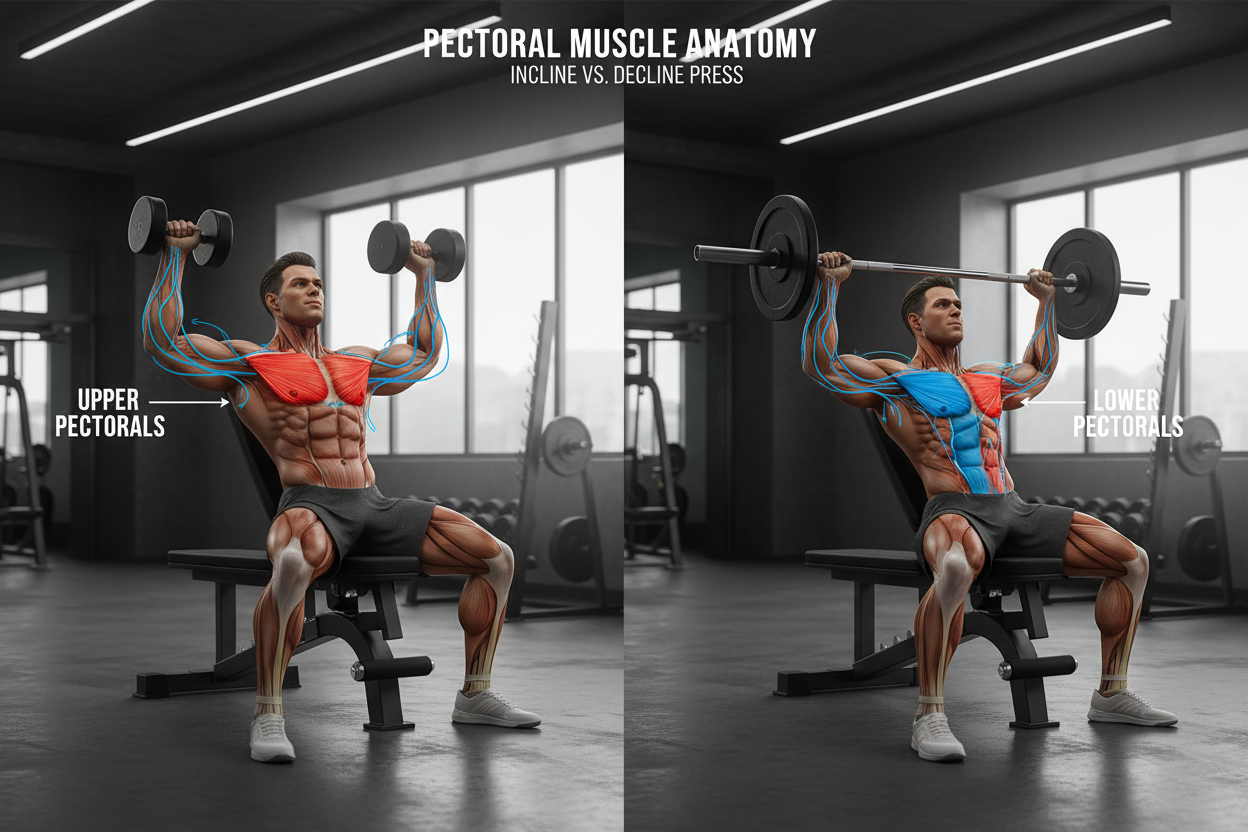
The pectoralis major is the primary muscle making up the chest. It has two main segments: the clavicular head (upper pec) and the sternal head (lower pec). The upper chest connects to the clavicle and helps with upward movement of the arm, while the lower chest is responsible for pressing movements and bringing the arm downward and inward. Targeting the upper chest and lower chest effectively requires an understanding of these muscular functions.
Is Upper Chest More Important?
For many, a small upper chest can make the torso appear less full, even if the lower and middle chest are well-developed. The upper pec plays a pivotal role in the overall shape and visual symmetry of the chest. However, saying that the upper chest is more important than the lower chest oversimplifies things — both portions contribute to strength, posture, and aesthetics. For example, a big lower chest with a small upper chest can create an imbalanced look, just as a big upper chest with a small lower chest can feel incomplete.
Common Imbalances
Some lifters find they have a lower chest bigger than upper over time, simply because standard flat bench pressing heavily engages the sternal head. Others might focus too much on incline work, ending up with an upper chest bigger than lower. Recognizing imbalances early can help you adjust your program accordingly.
Upper and Lower Chest Exercises
For balanced development, it helps to separate upper and lower chest exercises in your training week. Incline presses and incline dumbbell flyes emphasize the upper pec vs lower pec by placing your arms at an upward angle. Decline presses, dips, and cable crossovers angled downward target the lower chest and middle chest more effectively. Combining these in an upper lower chest workout routine can promote even growth.
Upper, Middle, and Lower Chest Training
An upper middle lower chest workout might look like this:
- Incline barbell press – 4 sets
- Flat dumbbell press – 3 sets
- Decline bench press – 3 sets
- Cable fly (high-to-low) – 3 sets for lower pec emphasis
- Cable fly (low-to-high) – 3 sets for upper pec emphasis
Integrating upper middle lower chest exercises ensures all fibers of the pectoral muscle are trained, reducing the risk of one part lagging behind.
Upper Chest and Lower Chest Workout Structure
Splitting them into different sessions can be useful. For example, train upper chest and lower chest workout elements on separate days, or pair the upper chest with shoulders and the lower chest with triceps. This approach allows more focused effort on each section, which can be particularly beneficial if one area is underdeveloped.
Lower vs Upper Chest – Which to Prioritize?
When deciding whether the upper or lower chest is more important, consider your goals. Aesthetic-focused trainees often prioritize the upper chest early on to avoid a small upper chest appearance. However, athletes seeking pressing strength may lean towards more lower chest and middle chest emphasis. Ideally, your plan should keep both developing at a similar rate to avoid muscle imbalance.
Personal Experience in Balancing Chest Development
Several years into training, I noticed my lower chest was significantly bigger than my upper chest. This imbalance resulted from focusing solely on flat bench movements. By incorporating incline presses twice a week and reducing decline presses temporarily, my upper chest caught up over a few months. The visual improvement was clear — my chest appeared fuller across both upper and lower areas, improving proportions and confidence.
Upper Mid Lower Chest Workout for Symmetry
For those needing uniform growth, an upper mid lower chest workout that rotates exercise angles each week can be highly effective. Alternating between incline, flat, and decline pressing, combined with angle-specific cable flyes, ensures the entire pectoral region gets stimulation. This strategy supports balanced strength and physique development over time.
Key Takeaways
- Upper pec vs lower pec differences are rooted in muscle anatomy and function.
- Both sections contribute to strength, performance, and aesthetics.
- Adjusting exercise selection based on current imbalances (big upper chest small lower chest or big lower chest small upper chest) can restore proportion.
- Consistent inclusion of varied pressing and fly movements at different angles promotes even growth across upper, middle, and lower chest.
Training with intention, observing your body’s progress, and making adjustments based on evidence will produce a balanced and proportional chest over time. Whether your goal is fullness, symmetry, or maximum performance, integrating upper and lower chest exercises strategically will be key.