Back Training Machines: What to Know Before Upgrading Your Gym
Building a thick, V-tapered back in a home gym setting often feels like a puzzle. While barbells and dumbbells are foundational, heavy free-weight rowing can put a massive toll on your lower back and central nervous system. That is exactly where dedicated back training machines come into play. Whether you are trying to replicate the premium feel of commercial back exercise equipment gym setups or simply want to isolate your lats without straining your lumbar spine, choosing the right piece of equipment is a game-changer.
In this guide, we will break down the exact specifications, space requirements, and training applications you need to consider before adding a new machine to your home training sanctuary.
Key Takeaways
- Versatility is king: Opt for combo units (like lat pulldown/low row machines) to maximize back development in a compact footprint.
- Weight capacity matters: Look for plate-loaded or selectorized machines with at least a 300-pound weight limit to ensure you do not outgrow the equipment.
- Measure your clearance: Cable-based back machines often require 80 to 90 inches of vertical clearance—always measure your ceiling height before buying.
- Chest-support saves the lower back: If lumbar fatigue is a limiting factor, prioritize chest-supported row variations.
Decoding the Types of Back Machines
When evaluating gym machines that work back, you generally have a few distinct categories to choose from. Understanding the differences will help you match the equipment to your specific hypertrophy or strength goals.
Cable-Based Pulldowns and Rows
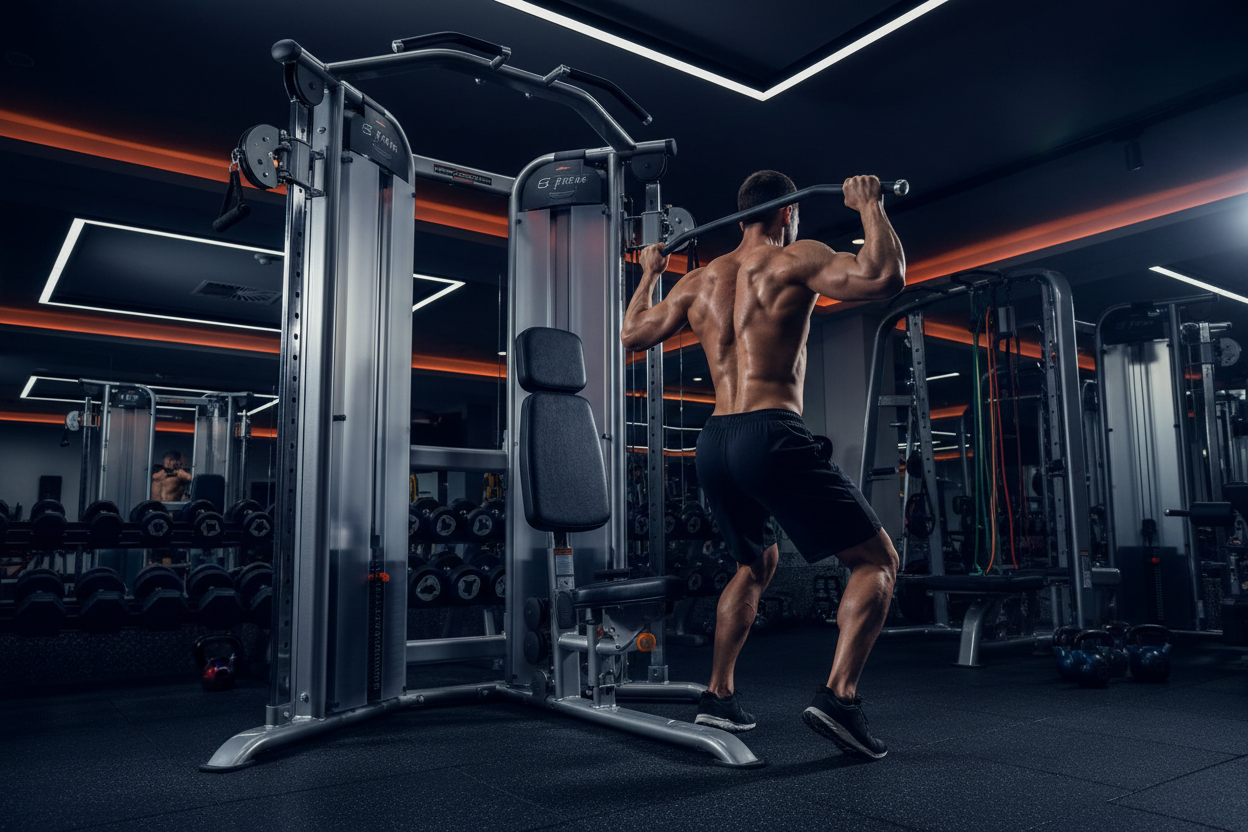
The staple of any well-equipped space is the lat pulldown and seated row combo. These types of back machines provide constant tension throughout the range of motion. Selectorized (weight stack) versions offer quick weight changes perfect for drop sets, while plate-loaded versions are typically much more budget-friendly and easier to move into a basement.
Chest-Supported Row Machines
If you are looking for the ultimate exercise equipment for upper back thickness, chest-supported T-bar rows or iso-lateral lever arms are top tier. By bracing your chest against a pad, you eliminate momentum and completely remove the lower back from the equation, allowing you to safely overload the rhomboids, traps, and lats.
Space Planning: Fitting a Home Gym Back Machine
Not everyone has a sprawling three-car garage to work with. When shopping for machines to workout back, footprint is often the ultimate deciding factor.
Garage vs. Basement Setups
For garage gyms, vertical space is usually abundant, making tall cable towers an easy fit. However, if you are setting up a basement gym, ceiling clearance is your biggest enemy. Look for compact or foldable back machine exercise equipment. A plate-loaded low row machine often has a much lower profile than a towering lat pulldown. Always account for an extra 2 to 3 feet of operating space around the machine so you can comfortably load Olympic plates and achieve a full stretch during your reps.
Optimizing Your Back Workouts
Having the gear is only half the battle; knowing how to use it dictates your results. Replicating traditional back exercises at the gym machines requires an understanding of grip and angles.
Maximizing Your Angles
To target the lats (width), utilize a neutral or underhand grip on your pulldowns, keeping your elbows tucked tight to your torso. To target the upper back and traps (thickness), use a wider, overhand grip on your rowing movements, allowing your elbows to flare out at a 45-degree angle. A single highly versatile machine can hit every muscle group simply by swapping out cable attachments.
From Our Gym: Honest Take
I have tested dozens of pieces of equipment over the last five years, and I can confidently say that not all back machines are created equal. Recently, we installed a plate-loaded lat pulldown and low row combo unit in our 400-square-foot garage facility.
The honest truth? The 1:1 cable ratio is incredibly smooth, and the diamond-knurled footplates keep me locked in during heavy low rows. However, at 6'2", I quickly realized that the knee pads on many mid-tier home models do not adjust high enough to pin my thighs down securely during max-effort pulldowns. I had to drill an extra adjustment hole in the upright to make it work. When shopping, always check the maximum user height recommendations—something most product pages conveniently bury in the fine print.
Frequently Asked Questions
Are back training machines worth the space in a home gym?
Yes, especially if you struggle with lower back fatigue from deadlifts and barbell rows. A dedicated machine allows you to isolate the lats and upper back safely, providing the necessary volume for muscle growth without systemic burnout.
What is the best exercise equipment for upper back development?
A chest-supported row machine is widely considered the best tool for upper back thickness. It isolates the rhomboids and trapezius muscles while completely supporting the spine, allowing you to train to muscular failure safely.
Can I get a complete workout with just one back machine?
Absolutely. A high-quality lat pulldown and low row combo machine allows you to perform vertical pulls (pulldowns, straight arm pulldowns) and horizontal pulls (seated rows, face pulls). By simply changing your grip attachments, you can effectively train the entire back complex.