
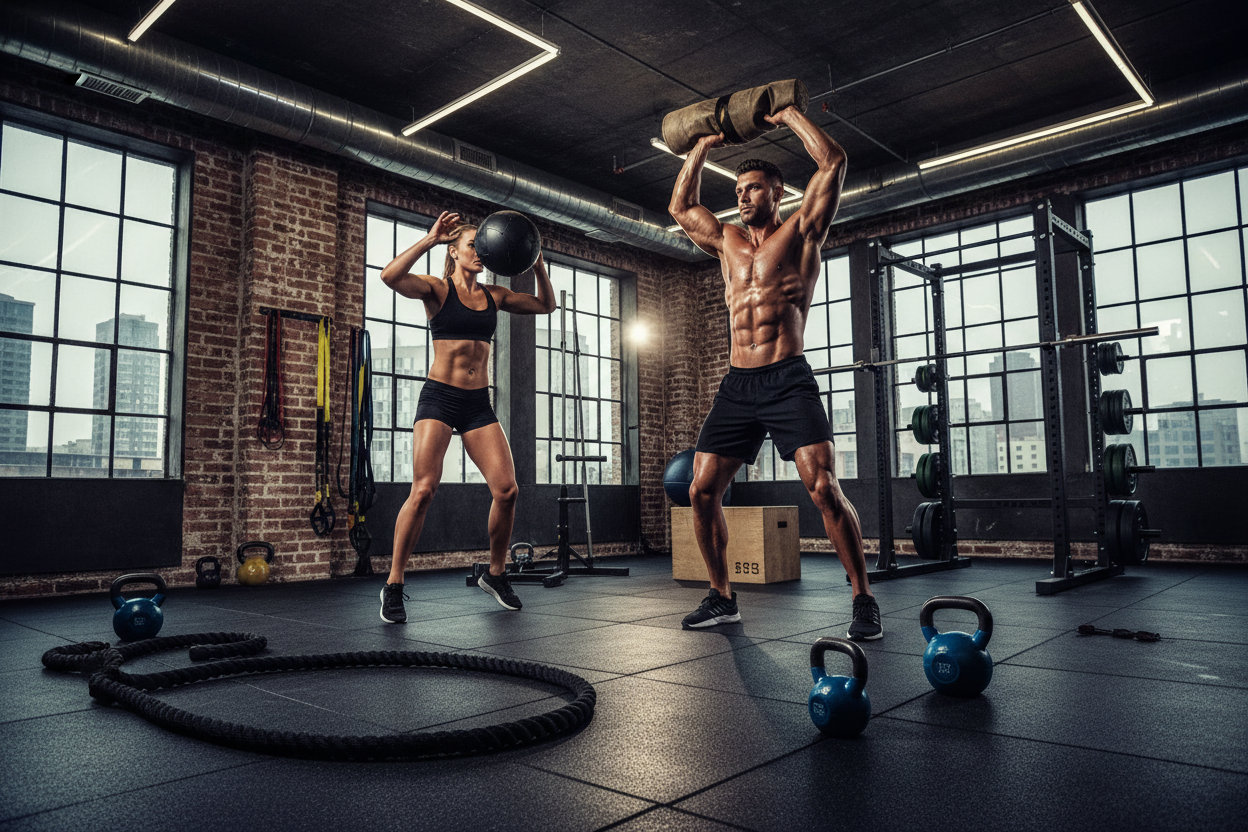
Athletic Workouts Explained: Stop Training Like a Bodybuilder
If you have spent years chasing bench press PRs or doing endless bicep curls, you might have noticed a frustrating side effect: you feel stiff, slow, and easily winded. Traditional bodybuilding splits are great for aesthetics, but they rarely translate to real-world movement and mobility. That is where athletic workouts come in.
Transitioning to the best workout for athleticism means prioritizing power, agility, and functional strength over isolated muscle pumps. In this guide, we will break down exactly what you need—both in terms of programming and home gym equipment—to start moving like an athlete again and break through your training plateaus.
Key Takeaways
- Athletic training focuses on multi-planar movements, speed, and explosive power rather than pure muscle hypertrophy.
- You do not need a commercial facility; a well-planned home gym with free weights and plyo boxes is more than enough.
- The best athlete workout blends dynamic warm-ups, plyometrics, compound strength, and metabolic conditioning.
- Adequate ceiling clearance and high-density flooring are critical when setting up your space for performance workouts.
The Anatomy of Performance Workouts
Moving Beyond Isolation Exercises
When designing a gym workout for athleticism, the goal is to train movements, not just muscles. Instead of sitting on a machine for leg extensions, you will perform exercises that require balance, core stability, and coordination. Think medicine ball throws, kettlebell swings, and lateral lunges. These performance workouts train your nervous system to fire quickly, improving your overall reaction time and functional, real-world strength.
Essential Home Gym Gear for Athleticism
What You Actually Need
You do not need bulky selectorized machines to get fast and strong. The foundation of any athletic home gym setup includes a high-quality barbell, bumper plates (essential for Olympic lifts and dropping weight safely), a sturdy plyometric box, and a set of kettlebells.
Space and Clearance Considerations
Athletic training requires movement. If you are setting up in a garage or basement, pay close attention to your ceiling height. Box jumps, overhead presses, and snatch variations typically require at least 8 to 9 feet of vertical clearance. Additionally, invest in 3/4-inch vulcanized rubber flooring. It absorbs the shock of dropped weights and provides the grip necessary for explosive agility drills without slipping.
Structuring the Best Athlete Workout
Power, Strength, and Conditioning Phases
A proper athletic session is structured differently than a standard push-pull-legs routine. You should always start with a dynamic warm-up to prep the joints. Follow this with your central nervous system (CNS) intensive work: plyometrics and power movements (like power cleans or broad jumps) while you are fresh. Next, move into your heavy compound strength block (squats, deadlifts). Finally, finish with metabolic conditioning to build the engine required for sustained performance.
From Our Gym: Honest Take
When I transitioned my own garage gym from a pure powerlifting setup to a space optimized for athletic training, I learned a hard lesson about spatial awareness. At 6'2', I quickly realized my 84-inch basement ceiling was a nightmare for overhead medicine ball slams and box jumps. I actually had to move my plyo station to the driveway during the summer months.
Also, do not skimp on your barbell's spin. I swapped my stiff power bar for a hybrid bearing bar, and the difference in my clean and jerks was night and day. The smooth rotation saved my wrists during high-velocity catches. It is a minor equipment tweak that makes a massive difference in daily use and long-term joint health.
Frequently Asked Questions
Can I do athletic workouts every day?
No. Explosive training heavily taxes your central nervous system. It is best to perform intense athletic sessions 3 to 4 times a week, allowing 48 hours of recovery between heavy CNS-demanding days.
Do I need heavy weights to build athleticism?
While heavy strength (force production) is a key component, speed and power (how fast you apply that force) are equally important. You can build incredible athleticism using moderate weights moved explosively, alongside bodyweight plyometrics.
What is the most versatile equipment for this style of training?
Kettlebells and medicine balls are unmatched for athletic conditioning. They allow for multi-planar movements, rotational core strength, and explosive throws that traditional barbells cannot safely replicate.


