Athletic Flooring Tiles: Stop Ruining Your Concrete Floors
There is nothing quite like the heart-stopping crack of a 45-pound bumper plate bouncing directly off an unprotected concrete garage floor. Whether you are battling limited space, echoing noise, or a workout plateau caused by joint pain, your foundation matters. Upgrading to high-quality athletic flooring tiles is often the most overlooked, yet most impactful, investment you can make for your home training space.
In this guide, we will break down exactly what you need to know to protect your subfloor, cushion your joints, and build a professional-grade setup without wasting money on the wrong materials.
Key Takeaways
- Thickness is crucial: Minimum 3/8-inch for general fitness; 3/4-inch for heavy barbell drops.
- Material matters: High-density vulcanized rubber vastly outperforms cheap EVA foam for durability.
- Installation is DIY-friendly: Interlocking tiles require no adhesives and can be easily reconfigured.
- Budget smart: Understanding the baseline gym floor mat price prevents overspending on commercial markup.
Choosing the Right Thickness and Material
Foam vs. Padded Rubber Flooring
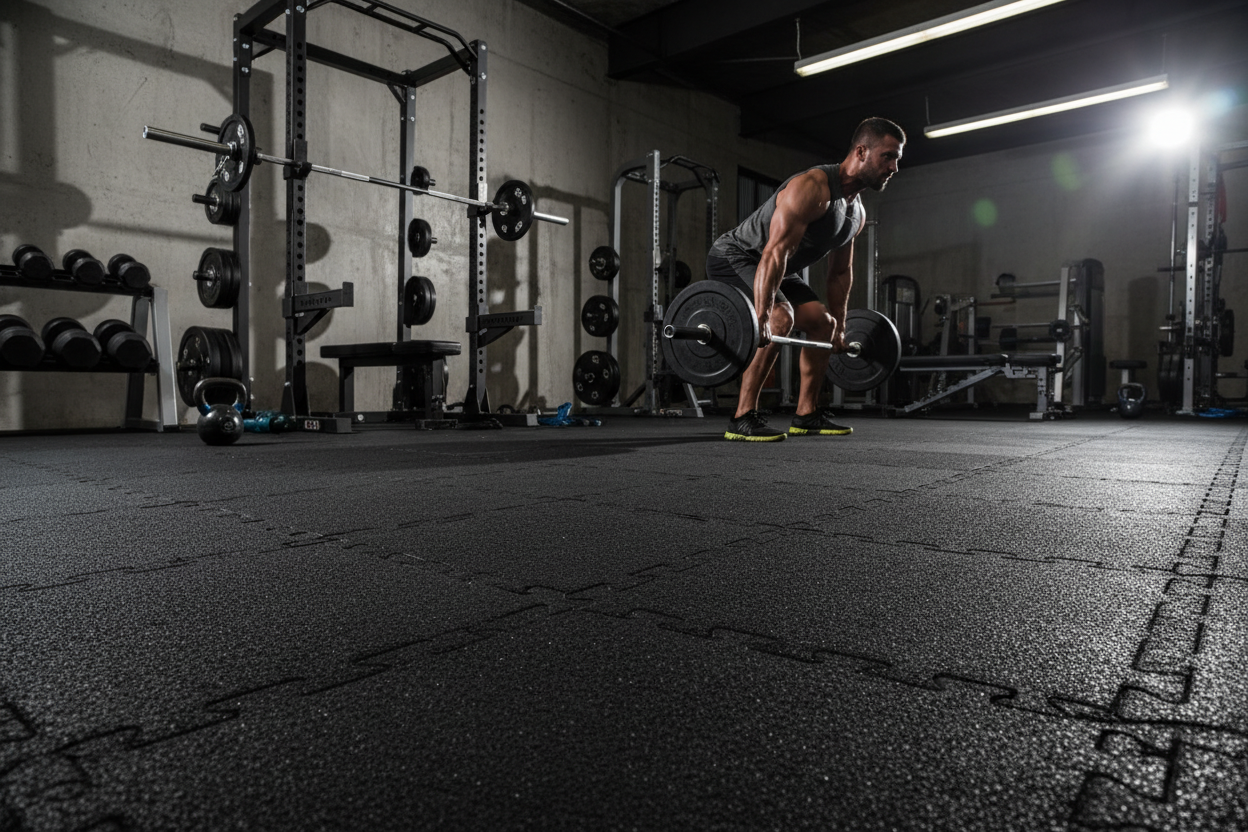
When searching for cheap rubber mats for gym setups, many beginners accidentally purchase EVA foam puzzle mats. While fine for light yoga or children's playrooms, foam compresses instantly under heavy squat racks. For true durability, you need padded rubber flooring. Dense weight room rubber tiles absorb shock, resist gouging from dumbbell drops, and provide the non-slip grip necessary for heavy lifting.
Thickness Guidelines: When to Go Heavy
Not all fitness gym flooring is created equal. If your routine consists of kettlebell swings and bodyweight HIIT, a standard 3/8-inch tile is plenty. However, if you are regularly deadlifting or practicing Olympic weightlifting, you must upgrade to thick gym mat flooring. A 3/4-inch thickness is the gold standard for heavy drop zones, ensuring your foundation (and your barbell) survives the impact.
Planning Your Gym Floor Layout
Garage and Basement Considerations
Most North American home gyms end up in garages or basements, meaning you are dealing with moisture, temperature swings, and unlevel concrete. A high-quality rubber gym floor covering acts as an excellent insulator against cold floors and dampens the acoustic echo of clanking iron. When measuring your space, always order 10% extra to account for wall-to-wall cutting and awkward corners. Interlocking tiles are ideal here because they lock together tightly without the need for messy glues.
Navigating Prices and Sourcing
Understanding the Market
It is easy to get sticker shock when outfitting a 400-square-foot garage. Evaluating the average gym floor mat price requires looking at the price per square foot rather than per tile. While you might be tempted by cheap rubber gym mats at big-box hardware stores, these often lack the density required for fitness applications. The rubber gym floor mat price typically scales with thickness and color fleck options—pure black is almost always your most cost-effective choice.
Where to Buy Rubber Gym Flooring
So, where to buy rubber gym flooring? Specialty fitness retailers and commercial flooring suppliers usually offer the best balance of quality and price. If you are hunting for the absolute best place to buy rubber gym flooring on a tight budget, tractor supply stores are famous for selling heavy-duty horse stall mats. These can be an incredible budget hack, though they often require intense scrubbing to remove manufacturing residues and strong odors.
From Our Gym: Honest Take
We recently overhauled a 300-square-foot basement testing facility using 1/2-inch interlocking rubber tiles. The installation took two of us about three hours using just a utility knife and a straight edge. What I immediately noticed was the grip—my chalked lifters felt absolutely planted during heavy squats, completely eliminating the micro-sliding I experienced on our old rolled rubber. One caveat: fresh rubber tiles do carry a distinct tire smell. We ran a dehumidifier and kept the windows cracked, and the odor faded by 90% within the first two weeks. It is a minor annoyance, but the joint relief and noise reduction are well worth it.
Frequently Asked Questions
Are interlocking athletic tiles better than rolled rubber?
For most home gym owners, yes. Interlocking tiles are much easier to transport into basements, require zero adhesive, and allow you to replace a single damaged section rather than an entire roll.
How do I clean rubber gym tiles?
Keep it simple. Vacuum weekly to remove chalk and dust. For a deeper clean, use a damp mop with a pH-neutral cleaner or a simple mix of water and mild dish soap. Avoid harsh chemicals like bleach, which can degrade the rubber over time.
Can I install heavy rubber tiles directly over carpet?
It is highly discouraged. Placing heavy rubber tiles over plush carpet creates an unstable, squishy surface that is dangerous for lifting heavy weights. If you must build over carpet, lay down a layer of rigid plywood first to create a stable subfloor.