Assisted Squat Rack Explained: What to Know Before You Buy
Building a home gym often comes with a glaring problem: how do you push your limits safely without a spotter? Nothing kills a heavy leg day faster than the very real fear of getting pinned under a loaded barbell in your own garage.
That is exactly where an assisted squat rack steps in to bridge the gap. Whether you are training alone, recovering from an injury, or simply looking to isolate your quads without the taxing demand of balancing free weights, this piece of equipment is a serious confidence booster. In this guide, we will break down exactly what you need to look for, how much space it will eat up, and whether it is truly worth your hard-earned cash.
Key Takeaways
- Unmatched Solo Safety: Built-in safety catches and guided bar paths eliminate the risk of getting trapped under heavy weight.
- Space Requirements: Most quality units require at least a 6-foot by 6-foot footprint and an 8-foot ceiling clearance.
- Hidden Versatility: Despite the name, these racks are excellent for overhead presses, shrugs, inverted rows, and calf raises.
- Maintenance Matters: Regular lubrication of the guide rods or bearings is strictly required to maintain a smooth, frictionless lift.
Buying Guide: Specs That Actually Matter
Weight Capacity & Build Quality
When shopping for an assisted squat rack, the gauge of the steel is your first indicator of quality. Entry-level racks often use 14-gauge steel, which is fine for beginners but can feel wobbly under a heavy load. If you are serious about progressive overload, look for 11-gauge steel frames with a weight capacity of at least 600 pounds. Additionally, pay attention to the glide mechanism. Cheap plastic bushings will drag and stutter; you want commercial-grade linear bearings for a buttery-smooth bar path.
Counterbalanced vs. Standard Bars
A standard bar on an assisted rack usually weighs between 30 and 45 pounds, much like an Olympic barbell. However, premium models often feature a counterbalanced system, reducing the starting weight of the bar to near zero. This is a massive advantage for physical therapy, warm-ups, or households where multiple people of varying strength levels train.
Space Planning for North American Home Gyms
Garage vs. Basement Clearances
One of the biggest mistakes home gym owners make is underestimating vertical space. The average North American basement ceiling hovers around 84 to 96 inches. Many heavy-duty assisted racks stand 82 to 90 inches tall. You must measure your floor-to-joist clearance, not just the drywall ceiling, to ensure the rack fits. For garage gyms, footprint is usually the bigger issue. Plan for a minimum of 48 inches of depth and 72 inches of width to allow enough room to load plates on the sleeves comfortably.
From Our Gym: Honest Take
We have tested dozens of racks in our facility, but moving an assisted squat rack into my personal garage gym was a revealing experience. At 6'2", I found that entry-level models with aggressively angled guide rods forced my knees awkwardly far forward during deep squats. Upgrading to a vertical, counter-balanced rack with linear bearings completely changed the game for my solo leg days. The knurling on the built-in bar is surprisingly aggressive—my chalked grip held solid through heavy split squats without slipping. One caveat, though: greasing the guide rods monthly with a silicone-based lubricant is non-negotiable. If you skip maintenance, the friction will ruin your lifting tempo.
Frequently Asked Questions
Is an assisted squat rack the same as a Smith machine?
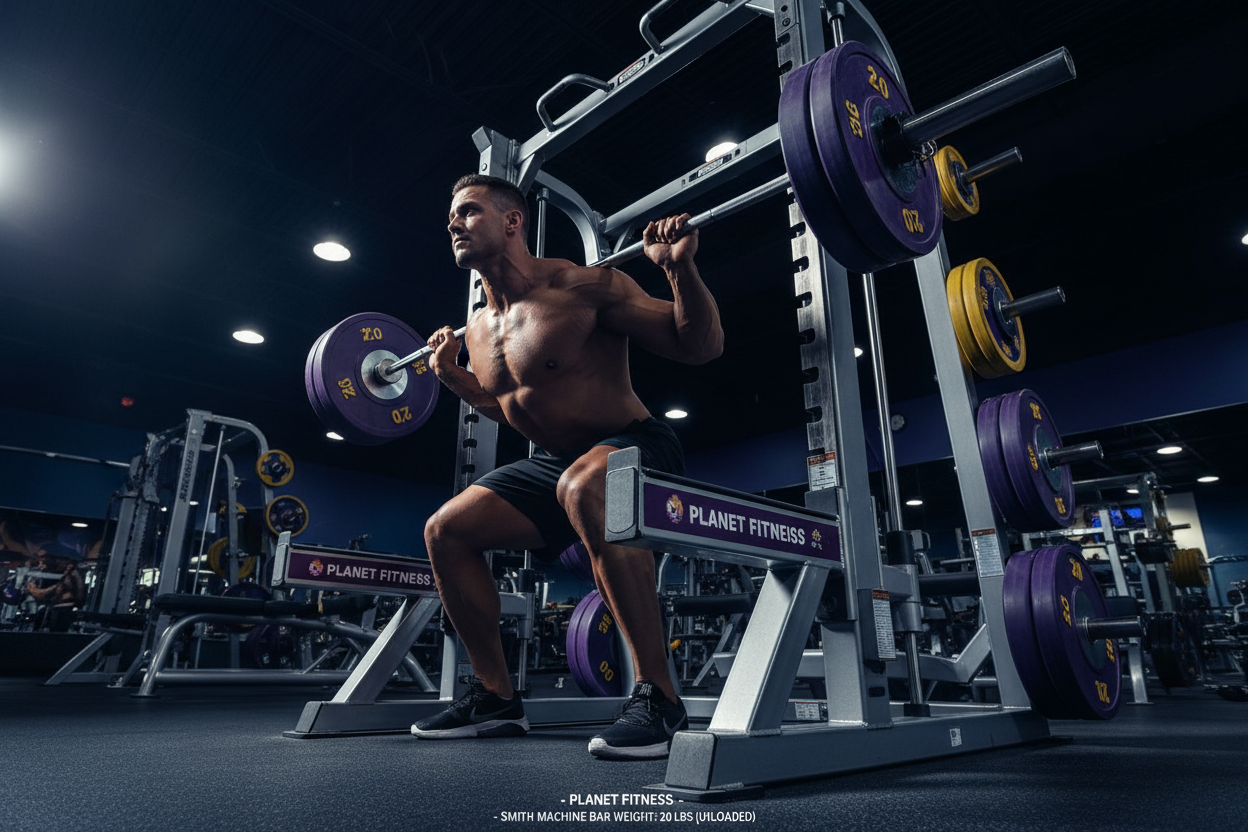
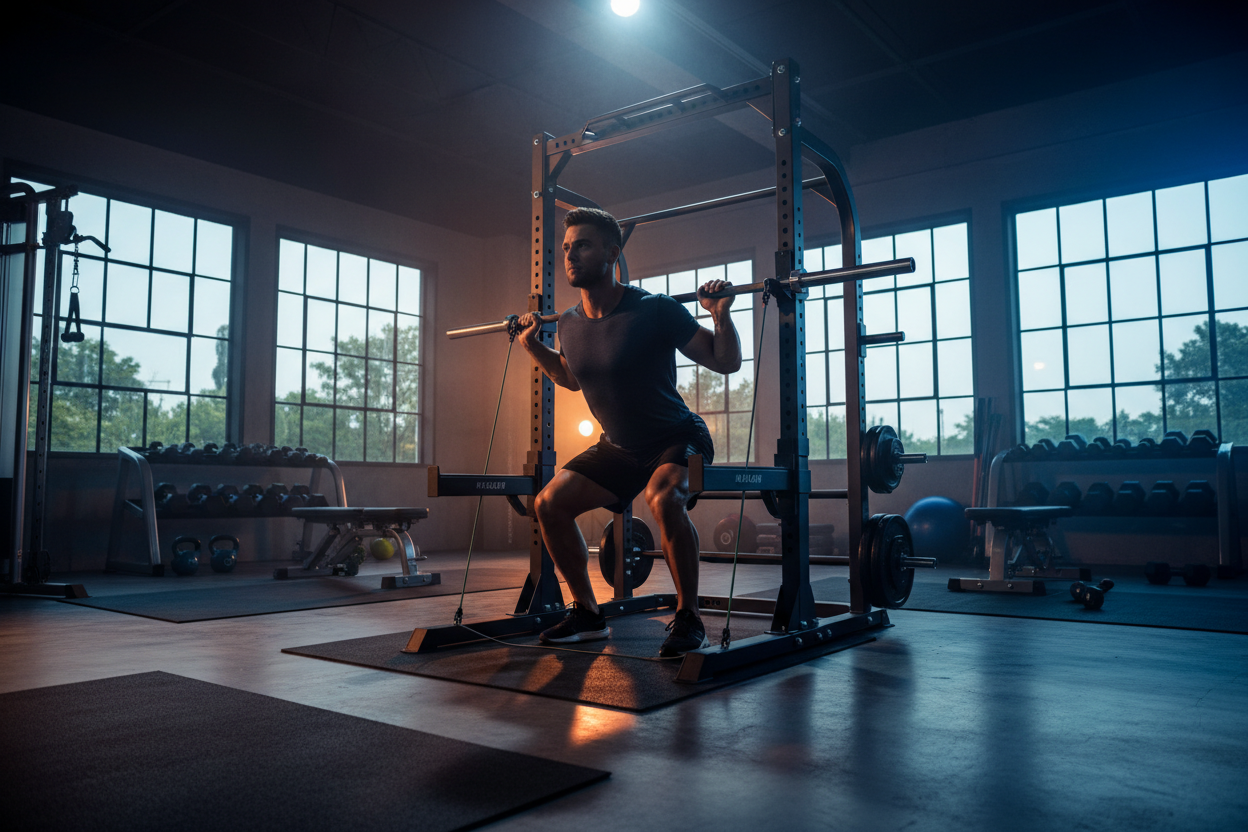
They are very similar and often the terms are used interchangeably. A Smith machine is the most common type of assisted squat rack, utilizing fixed vertical or slightly angled guide rods. However, some modern assisted racks use lever-arm systems or band-peg assistance instead of a fixed track.
How much space do I need for an assisted squat rack?
At a bare minimum, you need a footprint of 6 feet wide by 5 feet deep. This accounts for the machine itself plus the lateral space required to slide Olympic weight plates onto the bar sleeves safely.
Can I build muscle using an assisted rack instead of free weights?
Absolutely. Because the machine stabilizes the weight for you, you can often push your target muscles closer to mechanical failure without worrying about your core giving out or losing your balance. It is an incredibly effective tool for hypertrophy.