Are Smith Machines Bad For You? The Honest Truth Revealed
Walk into any hardcore bodybuilding gym, and you will see massive individuals using the Smith machine. Walk into a powerlifting club, and you might get laughed out of the room for suggesting it. This polarization leaves most trainees confused, asking: are smith machines bad for my progress?
The short answer is no, but the context matters immensely. The machine is a tool, much like a dumbbell or a cable station. It isn't inherently evil, but using it for the wrong purpose can lead to injury or lackluster results. Let’s strip away the bro-science and look at the biomechanics.
Key Takeaways
- Not Inherently Dangerous: The Smith machine is safe if used for exercises that match its fixed vertical (or slightly angled) path.
- Hypertrophy Benefit: The added stability allows you to drive closer to failure safely, which is excellent for muscle growth.
- Functional Limitation: It removes the need for stabilizing muscles, making it poor for athletic transfer or functional strength.
- Squat Caution: Squatting on a Smith machine requires a different foot placement than a barbell squat to avoid knee and lower back stress.
Why Are Smith Machines Bad Rap Targets?
The reputation of the Smith machine took a hit because people tried to use it exactly like a free weight barbell. The primary argument for why the machine is inferior comes down to its fixed plane of motion.
When you squat or bench press with a free bar, the path isn't a straight line. It has a slight natural curve (the bar path). The Smith machine forces you into a rigid, straight line. If your body wants to move naturally and the machine forces a linear path, your joints—specifically the shoulders and knees—have to compensate.
The Stabilization Deficit
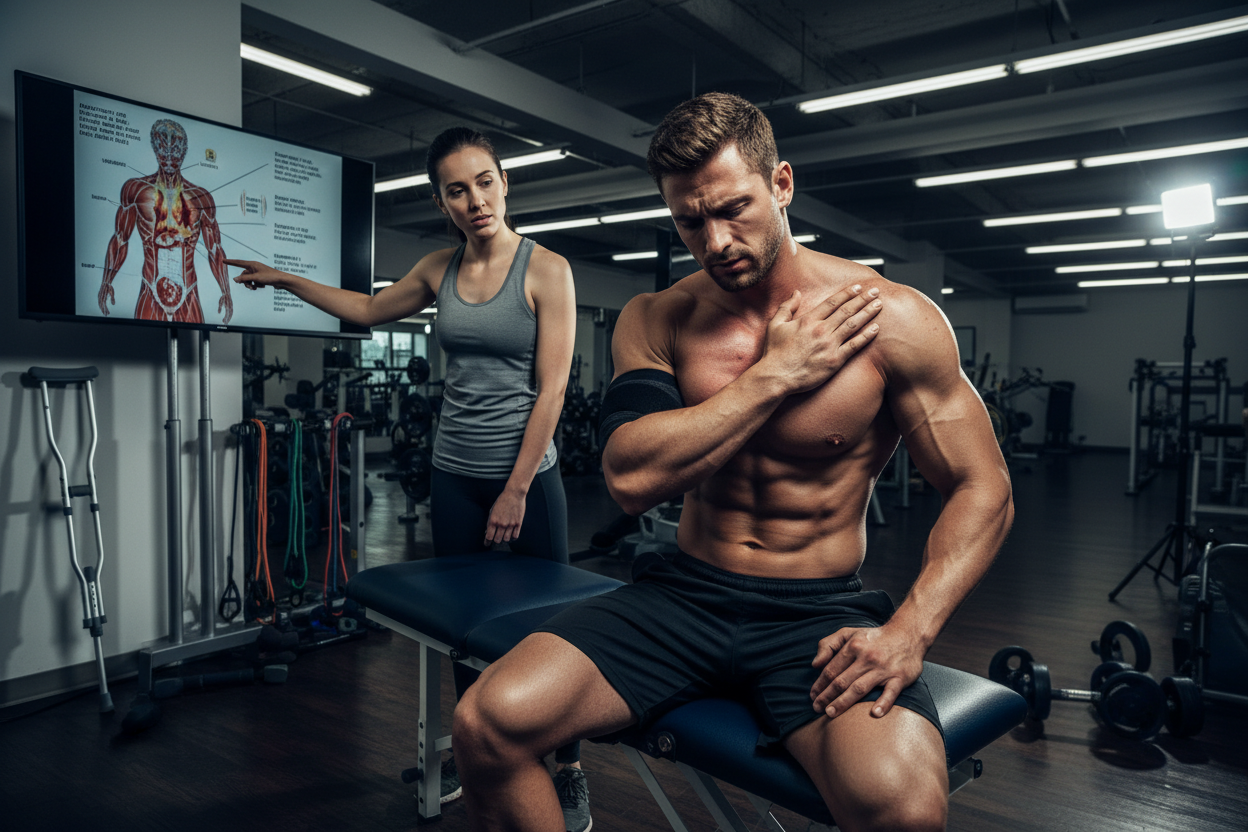
Because the machine balances the weight for you, your stabilizer muscles (like the rotator cuff during pressing or the core during squatting) don't work as hard. If you exclusively train on a Smith machine, you may develop "phantom strength," where you can press heavy loads but lack the stability to handle real-world objects.
Is the Smith Machine Bad for Muscle Growth?
Absolutely not. In fact, for pure bodybuilding purposes, it might be superior in specific contexts. This is where the nuance lies.
Hypertrophy (muscle growth) requires mechanical tension. When you don't have to worry about balancing a heavy bar, you can focus entirely on pushing the weight. This allows for a greater mind-muscle connection and often lets you safely push closer to muscular failure without a spotter.
Top bodybuilders often use the Smith machine for:
- Incline Bench Press: To target the upper chest without shoulder instability.
- Split Squats: To hammer the quads without falling over.
- Shrugs: To load heavy weight without the bar drifting forward.
The Danger Zone: Squats and Deadlifts
When people ask "is the smith machine bad," they are usually talking about squats. This is where things get risky. In a free weight squat, your torso leans forward slightly, and your hips travel back.
On a Smith machine, you cannot sit back naturally because the bar won't travel with you. To compensate, users often place their feet directly under the bar. This forces the spine into an unnatural upright position, potentially increasing shear force on the knees and compressing the vertebrae.
The Fix: If you must squat in the Smith machine, place your feet further forward (like sitting in a chair). This accounts for the fixed path and protects your lower back.
My Training Log: Real Talk
I’ve had a love-hate relationship with this piece of equipment for over a decade. I remember specifically preparing for a photoshoot a few years back and relying heavily on Smith Machine Bulgarian Split Squats.
There is a very specific, gritty feeling you get on a poorly maintained Smith machine—that slight "stutter" or friction on the eccentric (lowering) phase when the guide rods haven't been oiled in weeks. It messes with your rhythm. I learned the hard way that you have to check the glide before loading the plates.
I also recall the specific wrist pain from the "hook and roll" motion required to un-rack the bar. On a heavy incline press, having to rotate your wrists backward to disengage the safety hooks while holding 225lbs puts a weird torque on the forearm that you just don't get with a standard barbell. Now, I always set the safeties high so I don't have to fully rotate my wrists at the bottom of the movement.
Conclusion
So, are Smith machines bad? Only if you try to use them as a direct replacement for a barbell in every scenario. As a tool for isolation and hypertrophy, they are excellent. As a tool for functional strength and athletics, they are lacking.
Don't avoid the machine because of internet dogma. Just use it for what it's good at: stability and isolation.
Frequently Asked Questions
Is the Smith machine cheating?
No. It is simply a different stimulus. While the weight might move easier due to stability, the muscle tension is still real. It is easier to lift heavier loads, but that doesn't mean the muscle isn't working hard.
Why do people say Smith machine squats are dangerous?
They can be dangerous if you use a standard barbell stance. The fixed path forces unnatural joint loading on the knees and spine. However, adjusting your foot placement forward can mitigate these risks.
Can I build a big chest with just the Smith machine?
Yes. The Smith machine is actually very effective for chest hypertrophy because it removes stabilizer fatigue, allowing you to fully exhaust the pectorals safely.