Are Smith Machines Bad For Benching? The Honest Truth
When outfitting a home gym, one of the biggest dilemmas is figuring out how to lift heavy without a spotter. If you train alone in your garage or basement, safety is paramount, but so is making chest gains. This inevitably leads to a highly debated question: are smith machines bad for benching? For decades, fitness purists have claimed that using a fixed barbell path ruins your shoulders and limits growth. In this guide, we will break down the mechanics of the fixed bench press, separate fact from fiction, and help you decide if a Smith machine deserves a spot in your home gym.
Key Takeaways
- Smith machines provide a safe, self-spotting environment for solo home gym lifters pushing close to failure.
- The fixed bar path isolates the chest by removing the need for stabilizing muscles, allowing for intense hypertrophy focus.
- Proper setup is crucial; positioning the bench correctly prevents shoulder strain during the pressing motion.
- An assisted chest press machine or Smith machine is highly effective for variations like the incline press.
The Myth of the Fixed Bar Path
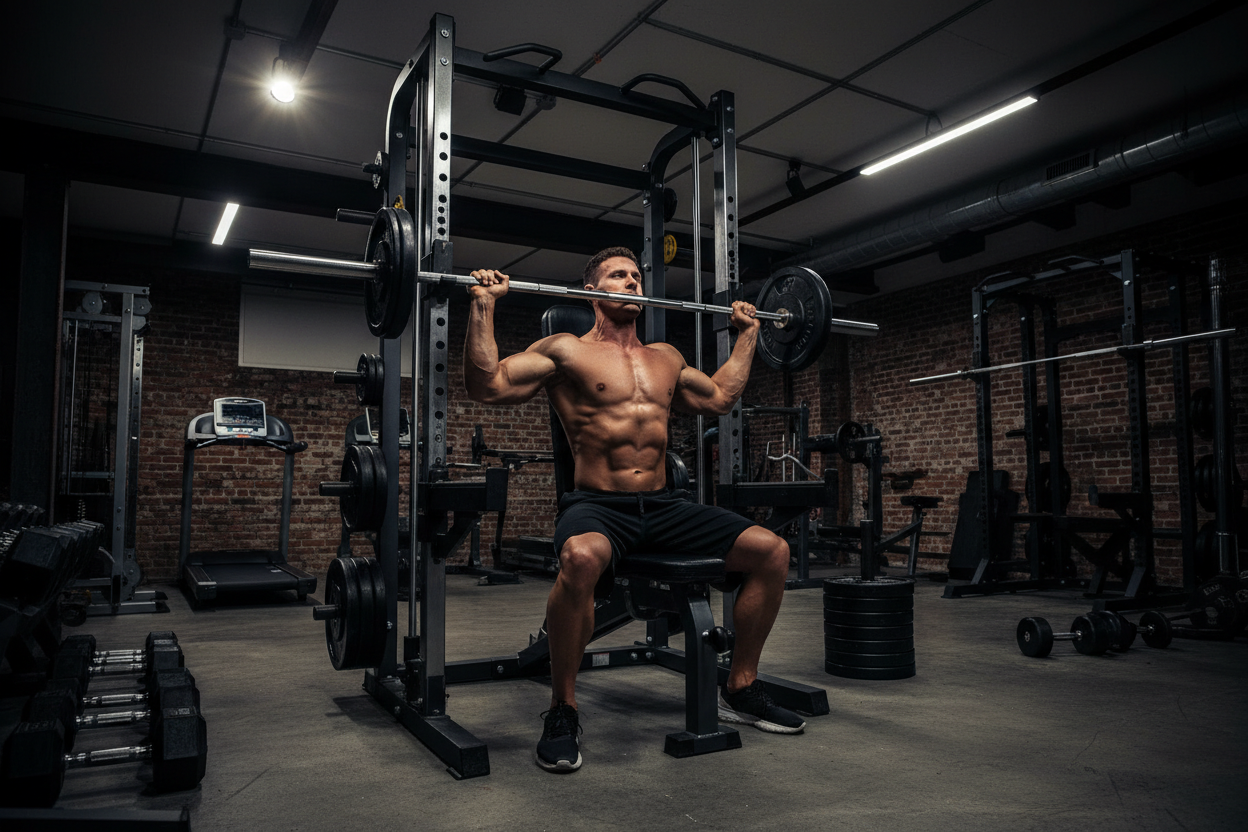
Many traditionalists will ask, is smith machine bench press bad compared to a standard barbell? The short answer is no, but it is mechanically different. A traditional free-weight bench press requires your stabilizer muscles—like the rotator cuff and anterior deltoids—to work overtime. When you switch to a fixed bench press, the machine balances the weight for you.
Hypertrophy vs. Functional Strength
If your goal is raw, functional strength for powerlifting, free weights are king. However, if you want to isolate the pectorals for muscle growth, the Smith machine acts much like an assisted chest press machine. By taking stability out of the equation, you can push your chest closer to absolute failure without the fear of getting pinned under a heavy barbell in your basement gym.
Mastering the Movement
A common reason people experience pain is simply a poor setup. Because the bar path is locked, you must align your body perfectly to the machine, not the other way around. So, how to properly bench press on a smith machine?
Setting Up for Success
To learn how to smith machine bench press safely, start with an empty bar. Lower the bar to your mid-to-lower chest. If the bar hits near your collarbone, slide the bench back. Your forearms should be completely vertical at the bottom of the movement. This setup applies whether you are doing a standard flat press or a smith machine v bar press using a close-grip setup for triceps.
Incline Bench Press vs Smith Machine
When comparing the free-weight incline bench press vs smith machine incline press, the Smith machine often wins for targeting the upper chest. The locked path allows you to focus entirely on the mind-muscle connection of the upper pecs. Just ensure your bench is set to a 30-to-45-degree angle and the bar touches just below the clavicle.
Is It Worth the Space and Budget?
For North American home gym owners, square footage is prime real estate. A standalone Smith machine takes up a significant footprint (often 4x4 feet or more) and requires vertical clearance of at least 82 to 90 inches. However, many modern home gym setups combine a power rack, functional trainer, and Smith machine into one unit. If you are asking are smith machines good for bench press, the answer is a resounding yes when it is part of a multi-functional trainer, offering incredible value and space efficiency without sacrificing workout quality.
From Our Gym: Honest Take
We have tested dozens of racks and machines in our facility, and I will be the first to admit I used to be a free-weight snob. But after tweaking my shoulder during a heavy solo session, I shifted my accessory work to the Smith machine. Can you do bench press on smith machine and still get a massive pump? Absolutely. During a recent 12-week hypertrophy block, I exclusively used our commercial-grade Smith machine for incline presses. The knurling on the fixed bar was aggressive enough that my chalked grip held solid, and the linear bearings provided a buttery-smooth glide. The only caveat? If your machine has a perfectly vertical path rather than a slight 7-degree pitch, it can feel a bit unnatural at the bottom of the rep. Always test the glide path if you can.
Frequently Asked Questions
Is the Smith machine bench press safer than free weights?
Yes, especially for solo lifters. The built-in safety catches and the ability to rack the weight with a quick flick of the wrist make it inherently safer if you fail a rep without a spotter.
Does the Smith machine build less muscle?
No, it actually excels at building muscle (hypertrophy). Because you do not have to balance the bar, you can recruit more motor units in your chest to push the weight, leading to excellent muscle growth.
How much weight is the bar on a Smith machine?
Unlike a standard 45-pound Olympic barbell, a Smith machine bar's starting weight varies by manufacturer due to the counterweight system. It typically ranges from 15 to 25 pounds, so always check your specific machine's manual.