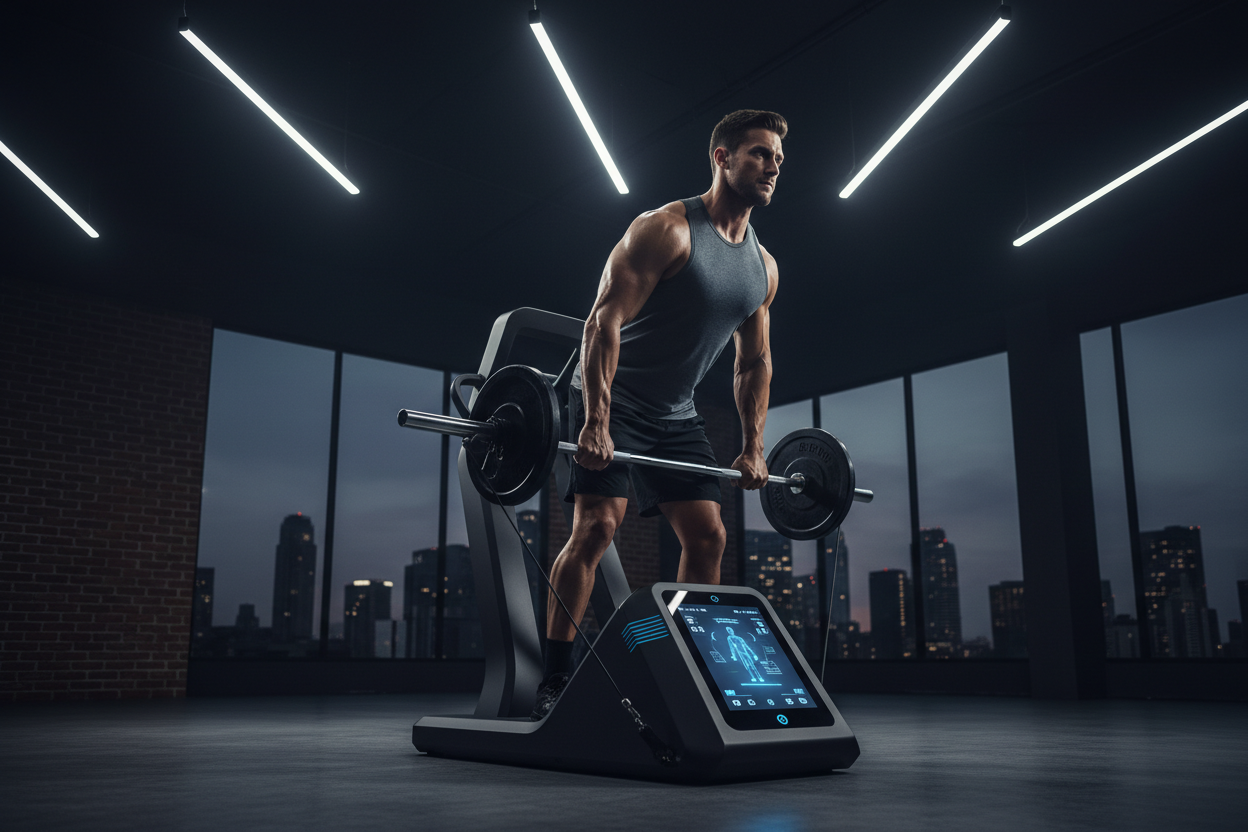
Are Smart Weight Lifting Machines Worth The Hype? The Honest Truth
You used to need a dedicated room reinforced with rubber flooring to house a serious strength setup. Now, the industry claims you only need a few square feet of wall space and a Wi-Fi connection. But is a smart weight lifting machine a legitimate replacement for heavy iron, or is it just an expensive gadget destined to become a coat rack?
We are seeing a massive shift in fitness technology. The clanking of plates is being replaced by the hum of electromagnetic motors. Before you drop several thousand dollars on this hardware, you need to understand exactly what you are paying for—and what you might be losing.
Key Takeaways: The Quick Summary
- Digital Weight vs. Gravity: Smart machines use algorithms to create resistance, eliminating inertia. This makes the weight feel heavier and smoother than traditional free weights.
- Space Efficiency: A home gym digital setup replaces an entire rack of dumbbells and barbells, usually occupying less than 10 sq ft.
- Safety Protocols: Automatic spotter functions detect fatigue and lower the weight instantly, making solo training safer than using heavy barbells.
- Hidden Costs: Almost all smart hardware requires a monthly subscription to access data tracking and advanced modes.
The Mechanics of Digital Resistance
To understand the value, you have to understand the engine. Traditional weightlifting relies on gravity. A 45lb plate is always 45lbs, and it relies on momentum. If you jerk a barbell up quickly, there is a moment of weightlessness at the top.
A home gym electronic system works differently. It typically uses an electromagnetic motor to generate tension. This creates "constant tension." There is no momentum to cheat with. If the machine is set to 50lbs, it fights you with exactly 50lbs for every millimeter of the rep. This is why 100lbs on a smart machine often feels significantly heavier than 100lbs on a barbell.
Why The Tech Matters for Hypertrophy
The real advantage here isn't the touchscreen; it's the eccentric loading. Building muscle requires mechanical tension, and smart machines can manipulate this in ways gravity cannot.
Eccentric Overload
You are stronger lowering a weight than you are lifting it. Smart machines can automatically add weight on the way down (the eccentric phase) and reduce it on the way up. This allows you to overload the muscle safely without a training partner manually pushing down on the bar.
Form Feedback
Sensors track your range of motion and velocity. If your squat depth starts to suffer as you get tired, the machine knows. It provides immediate visual feedback, keeping your form honest when your ego wants to cheat.
The Drawbacks No One Mentions
While the tech is impressive, it isn't perfect. The biggest issue for purists is the "maximum load" limit. Most wall-mounted units top out around 200lbs of resistance. For a novice, that is plenty. For a seasoned powerlifter looking to pull a 500lb deadlift, a home gym digital solution will fall short.
Furthermore, there is the subscription fatigue. You are essentially buying a piece of hardware that acts as a gatekeeper to a software service. If the company goes under or you stop paying the monthly fee, your expensive machine often loses its "smart" features and becomes a basic cable pulley.
My Training Log: Real Talk
I want to step away from the specs and tell you how this actually feels at 6:00 AM when you're groggy and just want to lift.
I've tested the leading wall-mounted smart units. The first thing you notice isn't the convenience; it's the lack of "clank." There is a psychological adjustment when you don't hear the plates hitting the floor. But the specific detail that threw me off was the "digital bite."
When you initiate a rep on a smart machine, there is a split-second delay—a tiny lag—before the motor engages the full resistance. It feels like the machine is thinking. And when you are grinding out the last rep of a bench press and the "spotter mode" kicks in to deload the weight, it doesn't feel like a human helping you. It feels like the cable suddenly went slack. It’s jarring. It kills your rhythm until you get used to it.
Also, let's talk about sweat. Touchscreens and chalky, sweaty hands are a terrible mix. I found myself constantly wiping the screen just to change the weight, which is an annoyance you never deal with when just moving a pin on a weight stack.
Conclusion
If you are limited on space and prioritize hypertrophy (muscle growth) and safety over raw strength numbers, a smart weight lifting machine is a phenomenal tool. It provides a density of training that free weights can't match in a small footprint. However, if you love the visceral feeling of iron and hate monthly subscriptions, stick to the rack.
Frequently Asked Questions
Can you actually build muscle with digital weights?
Yes. Your muscles cannot tell the difference between resistance created by gravity (iron) or magnets (digital). As long as you apply progressive overload—increasing tension over time—you will stimulate muscle growth.
Do smart gyms work without a Wi-Fi connection?
Most require an active internet connection to log data, access classes, and utilize advanced modes like eccentric overload. Without Wi-Fi, many revert to a basic "free lift" mode, but functionality is severely limited.
Is the weight limit high enough for legs?
For most general fitness enthusiasts, yes. However, since many units top out at 200-250lbs of total resistance, advanced lifters may find it too light for compound movements like squats and deadlifts.