Are Junk Sets Ruining Your Workout Plans for Muscle Growth?
I remember standing in my garage at 10:30 PM, staring at a pair of 25-pound dumbbells, wondering why I was about to start my sixth chest exercise of the night. I had already done heavy bench, inclines, and weighted dips. I was exhausted, my form was slipping, and honestly, I wasn't even feeling a pump anymore—just a deep, systemic ache. Most workout plans for muscle growth fail right here, in the 'just one more exercise' trap.
We have been conditioned to believe that more work equals more results. In a garage gym, where you are the head coach and the janitor, it is easy to let your sessions spiral into two-hour marathons of fluff. But if you want to actually pack on size, you need to learn how to cut the fat from your routine.
Quick Takeaways
- Junk volume is any set that adds fatigue without triggering a growth stimulus.
- If you cannot match your performance from the first two sets, the third and fourth are likely wasted energy.
- A successful muscle building gym program prioritizes mechanical tension over 'feeling the burn.'
- Garage gyms are actually better for minimalist, high-intensity growth than commercial warehouses.
The Trap of the 'More is Better' Mindset
I see it every week in the home gym community. Someone buys a new cable attachment or a fancy multi-grip bar and suddenly their 'Push Day' has nine different movements. You think that because you are sweating and your heart rate is 145, you are crushing it. You aren't. You are just getting good at being tired.
When you perform five different exercises for the same muscle group, you aren't providing five different growth signals. You are usually just repeating the same signal with less and less intensity. Your muscles don't have a 'volume counter' that rewards you for hitting 30 sets; they respond to high-quality mechanical tension. Once that tension drops because you're gassed, you're just spinning your wheels on a 6x8 ft mat.
What Junk Volume Actually Does to Your Body
Biology doesn't care about your hustle. There is a point in every workout where the 'signal' for hypertrophy is maxed out. Anything you do past that point is just digging a deeper recovery hole for your central nervous system (CNS). This is why The Best Workout Program for Building Muscle Ignores Your Spreadsheet when the spreadsheet demands volume for volume's sake.
When you perform sets in a state of extreme fatigue, your fast-twitch muscle fibers—the ones with the most growth potential—stop firing efficiently. Instead, your body compensates by using momentum and secondary muscles. You end up with a high amount of systemic fatigue that takes days to clear, but you haven't actually given your chest or back a reason to grow. You’re just making yourself too tired to train hard tomorrow.
How to Identify the Fluff in Your Routine
Auditing your routine is painful because it means admitting you've been wasting time. Start by looking at your exercise selection. If you are doing flat barbell bench, then flat dumbbell bench, then a chest press machine, you are doing the same movement three times. That is redundant junk volume.
Ask yourself: Does this exercise hit the muscle in a way the previous one didn't? Does a Workout for Building Muscle Mass Really Need Variety? Usually, the answer is no. You don't need to hit your triceps from seven different angles to make them grow. You need one heavy compound movement and maybe one isolation movement done with absolute intensity. Anything else is just noise.
Building a High-Signal, Low-Noise Protocol
An intense muscle building workout plan should look surprisingly simple on paper. I’m talking 2-3 exercises per session, 2-3 sets per exercise. The catch? Those sets have to be terrifyingly hard. You should be fighting for that last rep like your life depends on it. When you strip away the fluff, you have the mental and physical energy to actually reach that level of effort.
If you're looking for structured ways to strip your routine down, check out our Workout Hub for templates that focus on quality over quantity. A typical 'Back Day' shouldn't be six different rows. It should be one heavy vertical pull and one heavy horizontal pull. If you do those correctly—taking them to true technical failure—you won't want to do a third exercise. You won't be able to.
Why This Minimalist Approach Thrives in a Garage Gym
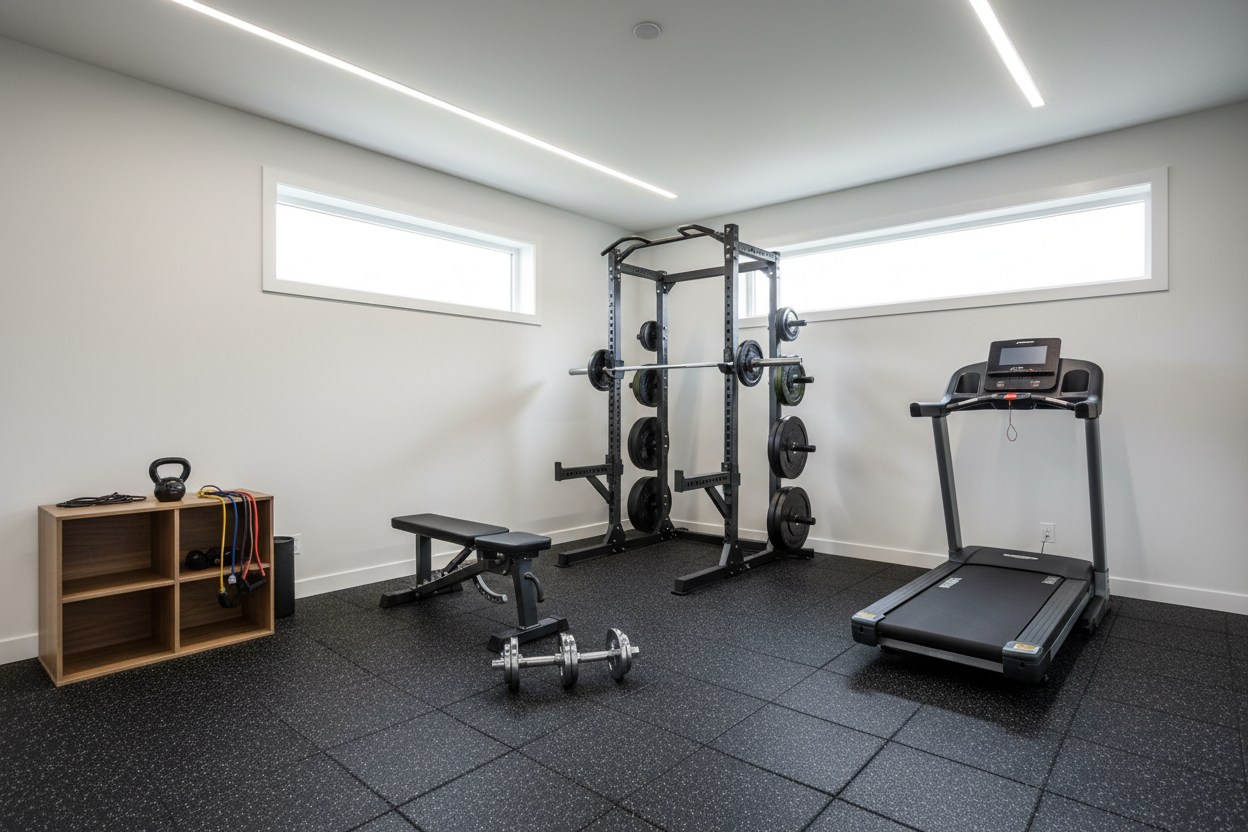
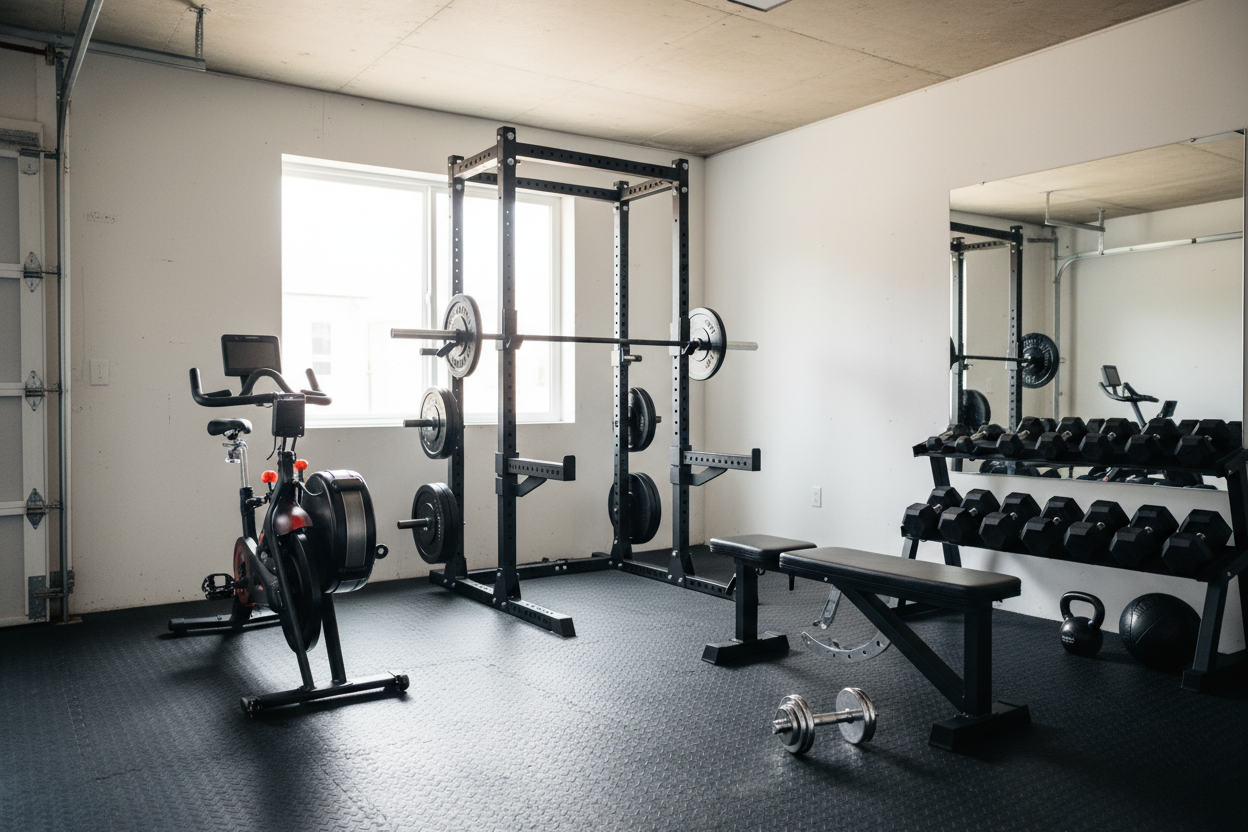
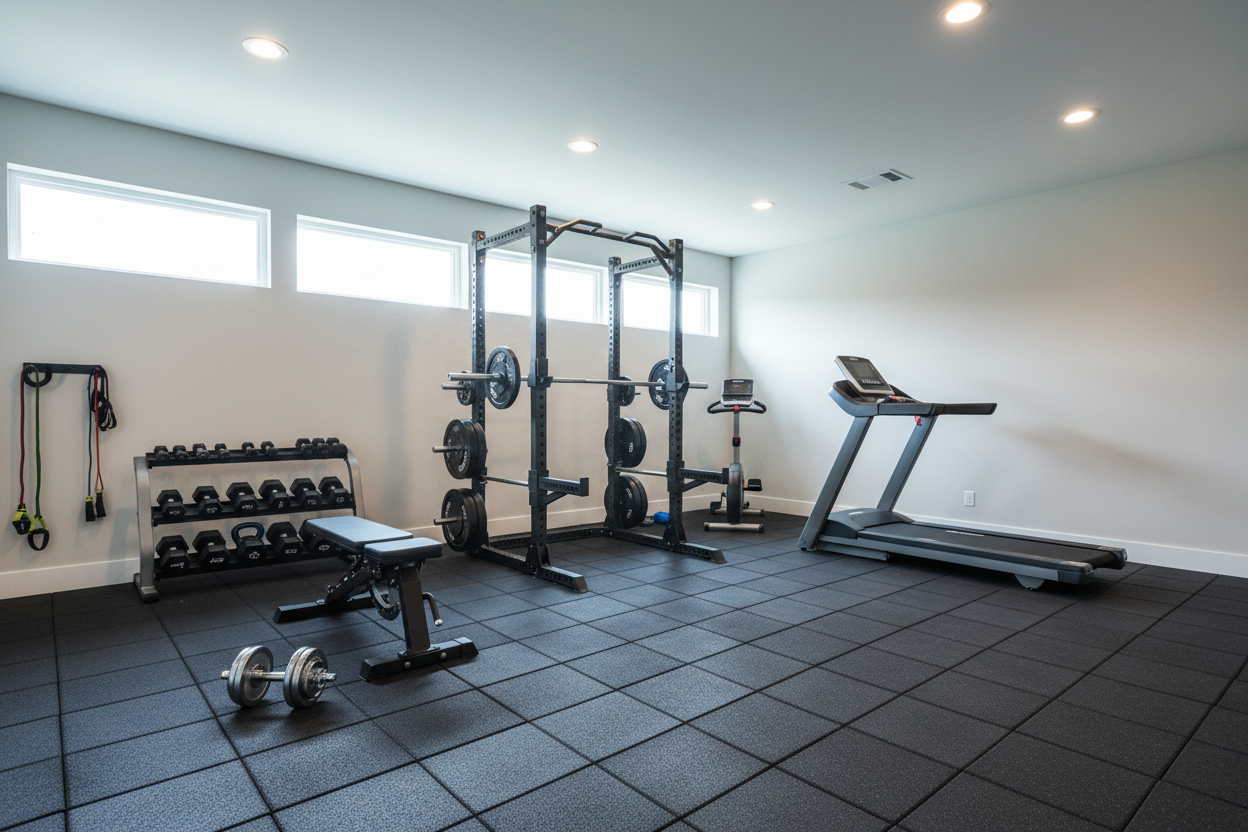
The beauty of a home gym is that you aren't competing for machines. You don't need to fill time while waiting for the cable crossover. You can load your bar, hit your heavy sets, and get out. This minimalist approach is a superpower. It allows you to invest in a few pieces of high-quality gear—like a solid rack and a dependable 6X8Ft Exercise Mat Yoga Mat Gym Flooring For Home Workout—and focus entirely on the movements that move the needle.
Training in a garage means you don't have the distractions of a commercial floor. You don't need 15 different isolation machines. You need a stable surface, a heavy bar, and the discipline to stop when the work is done. By eliminating junk volume, you recover faster, stay injury-free longer, and finally start seeing the scale move in the right direction.
My Personal Lesson in Less
A few years back, I was obsessed with 'optimal' volume. I was doing 25 sets for legs every Tuesday. I had a leg press, a hack squat, and a leg extension machine crammed into my garage. My knees constantly hurt, and my squats were stalling. I finally got fed up and cut my leg day down to just three exercises: Back Squats, RDLs, and Walking Lunges. I did two sets of each, max effort. Within six weeks, my squat jumped 30 pounds and my jeans didn't fit anymore. My mistake was thinking that more exercises would fix a lack of intensity. It never does.
FAQ
How do I know if a set is 'junk volume'?
If your strength or speed drops by more than 20% compared to your first set, or if you can no longer feel the target muscle working because you're too tired, it's junk. If you're just going through the motions to finish the workout, stop.
Can beginners benefit from high volume?
Beginners actually need the least volume to grow. They should focus on mastering the movements. Adding more sets just increases the chance of learning bad habits with poor form.
Should I ever do high-volume phases?
There is a place for 'overreaching' phases where you intentionally push volume for 2-3 weeks, but this must be followed by a deload. For most people, most of the time, lower volume with higher intensity is the more sustainable path to growth.