Are 'Exercises for Glutes Female' Routines Actually Different?
I have spent the last decade watching people train in garage gyms, and nothing fires me up more than the 'pink dumbbell' marketing machine. You have seen the ads: a fitness influencer doing a thousand kickbacks with a piece of elastic around her ankles, claiming it is the secret to a physique that was actually built with heavy squats and steak. When you search for exercises for glutes female, you are usually met with high-rep fluff that produces a 'burn' but zero actual muscle growth.
The truth is, your muscles do not have a gender. They respond to mechanical tension, metabolic stress, and muscle damage. If you are not challenging the tissue with real weight, you are just doing cardio with your butt. I have seen more progress from women switching to a basic powerlifting rack than from any 'booty blast' class ever invented.
Quick Takeaways
- Muscle growth requires heavy loading, not just high repetitions and 'feeling the burn.'
- The gluteus maximus is the largest muscle in the body; treat it like one.
- Ditch the light resistance bands for primary movements; use them only for warm-ups.
- Progressive overload is the only way to see permanent physical changes.
The Pink Dumbbell Problem in Posterior Training
It is frustrating to watch the fitness industry infantilize women's training. When you look for women's health glute exercises, the algorithm serves up endless unweighted donkey kicks. These movements are fine for a physical therapy clinic, but they will not build a powerful posterior chain. You cannot expect a muscle capable of moving hundreds of pounds to grow because you moved your leg through the air twenty times.
We need to stop acting like women need a completely different set of physics to get results. Building A Powerful Posterior Best Exercises For Glutes Women starts with accepting that foundational strength principles apply to everyone. If you want a specific shape, you need to build the muscle underneath the skin, and that requires moving some actual iron.
Biomechanics Don't Care About Gender (But Load Does)
The anatomy of the glutes is straightforward: you have the maximus, medius, and minimus. The maximus is your primary hip extensor. It is designed to move heavy loads and propel you forward. To make it grow, you need to subject those muscle fibers to heavy mechanical tension. This means lifting weights that make the last two reps of a set feel like a genuine struggle.
I have coached plenty of women who were afraid to 'bulk up,' only to find that heavy lifting gave them the exact look they were chasing. Men and women have different hormonal profiles, sure, but the way a muscle fiber hypertrophies is identical. You need to load the hip hinge and the squat pattern. Period. If you are staying in the 20-30 rep range with 5-lb weights, you are leaving all your results on the table.
The 4 Butt Exercises for Women That Actually Move the Needle
Forget the 30-day squat challenges. If you want to see a difference in the mirror and in your strength levels, you need to focus on four specific movements. These are the 'big rocks' of glute training. Everything else is just pebbles.
Heavy Barbell Hip Thrusts (The Main Engine)
The hip thrust is the king of glute isolation. Unlike the squat, where the glutes are least active at the top, the hip thrust keeps maximum tension on the muscle throughout the entire range of motion. In my garage, I tell people to focus on a hard squeeze at the top and a controlled descent. If you are feeling it in your lower back, you are likely arching too much; keep your chin tucked and your ribs down.
Romanian Deadlifts (The Deep Stretch)
The RDL is about the eccentric—the lowering phase. By pushing your hips back and keeping a slight bend in the knee, you put the glutes and hamstrings under an intense stretch. This is where the 'tie-in' happens. Don't worry about touching the floor with the plates; go as low as your hip flexibility allows while keeping a flat back. It is a hinge, not a reach.
Bulgarian Split Squats (The Unilateral Burner)
I hate these, and that is why they work. By elevating your back foot, you force the front leg to do all the work. To make this glute-dominant, take a slightly longer stride and lean your torso forward about 30 degrees. This puts the glutes in a more advantageous position to produce force compared to standing perfectly upright, which hits the quads harder.
How to Set Up Heavy Glute Training at Home Without Cables
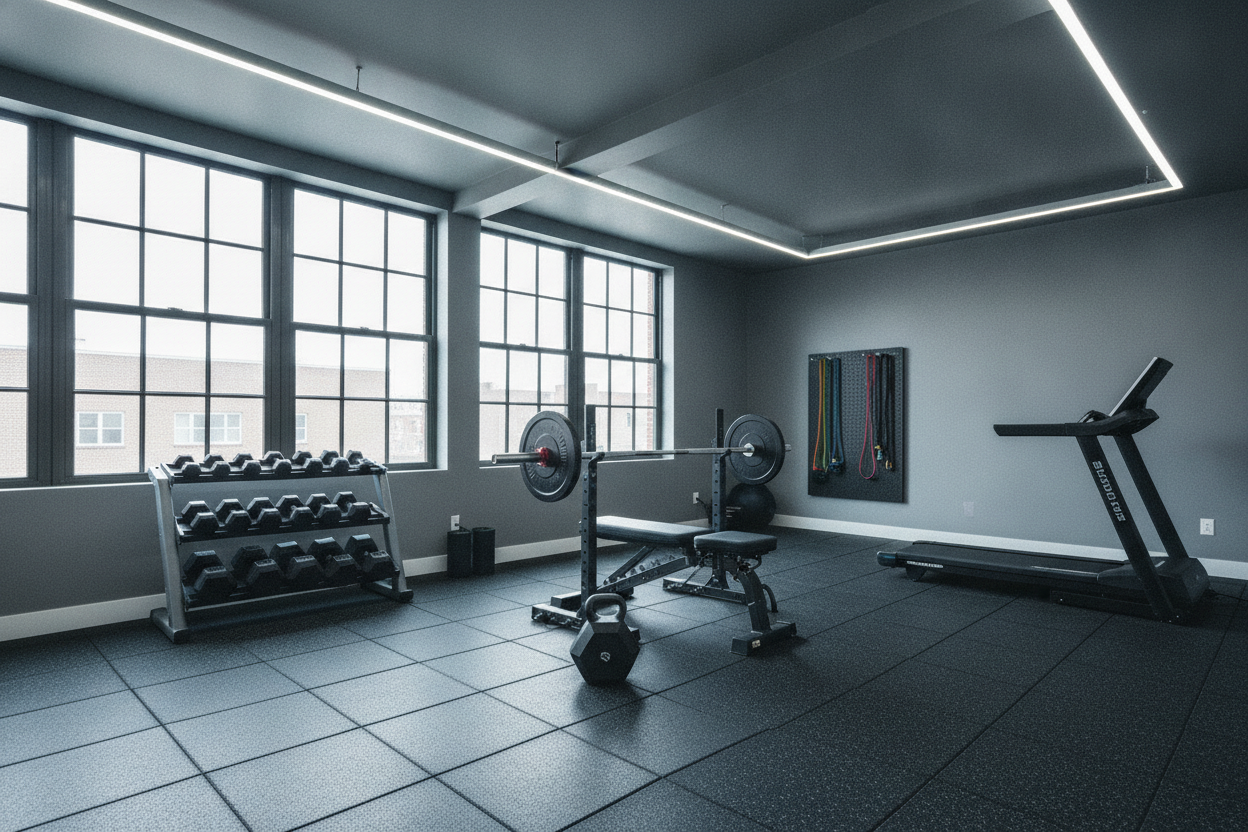
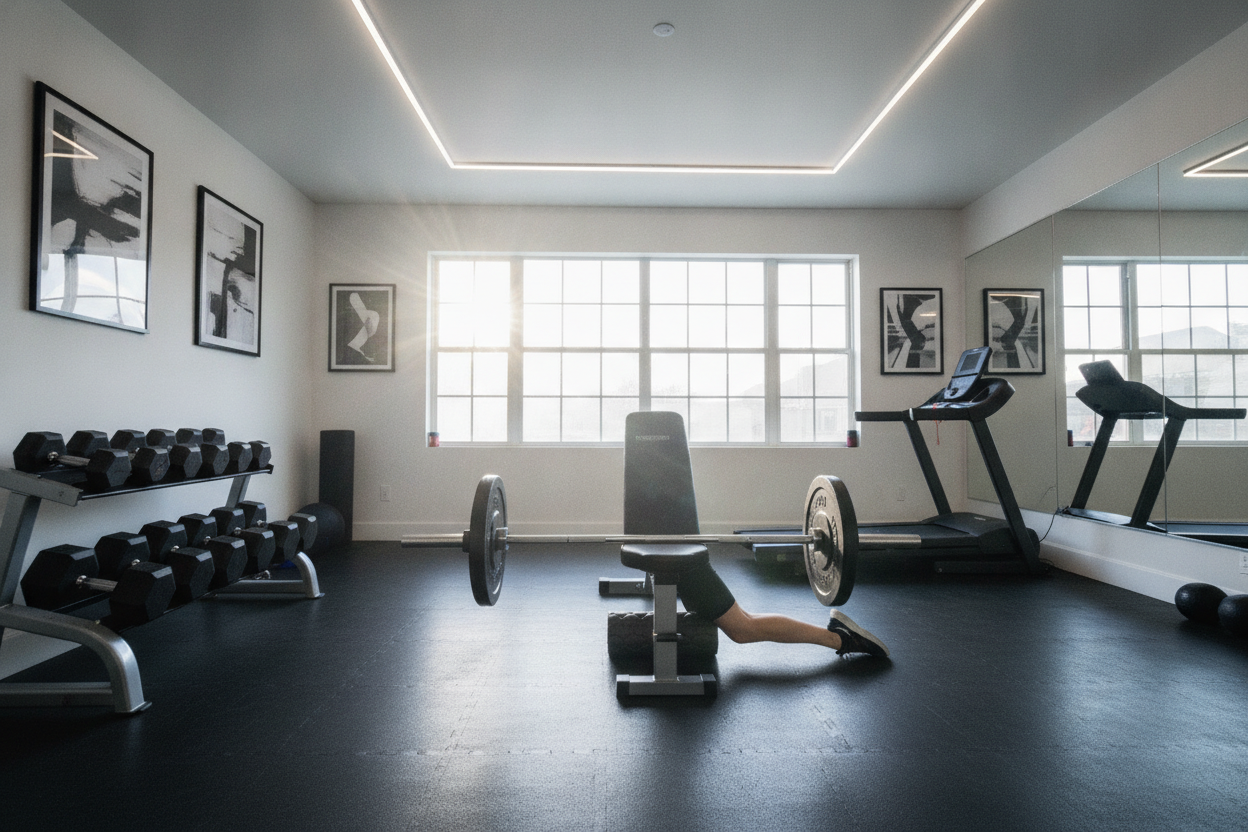
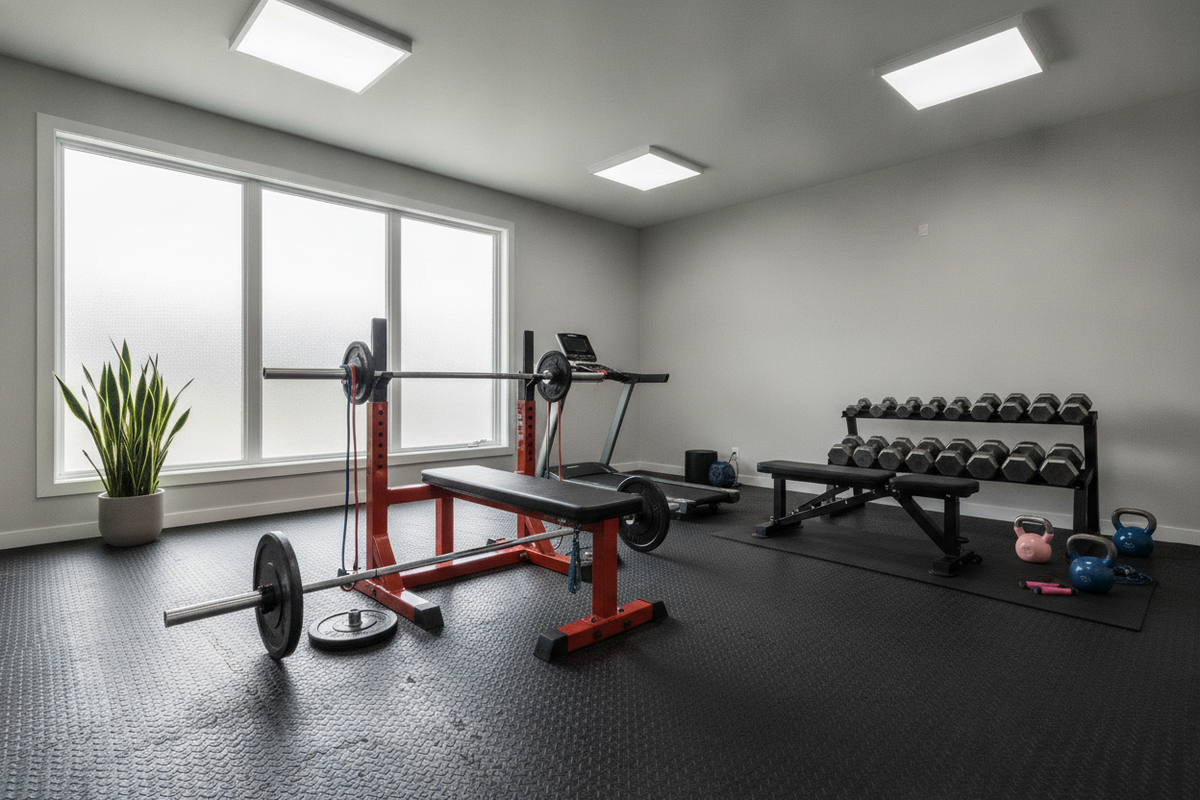
You do not need a $5,000 cable crossover machine to get this done. Most of my best athletes train in garages with a rack, a bench, and some floor space. For hip thrusts, use a sturdy bench pushed against a wall so it doesn't slide. If the barbell hurts your hips, use a thick foam pad—don't try to be a hero; hip bruising will just stop you from training the next day.
Stability is the most underrated part of home training. If you are wobbling during split squats because your floor is uneven or slippery, your brain will 'down-regulate' the force your muscles can produce. I always recommend a Large Exercise Mat For Home Gym to give yourself a grippy, level surface. It makes a massive difference when you start holding 50-lb dumbbells in each hand.
A Realistic Progression Plan (Throw Away the Booty Bands)
Stop chasing the 'burn' and start chasing the logbook. If you did 135 lbs for 8 reps last week, try 140 lbs this week. That is how you grow. A solid weekly structure involves hitting the glutes 2-3 times a week with at least 48 hours of rest between sessions. You cannot go heavy every single day and expect to recover.
Eat for the muscle you want to build. You cannot build a posterior chain on a 1,200-calorie 'detox' diet. Once you have the basics down, you can start looking at Mastering Exercises For Butt The Ultimate Glute Growth Protocol to fine-tune your volume and frequency. But for now, get under a bar and move some weight.
Personal Experience: My Biggest Mistake
Early on, I thought my female clients needed 'toning' workouts. I had one client doing high-rep lateral walks and kickbacks for six months. She got better at lateral walks, but her physique didn't change, and her strength stayed stagnant. We eventually scrapped the bands, put a barbell in her hands, and focused on RDLs and Thrusts. In three months, she added two inches to her glute measurement and dropped her body fat percentage. I learned the hard way: if you treat someone like they are fragile, they will never get strong.
FAQ
Will heavy glute training make my legs too big?
Unlikely. Muscle growth is a slow process. If you feel like your quads are taking over, adjust your stance or focus more on hip-hinge movements like RDLs and thrusts rather than deep squats.
How often should I train glutes?
Two to three times per week is the sweet spot. This allows for enough volume to trigger growth while giving your central nervous system time to recover from the heavy loading.
Can I grow my glutes at home with only dumbbells?
Yes, but you will eventually need very heavy dumbbells. A pair of 20s won't cut it for long. Look into adjustable dumbbells that go up to at least 50 or 80 lbs if you want to stay challenged.