Are Dead-Stops the Secret to Leg Exercises for Mass at Home?
I remember staring at my 50-pound adjustable dumbbells during the lockdowns, wondering how on earth I was going to keep my quads from shrinking. I was used to a commercial power rack and 400 pounds of iron; suddenly, I was doing sets of 50 reps just to feel a 'burn.' It was a waste of time. If you want real leg exercises for mass at home, you have to stop thinking about more reps and start thinking about harder reps.
Quick Takeaways
- Dead-stops eliminate the stretch reflex, forcing more muscle fiber recruitment.
- You can trigger hypertrophy with lighter weights by removing momentum.
- Bottom-up movements are safer for your joints and harder on your muscles.
- Protect your floors; dead-stops require setting weight down completely.
The Problem With Bouncing Through Your Living Room Workouts
Most people treat their home workouts like a cardio session. They pump out reps of air squats or lunges, using the 'bounce' at the bottom to propel themselves back up. That bounce is the stretch reflex—elastic energy stored in your tendons. It’s great for jumping high, but it’s a cheat code for muscle growth. If you're wondering if a leg workout at home for man actually build serious size, the answer is yes, but only if you stop letting your tendons do the work your muscles should be doing.
When you use a light weight and bounce, you’re effectively bypassing the hardest part of the lift. At the gym, you have a 500lb leg press to overcome this. At home, you probably have a pair of 25s or 40s. You cannot afford to cheat the range of motion when your external load is limited.
Why Killing Momentum Forces Muscle Growth
A dead-stop repetition is exactly what it sounds like. You lower the weight, come to a complete halt, let the weight settle, and then drive back up. This 2-3 second pause dissipates all that stored elastic energy. Now, your muscle fibers have to generate 100% of the force required to move that dumbbell from a static position.
Physiologically, this is devastating. It forces the recruitment of high-threshold motor units—the ones responsible for growth—much earlier in the set. Suddenly, that 40lb dumbbell feels like an 80lb stimulus. You aren’t just 'doing reps'; you’re forcing a leg mass workout at home to feel as heavy as a barbell session.
The Core Movements for a Dead-Stop Leg Mass Workout at Home
Not every exercise works for dead-stops, but the ones that do will change how you view home training. Forget high-rep burnout; we are looking for mechanical tension.
Bottom-Up Bulgarian Split Squats
Standard split squats are hard, but bottom-up versions are a different animal. Instead of starting from a standing position, start with your back knee resting on a foam pad or a rolled-up towel. Drive through your front heel to stand up, then lower back down until the knee is completely resting. This forces the lead quad to work from a 'dead' position every single time.
Paused Dumbbell Front Squats
Hold your dumbbells at shoulder height (goblet style or dual). Descend slowly, and once you hit the bottom, count to three. Do not just hover; stay tight but stay still. This leg workout for mass at home staple removes the 'rebound' out of the hole, which is where most people fail to grow because they’re essentially jumping out of the bottom.
Dead-Stop Romanian Deadlifts
Most people perform RDLs with a continuous loop of motion. For dead-stops, you’re going to set the dumbbells all the way down on the floor—or on a pair of blocks if you lack the mobility—between every rep. Let go of the tension for a split second, re-grip, and pull. This ensures your hamstrings are doing the heavy lifting without any lower-back-swinging momentum.
How to Structure This Leg Workout for Mass at Home
Don't fall into the trap of doing 20 reps. If you can do 20 reps with a true 3-second dead-stop, your weight is too light or your pause is too short. Aim for 3-4 sets of 6-10 reps. This rep range, combined with the increased time under tension, is the sweet spot for hypertrophy. You can easily plug this into a broader 4-Day Workout Routine for Mass You Need at Home to ensure you're hitting every muscle group with the same intensity.
A Quick Warning About Your Floors
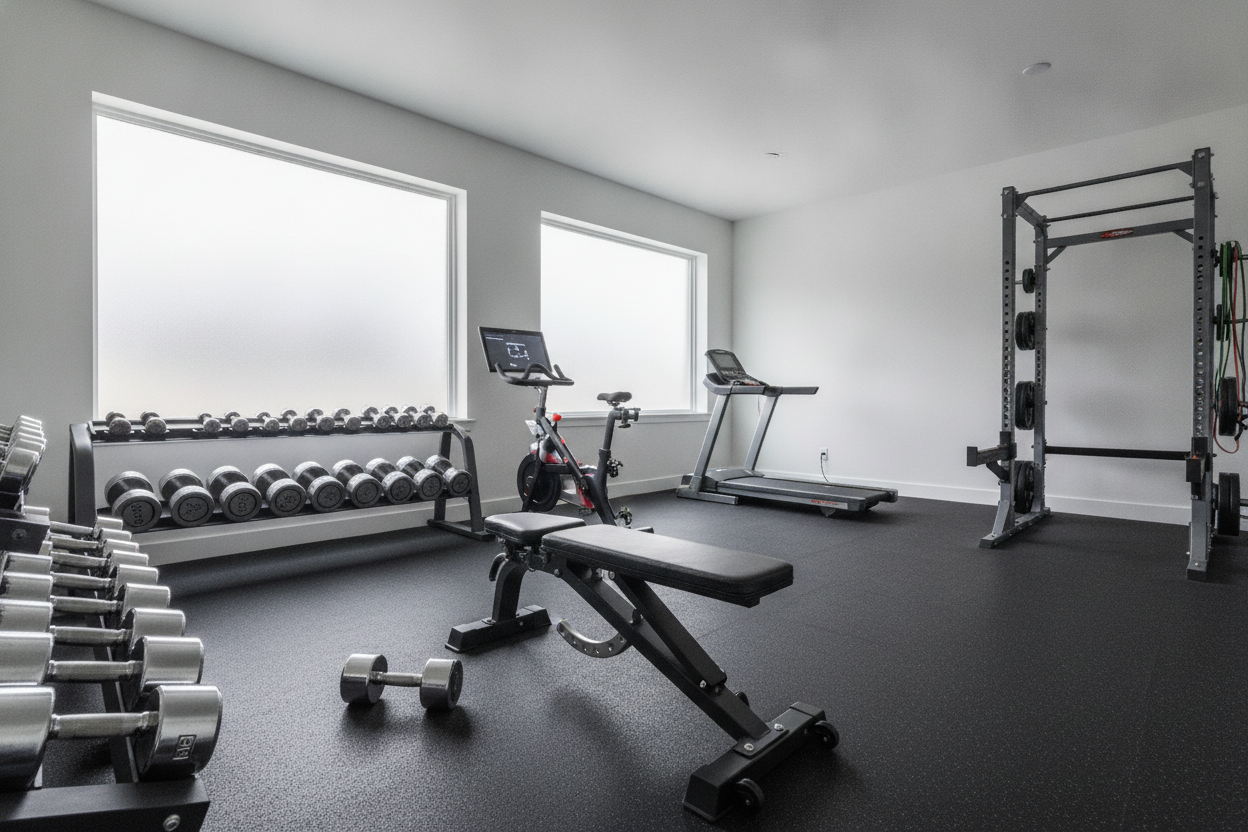
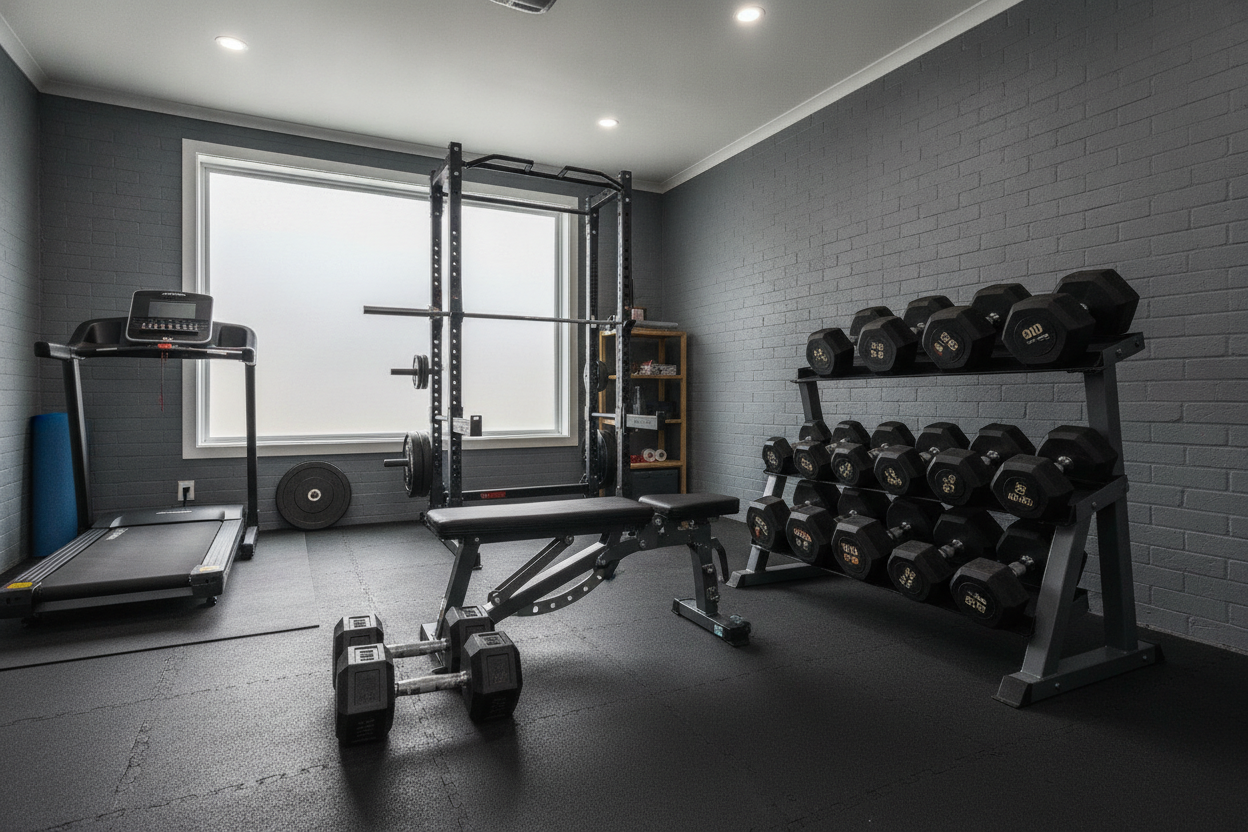
Dead-stops mean the weight actually hits the ground. If you’re training on hardwood or thin carpet, you’re going to have a bad time—and a lost security deposit. I learned this the hard way when I cracked a ceramic tile in my kitchen trying to 'settle' a 50lb hex bell during RDLs. You need a dedicated surface like a 6X8Ft Exercise Mat Yoga Mat Gym Flooring For Home Workout. It dampens the noise and, more importantly, protects the subfloor from the impact of those dead-stop resets.
Personal Experience: The Day I Stopped Bouncing
I spent years thinking home workouts were just 'maintenance.' I’d go through the motions with my 52.5-lb SelectTechs and wonder why my legs looked like toothpicks. The shift happened when I started timing my pauses. I realized I was using a 'micro-bounce' on every single lunge. Once I committed to a full 2-second floor pause on my split squats, my rep count dropped from 15 to 6. My quads grew more in two months of dead-stops than they did in a year of 'pumping' reps. My biggest mistake? Not buying decent flooring sooner. My basement floor still has the 'scar' of a dropped dumbbell from 2021.
FAQ
Do I need heavy weights for dead-stops?
No, that's the beauty of it. Dead-stops make light weights feel significantly heavier. However, you still need enough resistance to reach near-failure in the 6-12 rep range.
Are dead-stops harder on the knees?
Actually, they are often safer. Because you are removing the explosive 'rebound' at the bottom of the joint's range of motion, there is less sheer force on the patellar tendon.
How long should the pause be?
At least two full seconds. You want enough time for the 'stretch-shortening cycle' to fully dissipate. If you just touch and go, you're still bouncing.