All Arm Muscles to Workout: The Definitive Anatomy Guide
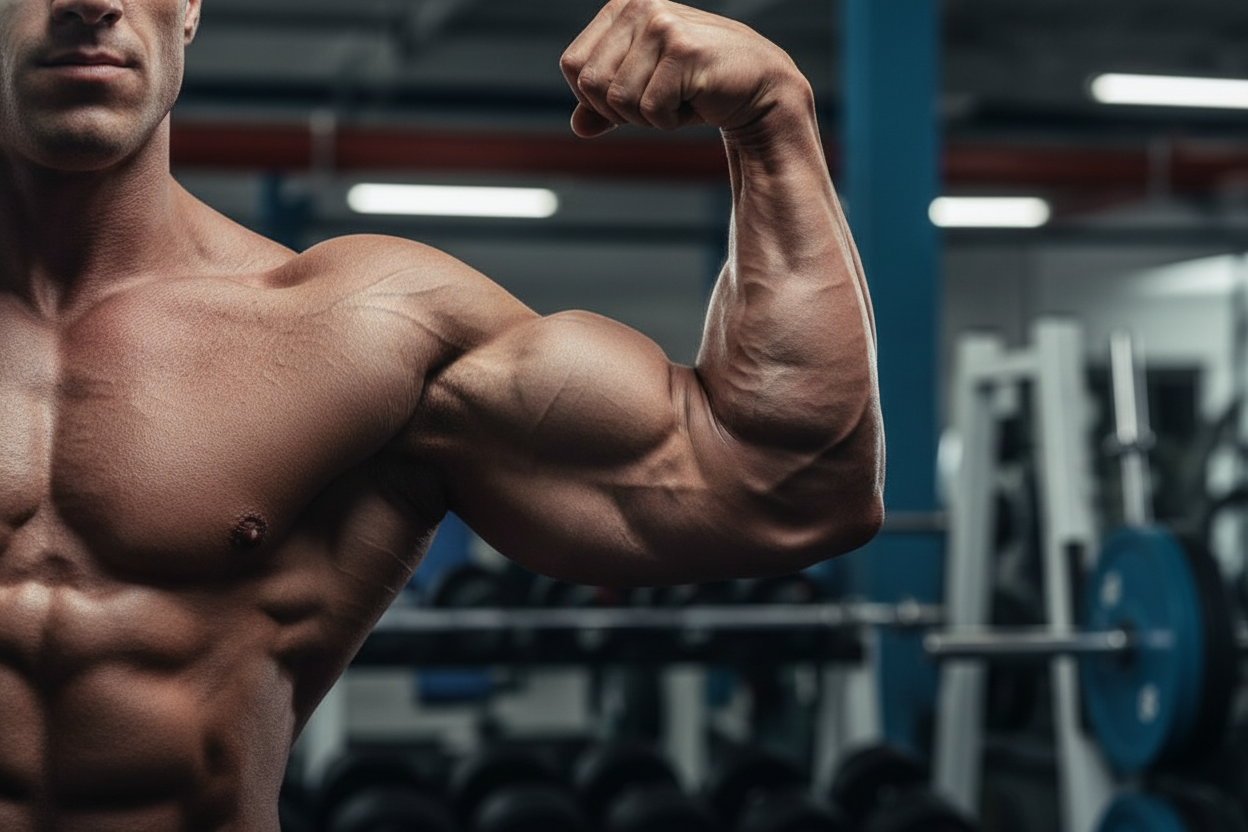
Walk into any gym, and you will see the same scene: guys aggressively curling dumbbells in front of the mirror. While curls have their place, they often neglect the complex architecture required to build truly impressive limbs. If you want all arm muscles to workout effectively, you have to look past the vanity muscles.
Understanding the biomechanics of your arms changes the game. It shifts your focus from simply moving weight from point A to point B, to actually contracting the specific fibers responsible for width, peak, and density. This guide breaks down the anatomy you are likely missing.
Key Takeaways: The Anatomy Checklist
If you are looking for a quick breakdown of exactly what arm muscles to workout for maximum growth, here is the core list:
- Biceps Brachii: Composed of the Long Head (the peak) and Short Head (width/thickness).
- Brachialis: The hidden muscle underneath the biceps that pushes the arm out for a wider look.
- Triceps Brachii: The massive three-headed muscle group (Long, Lateral, and Medial) comprising two-thirds of your arm mass.
- Brachioradialis & Forearm Extensors: Critical for grip strength and the "Popeye" aesthetic.
The Biceps: More Than Just Curls
When people ask what arm muscles to workout, they usually start here. But most get the angles wrong.
The Long Head (The Peak)
The long head sits on the outside of the arm. It is responsible for that mountain-peak shape when you flex. To target this, your elbows need to be behind your torso (like in an incline dumbbell curl). This position stretches the long head, forcing it to do more work.
The Short Head (The Thickness)
Located on the inner side of the arm, the short head gives your arm density when viewed from the front. Preacher curls are the gold standard here. By placing your elbows in front of your body, you create slack in the long head, forcing the short head to take the brunt of the load.
The Triceps: The Secret to Size
You cannot have big arms without big triceps. They make up the majority of your upper arm volume. If you want long muscular arms, the tricep sweep is non-negotiable.
The Long Head
This is the only tricep head that crosses the shoulder joint. That means to fully engage it, your arms must be overhead. Think overhead cable extensions or French presses. If you never train with your arms up, this muscle remains dormant.
The Lateral and Medial Heads
These heads are responsible for the "horseshoe" look. Heavy pressing movements and standard pushdowns target these areas. The medial head, specifically, is often the first to fatigue during high-rep burnout sets.
The Brachialis: The Unsung Hero
This is the most overlooked of the different arm muscles to workout. The brachialis sits deep underneath the biceps. When you grow this muscle, it physically pushes your biceps up, creating a higher peak and a wider arm appearance from the front.
You cannot hit this with a supinated (palms up) grip. You must use a neutral grip (Hammer Curls) or a pronated grip (Reverse Curls) to take the biceps out of the equation and isolate the brachialis.
My Training Log: Real Talk
I spent my first three years of lifting thinking heavy straight-bar curls were the answer to everything. My wrists hated me. I specifically remember the sharp, stinging pain on the ulnar side of my forearm (pinky side) whenever I let go of the bar after a heavy set. It felt like my bones were vibrating.
It wasn't until I stopped ego-lifting and started focusing on the brachialis that my arms actually changed shape. I swapped the heavy bar for slow, controlled rope hammer curls. The feeling is distinct—it’s not the burning pump you get in the bicep peak; it’s a deep, dull ache located physically between the bicep and tricep bone. That specific deep soreness is the indicator that you are finally hitting the width-builders. Once I chased that specific feeling, my t-shirt sleeves finally started getting tight.
Conclusion
Building impressive arms isn't about doing endless reps of the same movement. It requires a strategic approach where you hit muscles in arms to workout from different angles—overhead for triceps, elbows back for bicep peaks, and neutral grips for the brachialis. Train the function, not just the movement, and the growth will follow.
Frequently Asked Questions
Can I train all arm muscles in one workout?
Yes, you can. However, because the triceps and biceps are opposing muscle groups, it is often effective to train them using antagonistic supersets (e.g., doing a tricep extension immediately after a bicep curl) to maximize blood flow and save time.
What is the most neglected arm muscle?
The Brachialis is the most neglected. Most lifters only curl with palms up, which heavily favors the biceps brachii. Adding hammer curls is the fastest way to add visible thickness to the arm.
How often should I workout my arms?
Small muscle groups recover faster than large ones like legs or back. Generally, training arms directly 2-3 times per week allows for sufficient volume and recovery, provided you aren't overdoing it on your chest and back days.