Adjustable Incline Treadmill for Sale: What to Know Before You Buy
If you have hit a workout plateau with your indoor running routine or are tired of the repetitive impact on your knees, you are not alone. Transitioning from flat road running to hill training is one of the fastest ways to build posterior chain strength and increase calorie burn without having to sprint. But before you pull the trigger on that adjustable incline treadmill for sale you have been eyeing, you need to know exactly what separates a commercial-grade workhorse from a wobbly clothes hanger.
In this guide, we will break down everything you need to know about upgrading your home gym cardio setup, from motor specs to crucial ceiling clearance measurements.
Key Takeaways
- Motor matters: Look for at least a 3.0 CHP motor if you plan to run on steep inclines regularly.
- Ceiling clearance is critical: Factor in your height, the deck height, and the maximum incline height before buying.
- Auto adjustments win: An auto treadmill allows you to change pitch seamlessly without breaking your stride.
- Value over gimmicks: Prioritize build quality and a strong warranty over massive touchscreens that may become obsolete.
Decoding the Specs: Finding the Right Fit
When browsing any automatic incline treadmill for sale, the spec sheet can look like a foreign language. Here is what actually impacts your daily workout.
Motor Power and Belt Dimensions
Running uphill puts significantly more strain on a motor than walking on a flat belt. If you are serious about hill sprints or heavy-duty hiking, do not settle for less than a 3.0 Continuous Horsepower (CHP) motor. Additionally, ensure the running deck is at least 20 inches wide and 60 inches long so you do not feel cramped when your stride opens up.
The Incline Range
Most standard units offer a 10% to 15% maximum incline. If you are training for outdoor hiking or want maximum glute engagement, look for specialized trainer models that reach up to 40%. Just remember that higher inclines demand a rock-solid frame to prevent side-to-side sway.
Space Planning for North American Home Gyms
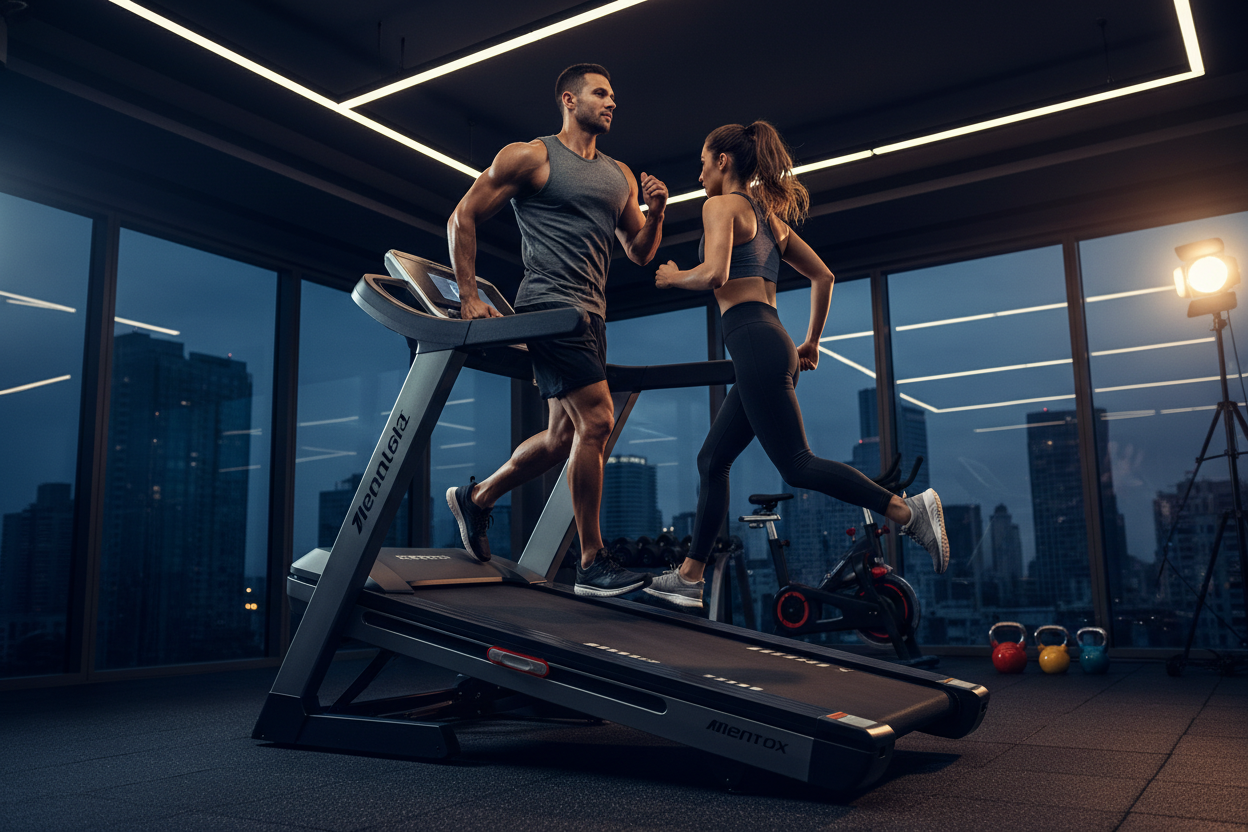
A common mistake buyers make when looking for an auto incline treadmill for sale is underestimating the vertical footprint. A standard garage gym or unfinished basement might have traditional 8-foot ceilings, but that space shrinks quickly once you elevate the deck.
Here is the golden formula for ceiling clearance: User Height + Maximum Deck Height at Full Incline + 15 Inches of Buffer. If you are 6-foot-2 and the treadmill deck rises 16 inches at a 15% incline, you need over 8.5 feet of ceiling clearance to run comfortably without feeling like you are going to put your head through the drywall.
From Our Gym: Honest Take
We test dozens of cardio machines every year, and I will be completely transparent: the transition to an automated system is non-negotiable for serious training. Last winter, I tested a highly rated budget model alongside a premium unit. The budget model required me to step off the belt to adjust the manual incline pins. It completely ruined the flow of my HIIT intervals.
When I finally upgraded our studio's primary cardio corner with a commercial-grade model, the difference was night and day. The motorized lift was whisper-quiet, and at a 12% grade, the reinforced steel frame did not rattle once, even under my 215-pound frame. The only caveat? It was incredibly heavy. Getting a 300-pound machine down a flight of basement stairs required three people and a lot of patience. Always factor delivery and assembly into your budget.
Frequently Asked Questions
Is a treadmill for sale with auto incline worth the extra cost?
Absolutely. If you do interval training, virtual coaching, or heart-rate zone workouts, an automated system allows the machine to adjust the terrain in real-time. Manual incline treadmills disrupt your workout flow and are generally built with lighter, less durable frames.
How much maintenance does the incline motor require?
Surprisingly little. The primary maintenance for any treadmill involves lubricating the running belt and keeping the motor hood free of dust. The actual incline lift actuator is usually a sealed component that requires zero day-to-day maintenance.
Can walking on an incline really build muscle?
Yes. Walking at a 10% to 15% incline dramatically increases the activation of your calves, hamstrings, and glutes compared to flat walking. It is a phenomenal low-impact way to build lower body strength and cardiovascular endurance simultaneously.