Acromial Pain: The Definitive Guide to Recovery
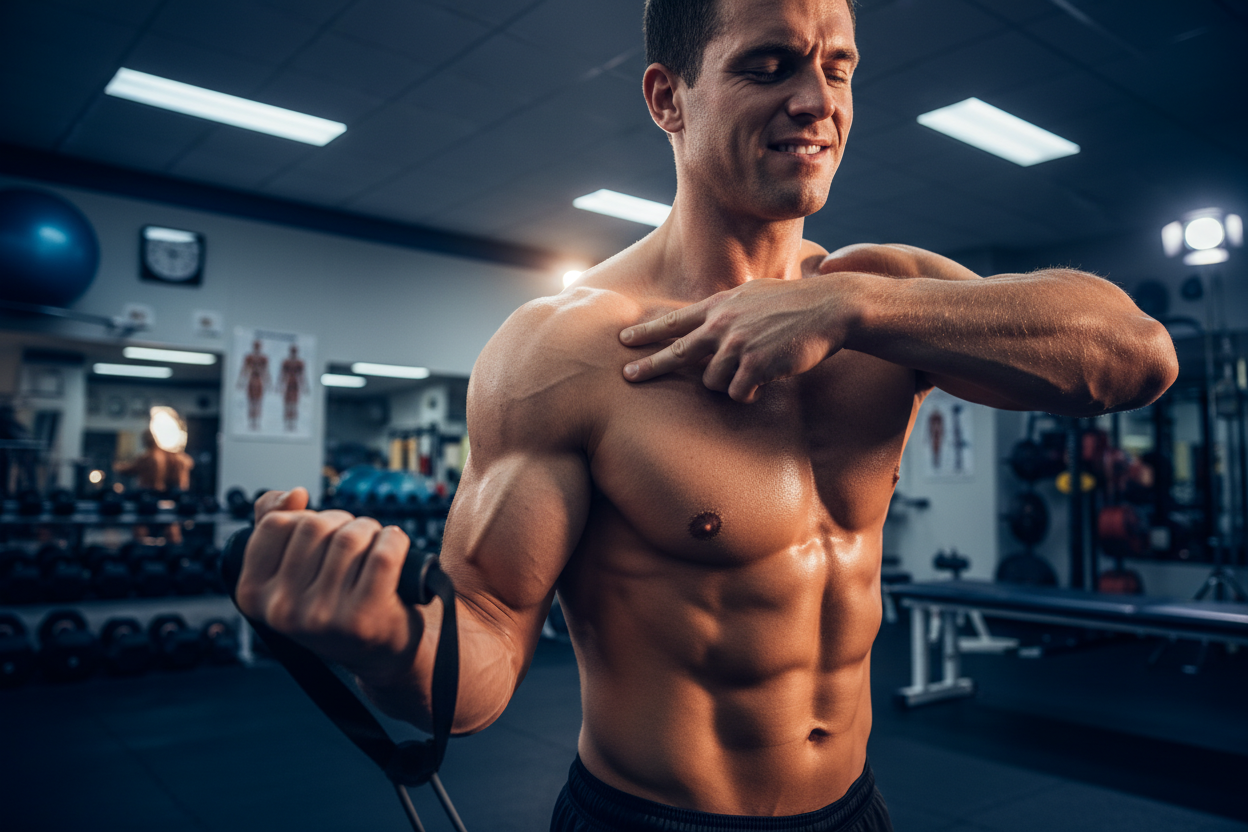
You know that sharp, nagging pinch right on the bony tip of your shoulder? It isn't the deep ache of a muscle strain; it feels specific, almost like a bruise on the bone itself. If you are pointing to the very top edge of your shoulder blade, you are likely dealing with acromial pain.
This isn't just general soreness. It is a mechanical warning light. Whether you are a lifter struggling to lock out an overhead press or someone who simply feels a wince when reaching for a seatbelt, pain at the acromion process indicates that the space in your shoulder joint is compromised. Ignoring it usually leads to chronic inflammation or tears.
In this guide, we will break down exactly why this bony prominence is hurting and the biomechanical adjustments you need to make to fix it.
Key Takeaways
- Location Matters: Acromial pain is localized to the top, bony tip of the shoulder (the acromion process), distinct from general deltoid soreness.
- Primary Causes: The most common culprits are subacromial impingement, AC joint dysfunction, and bursitis.
- Mechanical Flaws: Poor posture (rounded shoulders) reduces the subacromial space, causing the rotator cuff to rub against the acromion bone.
- Immediate Action: Stop overhead pressing immediately. Focus on thoracic mobility and external rotation exercises.
- Tenderness: If you have acromion pain to touch (palpation), it likely indicates superficial inflammation of the bursa or AC joint.
Understanding the Acromion Shoulder Anatomy
To fix the pain, you have to understand the machinery. The acromion is a bony projection off the scapula (shoulder blade). It forms the "roof" over your shoulder joint. Beneath this roof lies the rotator cuff tendons and a fluid-filled sac called a bursa.
When everything works perfectly, your arm bone (humerus) glides smoothly underneath this roof. However, when you experience acromion bone pain, it usually means that "roof" is crushing the structures underneath it, or the joint connecting the acromion to the collarbone (the AC joint) is inflamed.
What Causes Acromion Pain?
If you are asking, "Why does my acromion hurt?" the answer usually boils down to space and mechanics. Here are the primary drivers:
1. Shoulder Impingement (Subacromial Impingement)
This is the most common cause of shoulder acromion pain. When you raise your arm, the space between the acromion and the rotator cuff narrows. If your posture is poor or your scapula doesn't move correctly, the acromion rubs against the tendon and bursa. This friction causes the classic pinching sensation.
2. AC Joint Dysfunction
The acromioclavicular (AC) joint is where your collarbone meets the acromion. If you have pain on top of shoulder acromion specifically, rather than deep inside, it is often this joint. It can flare up from heavy bench pressing or a direct fall onto the shoulder.
3. Bursitis
When the subacromial bursa gets irritated from repetitive overhead motion, it swells. A swollen bursa takes up more room in an already tight space, leading to a cycle of pain and inflammation. This often results in a sore acromion that feels warm or tender.
Identifying the Symptoms
How do you know if it's the acromion or just a rotator cuff strain? Look for these specific markers:
- Acromion Pain When Pressed: If you press your finger on the bony tip of the shoulder and feel sharp pain, that is a hallmark of AC joint issues or superficial bursitis.
- Painful Arc: You feel fine with your arms at your sides, but experience shoulder pain acromion symptoms when lifting your arm between 60 and 120 degrees.
- Side Sleeping Issues: Many patients report waking up because of left acromion pain (or right) when they roll onto the affected side, compressing the joint.
- Acromion Tenderness: The skin and tissue directly over the bone feel sensitive, almost like a bruise that won't heal.
Treating Acromion Process Pain
Fixing acromial pain requires a two-pronged approach: reducing inflammation and correcting mechanics.
Phase 1: De-load and Desensitize
If you have acromion pain to touch, you cannot train through it. You must stop movements that compress the subacromial space. Avoid overhead presses, upright rows, and dips. Ice the area if there is visible swelling, but more importantly, modify your sleeping position to avoid crushing the shoulder at night.
Phase 2: Create Space
The goal is to open up the subacromial space so the impingement acromion issues subside. This involves:
- Thoracic Extension: If your upper back is rounded, your shoulder blade tilts forward, lowering the acromial roof. Use foam rollers to improve upper back extension.
- Strengthen the Lower Traps: These muscles pull the shoulder blade down and back, clearing space for the rotator cuff to move without hitting the acromion.
- Posterior Capsule Stretching: A tight back-of-shoulder pushes the arm bone forward, grinding it against the acromion. The "sleeper stretch" is effective here.
My Personal Experience with Acromial Pain
I dealt with this specifically during a high-volume bench press cycle a few years back. On paper, my form was fine. But in reality, I was ignoring a very specific signal.
It wasn't a muscle tear sensation. It was this gritty, annoying ache right on the bony tip of my shoulder that only flared up after I racked the weight. The real wake-up call wasn't in the gym, though. It was putting on a seatbelt. I reached across my body with my left arm to grab the belt, and I felt a sharp, electric "catch" right on the acromion bone. It felt like someone poked a bruise with a needle.
I tried to stretch it out, which was a mistake. I was stretching a shoulder that was already loose and unstable. What actually fixed it wasn't stretching—it was stability. I had to stop benching for three weeks and focus entirely on Face Pulls and serratus anterior work (like push-up pluses). The moment I stopped trying to "stretch the pain away" and started stabilizing the scapula, the tenderness on the bone finally vanished.
Conclusion
Acromial pain is a nuisance, but it is also a very clear signal from your body that your movement mechanics are off. Whether it is acromion process pain from pressing or acromion tenderness from sleeping wrong, the solution is rarely surgery first. It is almost always about posture, thoracic mobility, and rotator cuff stability. Listen to the pinch, adjust your mechanics, and give the joint the space it needs to breathe.
Frequently Asked Questions
Why does my acromion hurt when I sleep?
Sleeping on your side compresses the subacromial space and the AC joint. If you have existing inflammation, the direct pressure of your body weight exacerbates the acromion pain causes, leading to throbbing that wakes you up. Try sleeping on your back or propping the affected arm up with a pillow.
Can I continue lifting with acromion pain?
You should avoid exercises that cause the pain, specifically overhead pressing and upright rows. However, you can often continue lifting if you modify exercises. For example, switching from a barbell bench press to a neutral-grip dumbbell press often alleviates shoulder impingement acromion stress by opening up the joint space.
How long does acromion pain take to heal?
With proper rest and rehab exercises, mild acromion bone pain typically resolves in 4 to 6 weeks. However, if the pain is caused by a bone spur or severe bursitis, it may take several months. If you have acromion pain to touch that persists despite rest, consult a physical therapist or orthopedist.