A Total Body Workout for Shoulders Will Humbly Destroy You
We've all been there: standing in front of the mirror, spamming lateral raises with 15-pounders until our side delts feel like they're on fire. It feels productive in the moment, but three months later, your overhead press hasn't budged and your shoulders still look like they belong on a coat hanger. I spent years chasing the 'pump' with isolation moves, only to realize I was just accumulating junk volume and irritating my rotator cuffs.
A body workout for shoulders isn't about ditching the pump entirely; it's about realizing that your delts are designed to move heavy things in tandem with your legs and core. If you want shoulders that actually do something, you have to stop treating them like they're disconnected from the rest of your skeleton. Integrating them into a high-intensity, full-body routine is the fastest way to build functional mass that doesn't vanish the moment you stop flexing.
Quick Takeaways
- Isolation often leads to 'junk volume' and tendonitis rather than raw strength.
- Overhead movements integrated with leg drive (like thrusters) recruit more muscle fibers.
- Full-body integration forces core stability, protecting the lower back during heavy presses.
- Metabolic demand is significantly higher, helping you lean out while building shape.
The Problem With Chasing the 'Shoulder Pump'
The fitness industry loves isolation because it's easy to sell. It's easy to film a guy doing front raises and call it a 'shoulder day.' But for those of us training in a garage with limited time, isolation is often a trap. When you spend 45 minutes strictly hitting delts, you're usually just fatiguing small stabilizer muscles without ever challenging your central nervous system.
I've found that high-rep isolation often leads to 'shoulder impingement' faster than it leads to growth. Your rotator cuff is a small, delicate group of muscles. When you hammer them with endless reps of lateral raises and flyes, they get inflamed. By the time you get to your heavy compound lifts later in the week, your shoulders are already fried, limiting your top-end strength. It's a cycle of stagnation that keeps you lifting the same 25-lb dumbbells for years.
What Happens When You Integrate Instead of Isolate
When you switch to a shoulder body workout approach, everything changes. Think about a push press. You aren't just using your delts; you're using your quads, glutes, and core to launch that bar upward. This allows you to handle 20-30% more weight than a strict press. That extra load provides a massive stimulus to the nervous system and forces the shoulders to adapt to weights they could never handle in isolation.
This integration mimics real-world athleticism. Whether you're tossing a kid into the air or hauling a 60-lb bag of mulch, your body works as a single unit. By forcing your core to stabilize a heavy load overhead while your legs are already fatigued from a squat or lunge, you develop a level of 'bracing' strength that isolation exercises can't touch. You'll feel it in your midsection as much as your shoulders.
The Conditioning Benefit Nobody Talks About
Let's be honest: traditional shoulder days are boring. You sit on a bench, press, and wait two minutes. By weaving overhead movements into a total body strength training HIIT workout, you turn a strength session into a cardiovascular nightmare—in a good way. The distance the weight travels from the floor to overhead is massive, which spikes your heart rate instantly.
This metabolic demand is what builds that 'hard' look. You're burning more calories per minute than you ever would doing seated presses. Plus, the hormonal response to heavy, full-body movements is far superior for fat loss and muscle retention. You aren't just building shoulders; you're building an engine that can actually sustain work for more than 10 seconds at a time.
My Go-To Full-Body Circuit for Stubborn Delts
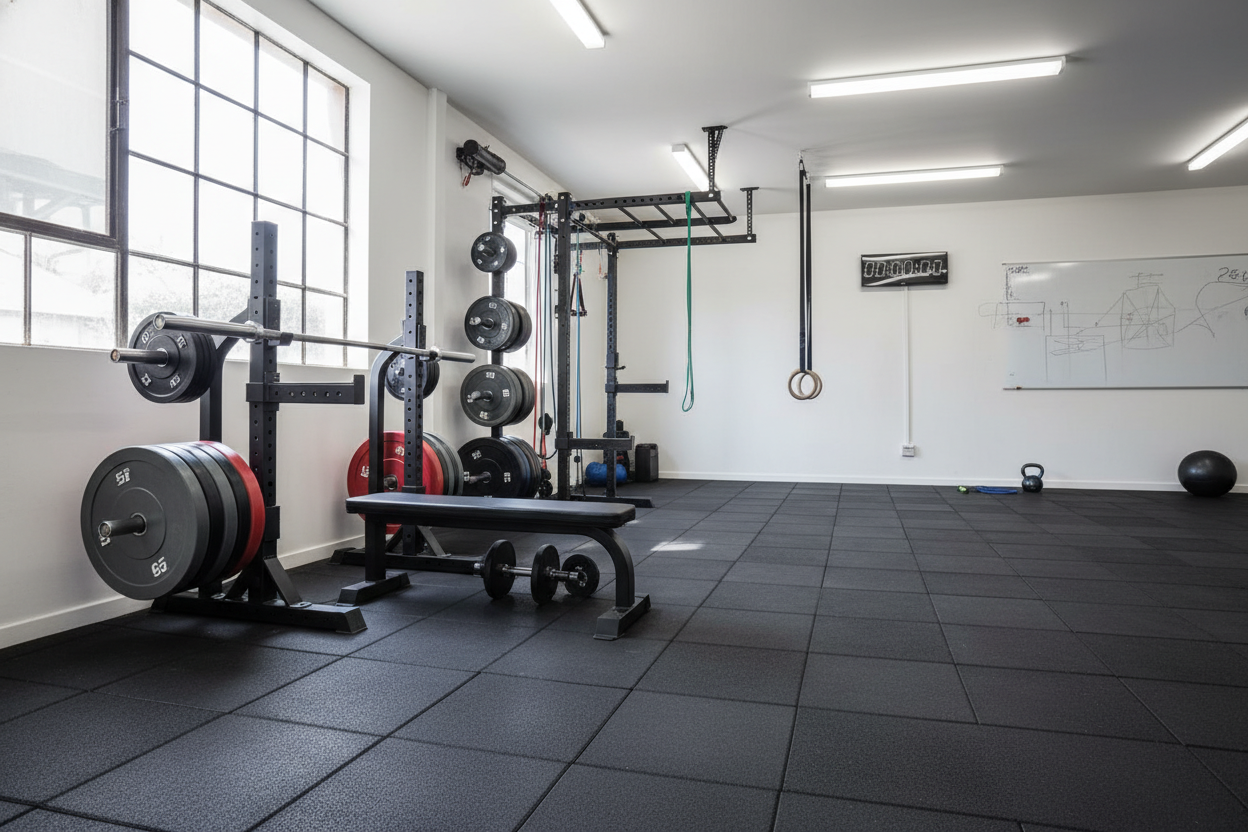
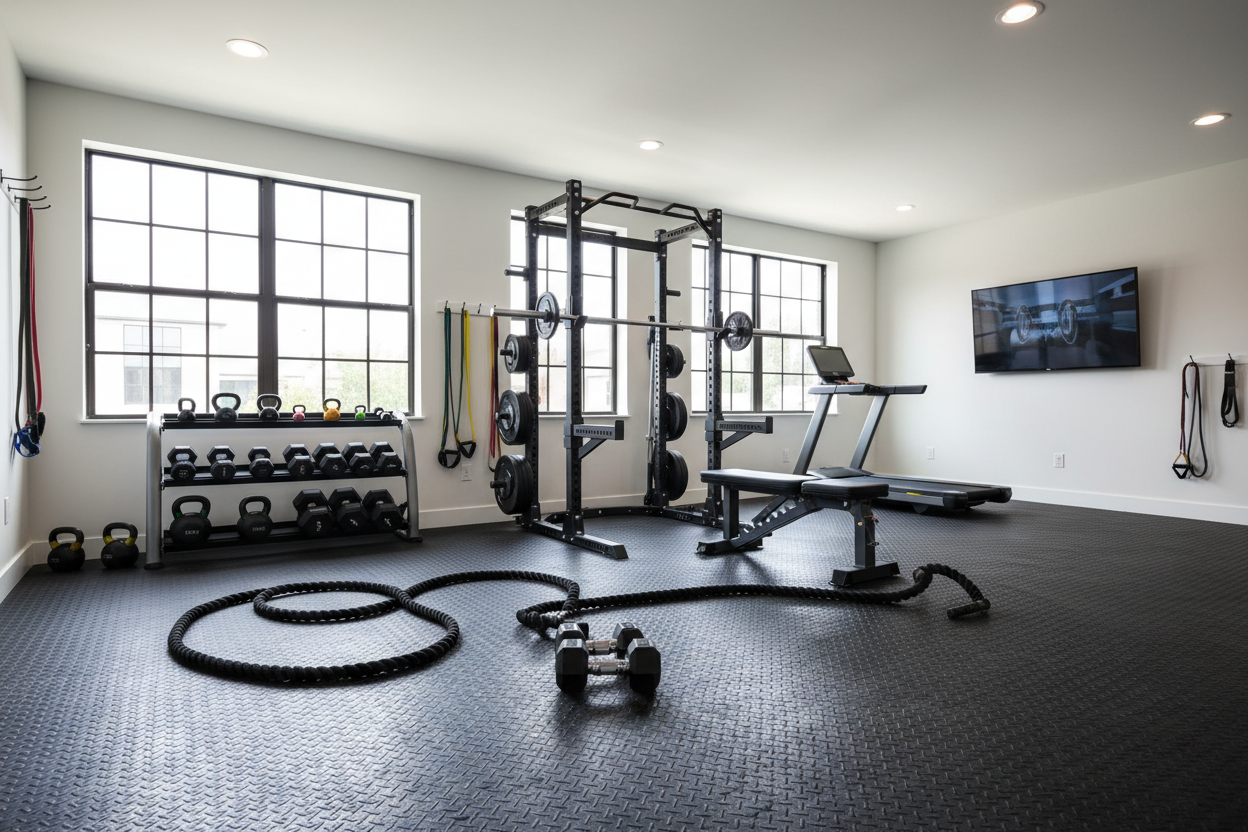
This is the routine I run when I'm short on time but need to feel like I've been hit by a truck. You don't need a massive commercial gym for this. I do this in my 10x10 space with a barbell and a set of 52.5-lb adjustable dumbbells. Grab a large 6x8ft exercise mat to protect your floors and give yourself enough room to move without tripping over your rack.
Perform 4 rounds of the following, resting 90 seconds between rounds:
- Dumbbell Thrusters: 12 reps (Full squat into overhead press).
- Renegade Rows: 10 reps per side (Hold the plank on the dumbbells, row, then perform a push-up).
- Clean and Press: 8 reps (Use a barbell or heavy dumbbells).
- Burpee Over Bar: 10 reps (The ultimate heart-rate spike).
The thrusters hit the legs and front delts, the renegade rows stabilize the shoulder girdle while hitting the back, and the clean and press builds that explosive power. By the end of round three, your shoulders will be screaming, but your entire body will be working to keep that weight moving. It's efficient, brutal, and effective.
How to Program This Without Overtraining
The biggest mistake people make with full-body shoulder work is doing it too often. Because you're involving your legs and back, you can't do this five days a week. I recommend hitting this type of circuit twice a week, with at least two days of recovery or light steady-state cardio in between. If you want to see how this fits into a broader schedule, you can explore our workout hub for more programming ideas.
Listen to your joints. If your elbows start feeling 'clicky,' back off the weight and focus on the tempo. The goal is tension and heart rate, not just ego-lifting. If you're using a barbell, make sure your knurling isn't so aggressive it's tearing your hands apart during the cleans; a standard multi-purpose bar is usually better for this than a sharp power bar.
Personal Experience: The 'Moving Day' Epiphany
I used to be a 'shoulder day' devotee. I had the 3D delts, but I was functionally useless. I realized this when I helped a friend move a heavy oak dresser up three flights of stairs. My shoulders gassed out in minutes because I didn't have the core stability to support the weight while moving my feet. I was all 'show' and no 'go.' Since switching to integrated full-body shoulder work, my overhead press has jumped 30 pounds, and more importantly, I don't feel like a broken man after a day of yard work. The downside? You can't hide in the corner of the gym doing easy reps. This style of training is uncomfortable, but that's why it works.
FAQ
Can I do this with just dumbbells?
Absolutely. In fact, dumbbells are often better for shoulder health because they allow for a more natural range of motion. A pair of 50-lb adjustables is plenty for most people to get a world-class workout in a small footprint.
Will this make my shoulders too bulky?
Muscle 'bulk' is a product of calories, not just the exercise. This approach builds dense, functional muscle. If you eat at maintenance, you'll likely see more definition and better posture rather than just 'size.'
Is this safe for people with old rotator cuff injuries?
Always clear it with a PT first, but many find that integration actually helps. By using the legs to initiate the move (like in a push press), you bypass the most stressful part of the lift for the shoulder joint—the bottom transition.