A 30 Day Exercise Plan for Beginners Who Always Quit on Day 12
I have seen it a hundred times. You buy the fancy adjustable dumbbells, you clear a spot in the garage, and you download a 30 day exercise plan for beginners with high hopes. Then Day 12 hits. Your boss stays late, the kids are screaming, and suddenly that 'perfect' streak is broken. Most people just stop there because they feel like they have already failed. They think if they can not do 30 days in a row, they might as well do zero.
Quick Takeaways
- Perfection is a lie; aim for 80 percent consistency instead of 100 percent.
- Environment dictates behavior—if your gym space is a mess, you will not use it.
- Focus on 'blocks' of activity rather than a rigid calendar.
- Phase into resistance training slowly to avoid the 'I can not walk' soreness that kills motivation.
Why You Keep Crashing in the Second Week
The psychology of most fitness challenges is fundamentally broken. They are built on the idea of a 'streak,' which is the most fragile motivation tool in existence. When a 30-day beginner workout demands perfect attendance, it sets a trap. The moment you miss a Tuesday, the streak is dead, and your brain tells you the whole month is a wash. This is why the 'Day 12 Crash' is so common.
To actually finish a month of training, you need built-in grace periods. Real life does not care about your PDF calendar. A sustainable 30 day exercise plan for beginners should treat the month like a checklist, not a conveyor belt. If you miss a day, you do not fail. You just pick up where you left off. The goal is 30 completed sessions, even if it takes you 35 or 40 days to get through them.
The 'Flexible Block' Approach to Building Habits
Instead of looking at a calendar with 30 terrifying squares, break your month into six blocks of five days. Each block should have a specific focus. This method prevents the mental burnout that comes from staring at a long, unbroken road. It also allows you to layer your progress. You might start with three days of movement and two days of active recovery, gradually shifting the ratio as you get stronger.
By using an at-home workout schedule for beginners, you can slowly add volume without shocking your central nervous system. Think of it like a menu. You need to hit your 'movement' quota for the block, but you get to decide which day that happens based on your energy levels and schedule. This autonomy is what turns a chore into a habit.
Setting Up Your Friction-Free Space
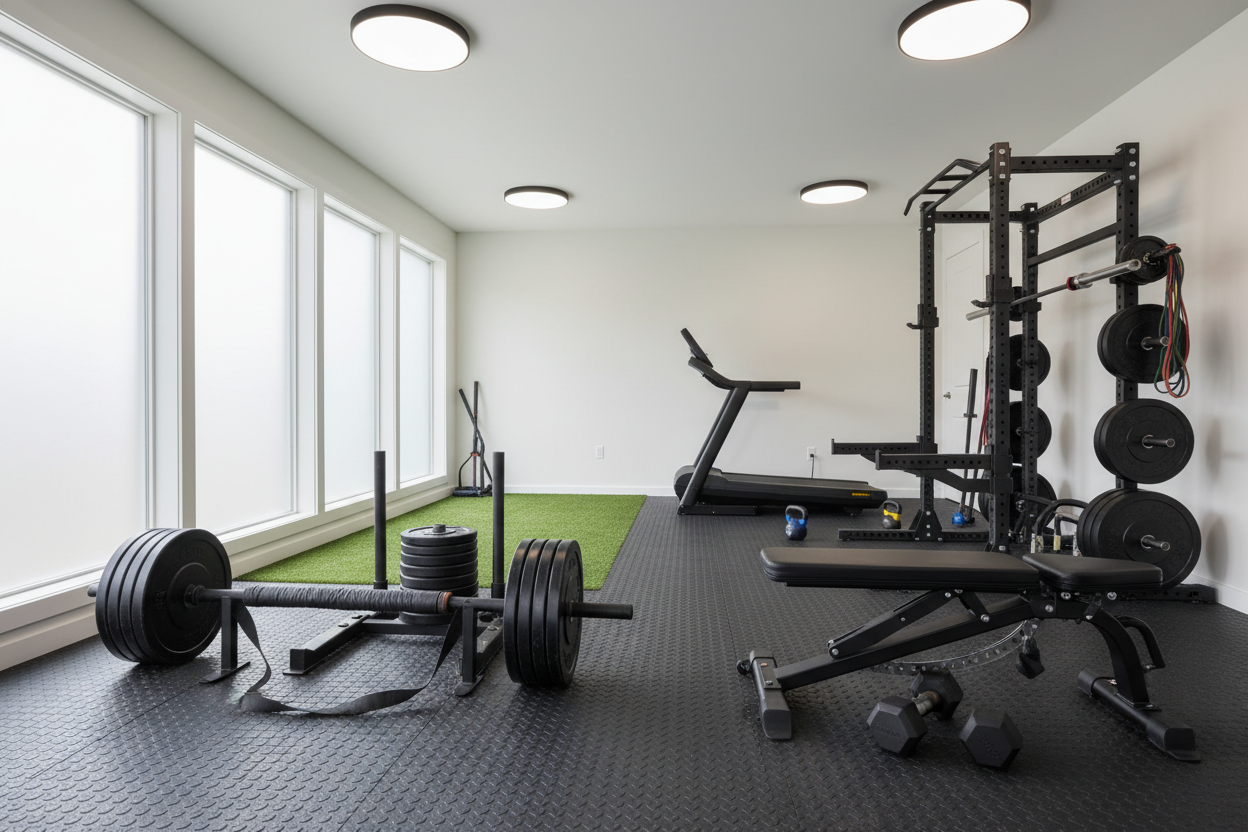
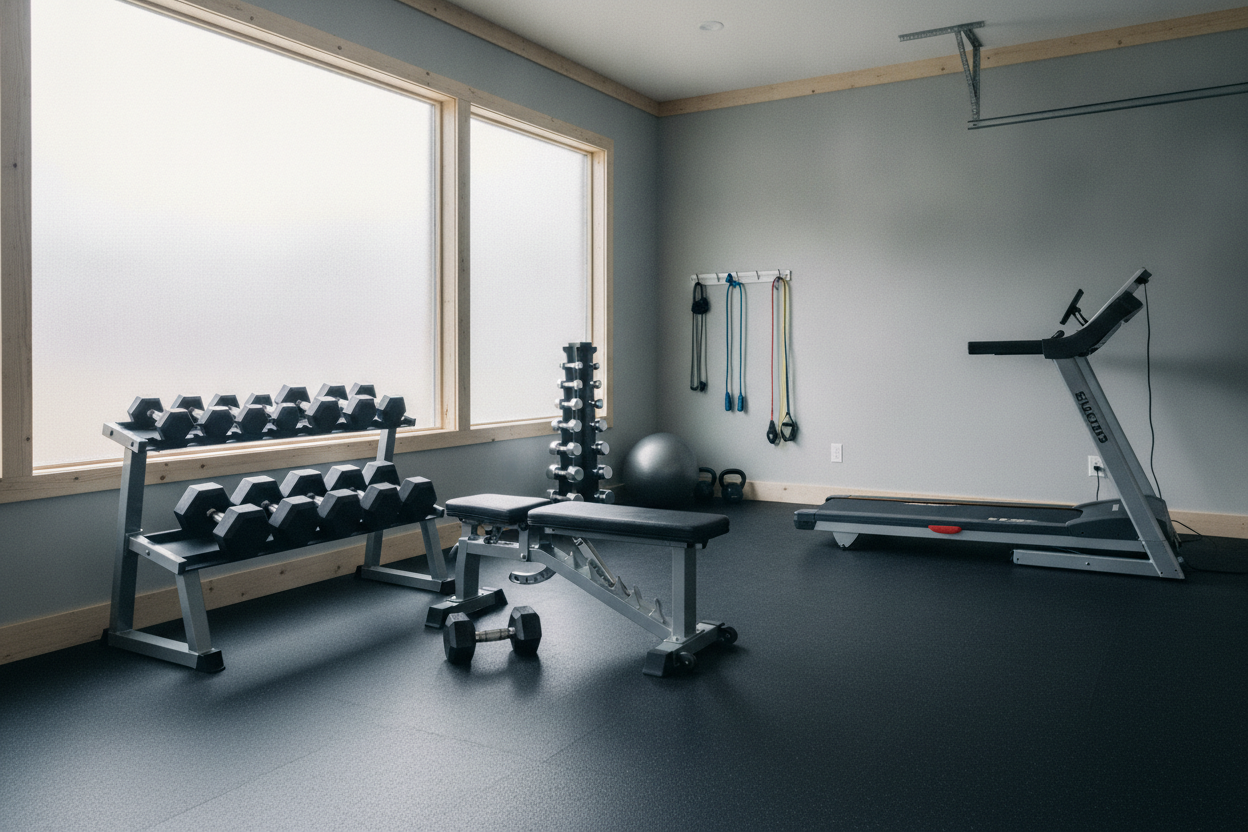
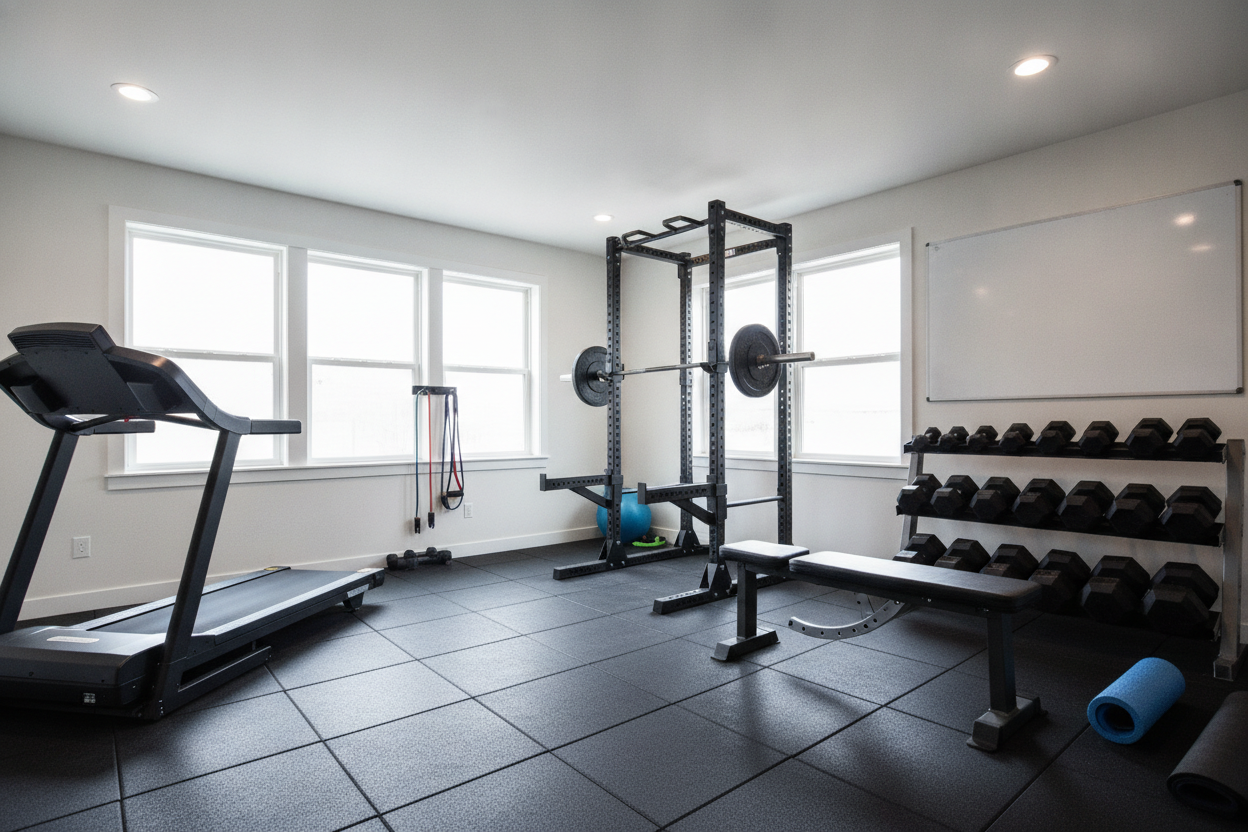
Motivation is a finite resource, so stop wasting it on logistics. If you have to move a coffee table, find your shoes, and sweep the floor every time you want to sweat, you will quit by Wednesday. You need a designated zone that is always ready. I have seen guys with $5,000 racks who never train because the garage is too cold or cluttered. Meanwhile, the person with a simple, dedicated corner stays consistent.
The easiest win is a permanent floor upgrade. A thick 6x8ft exercise mat creates an instant boundary for your brain. Once you step on that mat, you are in the gym. It is not just about the cushion for your knees; it is about having a large exercise mat for home gym use that stays put. When the equipment is already laid out, the 'friction' of starting is gone.
Phase 1: Days 1-10 (Just Show Up)
The first ten days are not about burning calories or 'shredding' anything. They are about neurological adaptation. You are teaching your brain that 20 minutes of movement is now a non-negotiable part of your day. We focus on basic mobility: air squats, lunges, planks, and bird-dogs. If you go too hard here and end up with debilitating soreness, you will associate exercise with pain rather than progress.
Keep the intensity at a 5 out of 10. You should finish every session feeling like you could have done more. That 'leftover' energy is what brings you back the next day. We are building the 30-day beginner workout foundation here, and you can not build a house on wet concrete. Focus on form, breathing, and simply hitting your time slot.
Phase 2: Days 11-20 (Surviving the Danger Zone)
This is where the novelty wears off. The initial excitement is gone, and the results are not quite visible in the mirror yet. This is when you need to introduce slight resistance. If you have been doing bodyweight movements, grab a light kettlebell or a pair of dumbbells. This is the stage where a specific at home workout plan for beginners female or male focused becomes useful because it moves you toward actual strength gains.
Do not fall for the 'light weight, high reps' myth if you want to see changes. Pick a weight that feels heavy by the 10th rep. We are trying to stimulate muscle, not just move for the sake of moving. If you can talk comfortably during your sets, you are not working hard enough. Increase the intensity to a 7 out of 10, but keep the sessions short—30 minutes max.
Phase 3: Days 21-30 (Cementing the Routine)
By now, the 30-day workout plan for beginners at home should feel less like a 'challenge' and more like your morning coffee. In this final stretch, we focus on tracking. Write down your reps. If you did 10 pushups on Day 5, try to do 12 today. These small, measurable wins are what keep you going when motivation fails. You are no longer 'trying out' a new hobby; you are maintaining a training routine.
This phase is about confidence. You have survived the Day 12 crash and the mid-month slump. Now, you are just refining the movements. Experiment with slightly more complex exercises or add a fifth day of training to your block if you feel recovered. The goal is to finish Day 30 feeling strong, not exhausted.
What Happens on Day 31?
Most people finish a 30-day plan and then fall off a cliff. They celebrate with a week off, which turns into a month off. To avoid this, you need a 'Bridge Plan.' Day 31 should not be a rest day; it should be the start of a new, sustainable 3-day or 4-day split. You have built the engine; now you just need to keep it running.
Transition into a program that focuses on progressive overload. You do not need a 30 day exercise plan for beginners anymore—you are an intermediate now. Keep the mat where it is, keep the weights accessible, and keep showing up. The habit is the real trophy, not the completion of a calendar.
My Personal Take on the '30 Day' Myth
I once tried one of those '100 burpees a day' challenges. By Day 14, my wrists were shot and I hated the sight of my gym floor. I realized that rigid, high-repetition challenges are usually designed for social media, not for human bodies. I switched to a flexible block system—aiming for 4 quality sessions a week regardless of which days they fell on—and I have not missed a week of training in three years. Consistency beats intensity every single time.
FAQ
What if I miss three days in a row?
Do not double up the workouts. Just start back at the next day in your plan. The goal is the total number of sessions, not the date on the calendar.
Do I need a full rack for this?
No. A solid mat and one or two pairs of dumbbells are enough to get through the first 30 days. You can worry about the big iron once you have proven you will actually use it.
Should I do cardio or weights?
Do both, but prioritize resistance. Muscle burns more calories at rest and protects your joints. Use 'cardio' as a way to move on your active recovery days.