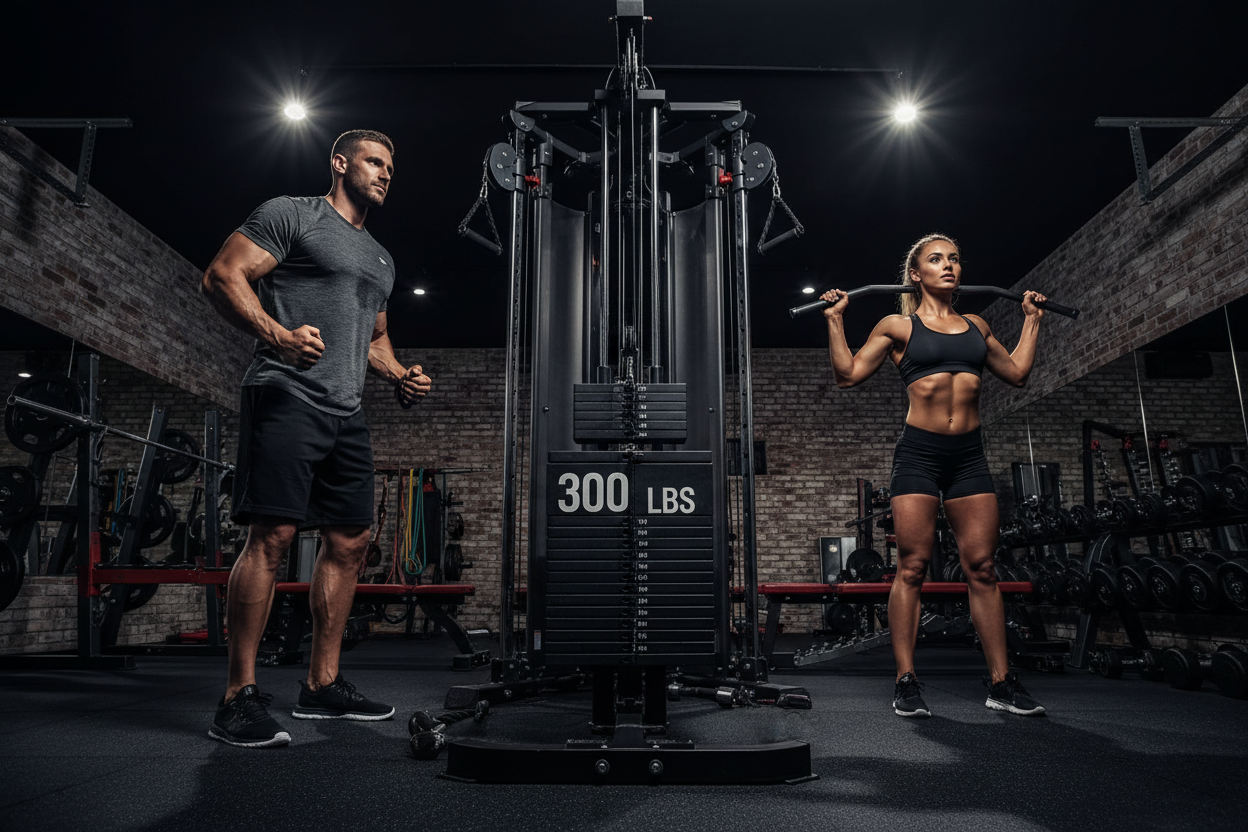
300 lb weight stack home gym: Is It Actually Worth the Upgrade?
Have you ever mid-workout realized you are effortlessly maxing out the lat pulldown station? That clanking sound of the pin hitting the top of the stack is satisfying, but it is also a flashing warning sign that your strength gains are about to stall. If you are tired of outgrowing your equipment, upgrading to a 300 lb weight stack home gym might be the permanent solution to your training plateaus.
In this guide, we will break down exactly what you need to know before making the jump to a heavier setup, from structural requirements to understanding cable ratios.
Key Takeaways
- A heavy-duty 300 lb stack provides enough resistance for advanced lifters to progress on heavy compound cable movements.
- Cable ratios (1:1 vs. 2:1) drastically alter the actual felt resistance, making larger stacks a necessity on functional trainers.
- You will need reinforced flooring, as the total assembled machine weight often exceeds 500 lbs.
- Upgraded guide rods and aluminum pulleys are essential to handle the increased friction and load.
Decoding the Specs: Why Bigger is Better
The Cable Ratio Trap
Many lifters buy a standard 150 lb functional trainer only to realize it utilizes a 2:1 pulley ratio. This means pulling the entire stack only yields 75 lbs of actual resistance per handle. When you invest in a home gym 300 lbs stack, that same 2:1 ratio gives you 150 lbs of working weight per side—enough to properly challenge your chest presses, heavy rows, and lat pulldowns without needing to pin extra weight plates to the stack.
Frame and Build Quality
You cannot put a massive weight stack on a flimsy frame. Machines built to house 300 lbs of cast iron are typically constructed from 11-gauge steel. This commercial-grade footprint ensures the machine will not sway, tip, or shudder when you are performing explosive movements or heavy negatives.
Space and Structural Planning
Flooring and Footprint Requirements
Before hitting the buy button, consider your floor plan. A 300 lb stack alone is heavy, but the heavy-duty frame required to support it usually brings the total machine weight to anywhere between 500 and 700 lbs. If you are installing this in a garage or basement on a concrete slab, a standard 3/4-inch rubber horse stall mat will suffice. However, if you plan to put this on a second floor or above a crawlspace, you must verify the load-bearing capacity of your joists.
From Our Gym: Honest Take
I recently swapped our garage studio's standard 160 lb trainer for a dedicated 300 lb weight stack home gym. The difference in the friction curve was immediate. Pulling 200+ pounds on a seated row requires serious stability, and the heavier frame of the 300 lb unit did not budge an inch. The knurling on the included attachments felt secure, and the aluminum pulleys offered a buttery smooth pull compared to the nylon pulleys on our old unit.
However, I will warn you: assembly is an absolute beast. Carrying thirty 10-pound cast-iron plates across the house is a workout in itself. Also, I noticed the selector pin on these larger stacks can sometimes be finicky if the dual guide rods are not perfectly lubricated. A quick wipe-down with a silicone-based lubricant every few months is mandatory to keep the plates gliding smoothly.
Frequently Asked Questions
Is a heavy weight stack overkill for average lifters?
Not necessarily. Because of pulley ratios, a 300 lb stack often translates to a much lower felt weight. It provides room to grow, ensuring you will not need to buy a whole new machine in two years when your strength increases.
How much does a home gym 300 lbs stack actually weigh fully assembled?
Depending on the frame thickness and included attachments, the total assembled weight typically ranges from 450 lbs to over 700 lbs. Always check the manufacturer specifications for exact shipping and assembled weights.
What maintenance does a heavy stack require?
The primary maintenance involves keeping the guide rods clean and lubricated. Wipe them down with a dry cloth to remove dust, and apply a high-quality silicone spray or Teflon lubricant to ensure the heavy plates do not catch or drag during your sets.