3 Tweaks to Fix Your overhead press form dumbbell Tonight
I remember the first time I tried to max out my overhead press form dumbbell. I was using a pair of crusty 70-lb hex bells in my garage, and by the third rep, my lower back was arched like a bridge and my right shoulder sounded like a bag of gravel. It wasn't a lift; it was a 911 call waiting to happen.
Most lifters treat the dumbbell arm press like a secondary movement, something they just toss in after benching. But if you want actual boulder shoulders without the chronic inflammation, you have to stop 'surviving' the weight and start owning the mechanics. It is the difference between a productive session and a week of icing your rotator cuffs.
Quick Takeaways
- Tuck your elbows 30 degrees forward into the scapular plane to save your joints.
- Stop clanking the dumbbells at the top; it kills the tension you are trying to build.
- Drive your feet into the floor to prevent your lower back from taking over.
- Lower the weights until the handles are roughly level with your ears or chin.
The Difference Between Pressing and Surviving
Lifting dumbbells above head is a completely different beast than the barbell version. With a bar, your hands are locked into a fixed position. With a free weight overhead press, those bells want to wander. They want to drift out, pull back, or shake your stabilizers into submission.
I see too many guys in their garage gyms trying to manhandle 80s when they can't even stabilize a 50-lb dumbbell overhead raises session with clean form. When you lose control, you stop training your delts and start training your ego. Mastering how to do dumbbell overhead press movements requires you to fight the urge to balance the weight and instead focus on driving it through a rigid, stable frame.
Tweak 1: Find the Scapular Plane
The biggest mistake I see is the 'T-pose' press. If your elbows are flared out at a perfect 90-degree angle to your torso, you are grinding your AC joint into dust. It feels 'wider,' sure, but it is a biomechanical nightmare for your rotator cuffs during an overhead dumbbell lift.
Instead, tuck your elbows slightly forward, about 30 degrees. This is the scapular plane. It allows your shoulder blades to move naturally against your ribcage. When I made this switch, my nagging front delt pain vanished within two workouts. It feels stronger because it is a more natural path for the humerus to travel.
Tweak 2: Nail Your Range of Motion
There is a massive debate about how low you should go. Some guys tap their shoulders; others stop at 90 degrees. If you go too low with heavy weight and poor mobility, you risk impingement. If you stop too high, you are just doing expensive tricep extensions.
I generally recommend bringing the handles down until they are level with your ears or chin. This keeps the tension squarely on the medial and anterior delts. For a deeper dive into the mechanics of depth, check out How Deep Should a dumbbell shoulder overhead press Actually Go? to see where your specific mobility cut-off should be.
Tweak 3: Press Like Pistons, Don't Clank
We have all seen it: the guy who finishes a rep by smashing the dumbbells together like cymbals. Stop doing that. When you clank the weights, you lose the lateral tension on your shoulders at the exact moment they should be working hardest to stabilize the lockout.
Think of your arms like pistons in an engine. They move straight up and straight down. Using The Piston Fix for Dumbbell Overhead Press Shoulders ensures that you are maintaining a vertical bar path. Your hands should stay shoulder-width apart at the top, not converge into a triangle. This keeps the side delts under fire for the entire set.
Why Your Feet Matter on Upper Body Day
Even if you are doing a seated overhead press at home, your legs are not just there for decoration. If your feet are dancing around, your base is weak. A weak base leads to a rounded lower back, which turns your vertical press into a standing incline bench press. That is how you blow a disk.
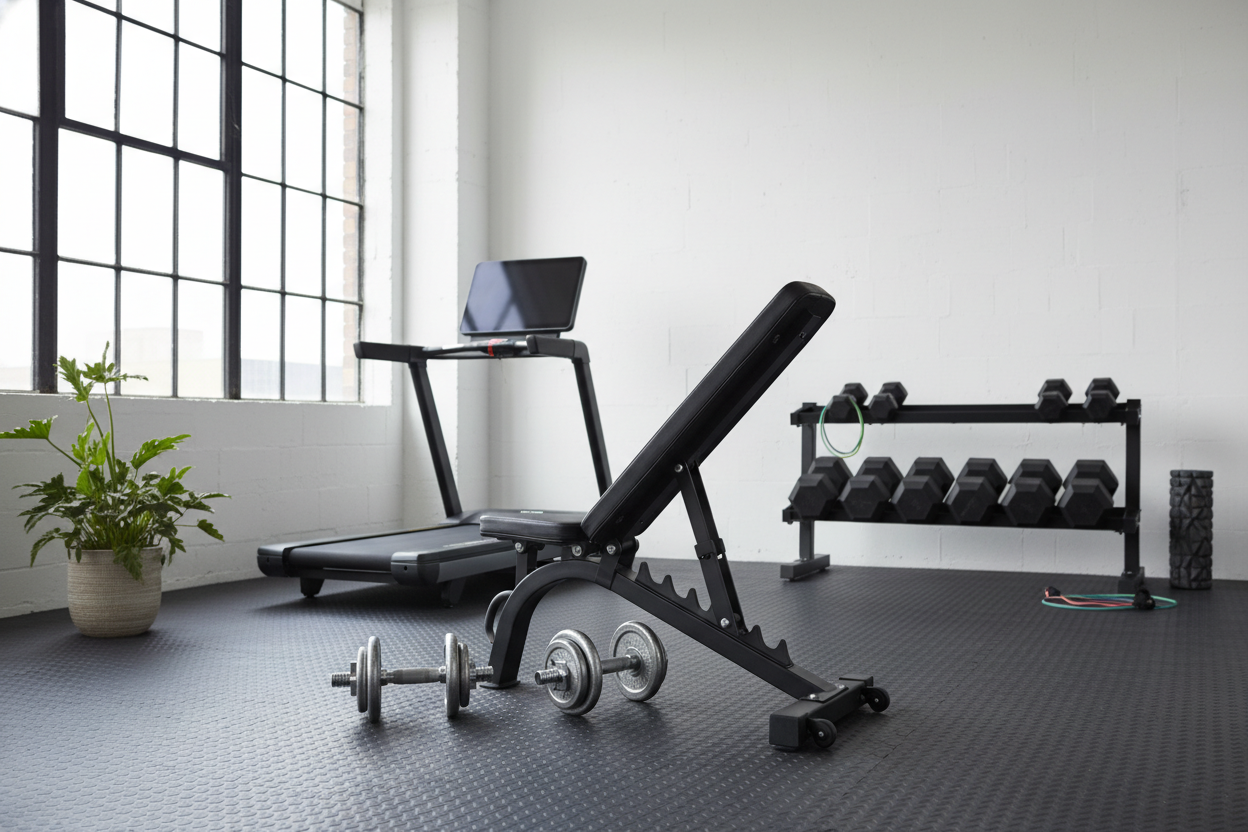
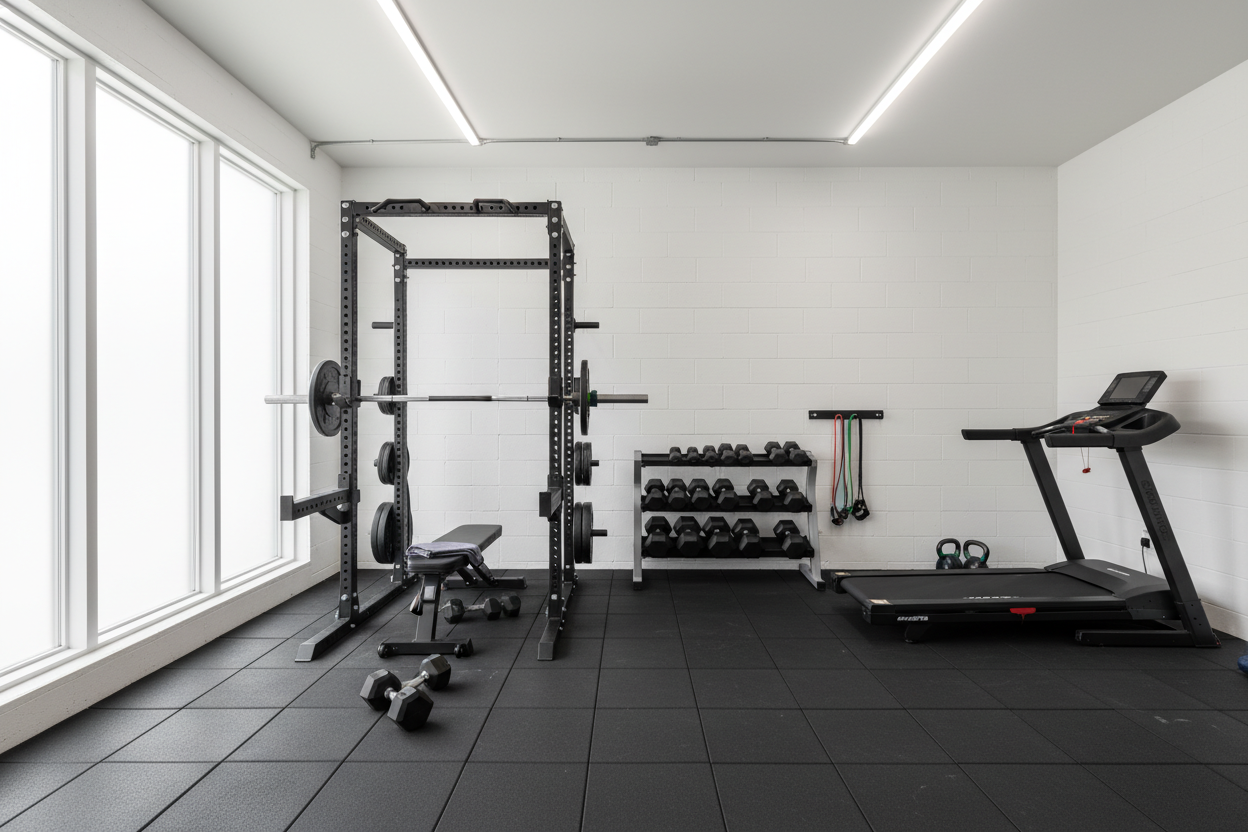
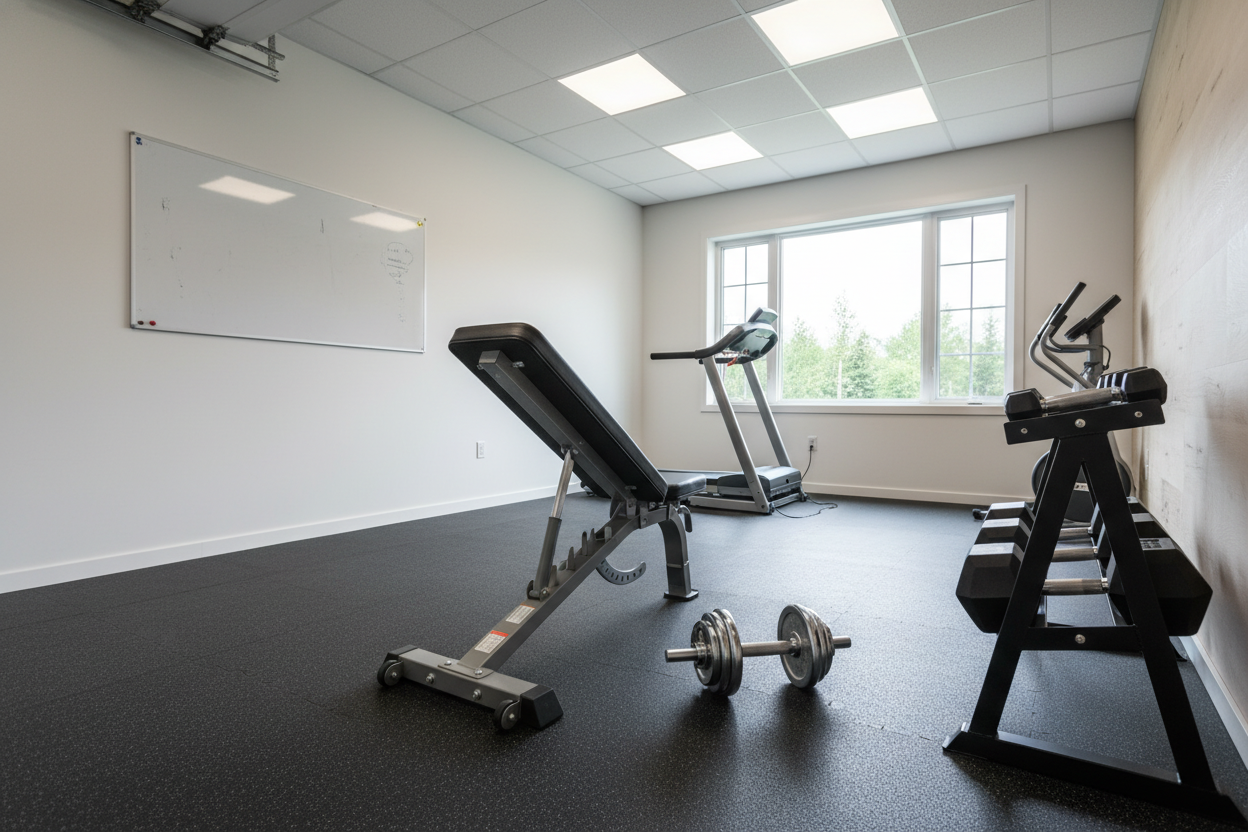
I always make sure I have a grippy surface, like a high-density exercise mat gym flooring for home workout, so I can dig my heels in. When the weight gets heavy, I drive my feet into the floor and squeeze my glutes. This creates a 'column' of stability that lets me press more weight without my spine turning into a wet noodle.
Rebuilding the Lift from Scratch
If your overhead press dumbbell form feels shaky, do yourself a favor: drop the weight. I had to swallow my pride and go from 80s back down to 60s to fix my path. It felt like a regression at first, but my shoulders grew more in three months of strict pressing than they did in three years of 'surviving' the heavy stuff.
Take a week to practice how to overhead dumbbell press with these three tweaks. Focus on the scapular plane, the piston path, and a rock-solid base. Your joints will thank you, and your shirts will eventually stop fitting in the shoulders.
FAQ
Is it better to do these standing or seated?
Standing requires way more core stability and prevents you from lifting as heavy, but it is better for overall athleticism. Seated allows you to isolate the shoulders more because the bench supports your back. I do both, but I prefer seated for pure hypertrophy.
Why do my shoulders click when I press?
Usually, it is because your elbows are flared too wide or you have poor thoracic mobility. Try the 30-degree elbow tuck (scapular plane). If it still clicks, you might need to work on your upper back tightness before you go heavy again.
Can I use adjustable dumbbells for this?
Absolutely, but be careful with the length. Some adjustables are very long, which can make the 'piston' path tricky because the ends might bump your head or shoulders. Just move slow and find your lane.