Your Weight Training Programme Doesn't Need Cable Machines
I remember the day I finally quit my big-box gym. I was standing in line for a cable crossover machine, watching a guy do 'weighted' shadowboxing with the pulleys, and I realized I was paying fifty bucks a month for access to a bunch of chrome-plated distractions. Setting up a weight training programme at home felt like a massive undertaking until I stripped away the fluff and realized that 90% of those machines are just there to make the gym floor look busy.
- Compound movements are the primary drivers of muscle and strength.
- A power rack provides a safety net that machines can't replicate for solo lifters.
- Adjustable benches unlock more angles than a high-end cable station.
- Progressive overload is easier to track with iron plates than friction-heavy pulleys.
The Commercial Gym Illusion
Walk into any commercial gym and you'll see a sea of machines. There's a machine for your inner thigh, your outer delt, and even a machine that mimics the exact motion of a shrug. It makes home gym owners feel like they're missing out. But here's the truth: that variety often just masks a lack of intensity. If you can't grow your legs with a barbell and a rack, a leg extension machine isn't going to save you.
I've spent years testing gear in a 200-square-foot garage. I've found that when you have fewer options, you're forced to get better at the ones that actually work. You stop 'exercising' and start training. Machines provide a fixed path of motion, which is fine for rehab, but for building raw strength, you want the instability that free weights provide.
The Core of Any Good Routine
A proper routine isn't about hitting every muscle from sixteen different angles. It's about mastering movement patterns: push, pull, hinge, and squat. If your programme covers these, you're hitting every major muscle group in the body. The barbell is the ultimate equalizer because it doesn't care about your limb lengths or your gym's brand—it just demands that you move the weight.
When you strip away the cables, you're left with the 'Big Four': the Squat, Deadlift, Bench Press, and Overhead Press. These four movements have built more world-class physiques than every selectorized machine combined. By focusing on these, you spend your energy on the movements that offer the highest return on investment.
The Only Gear That Actually Matters
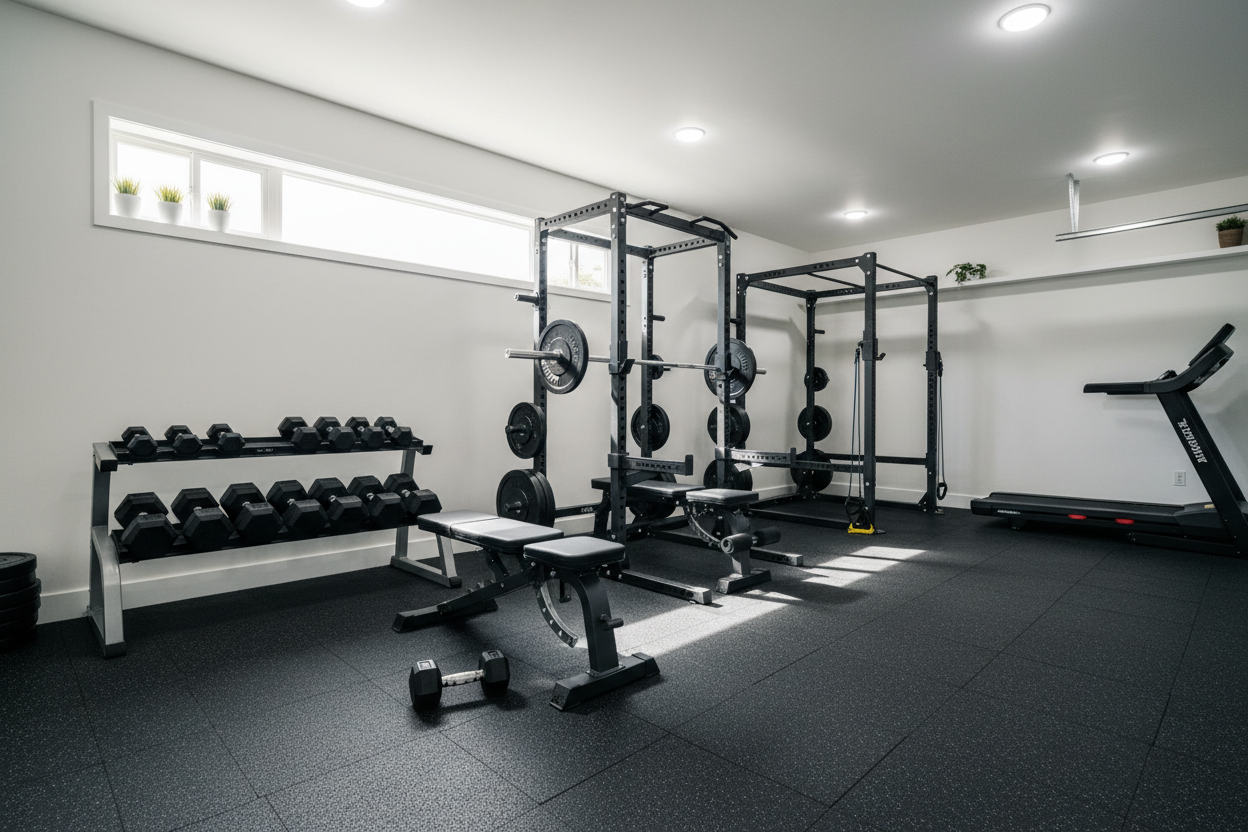
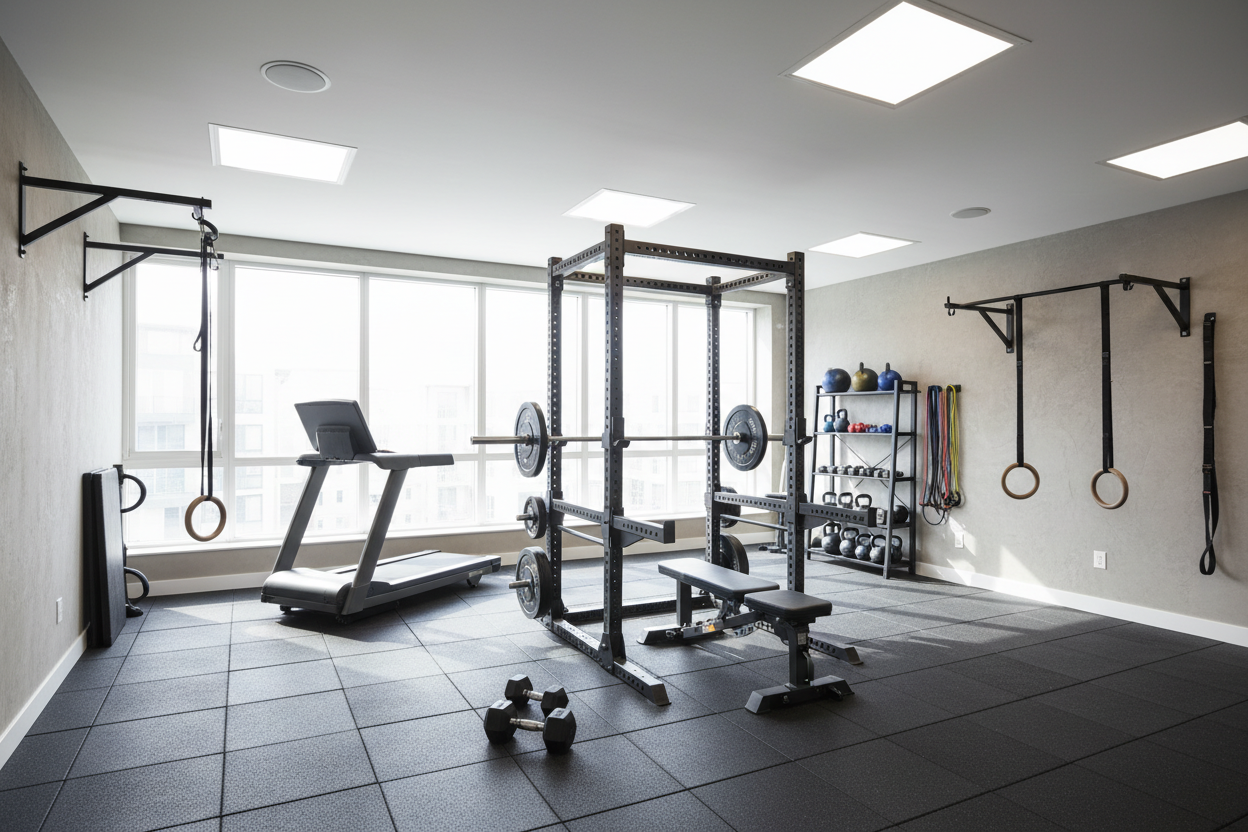
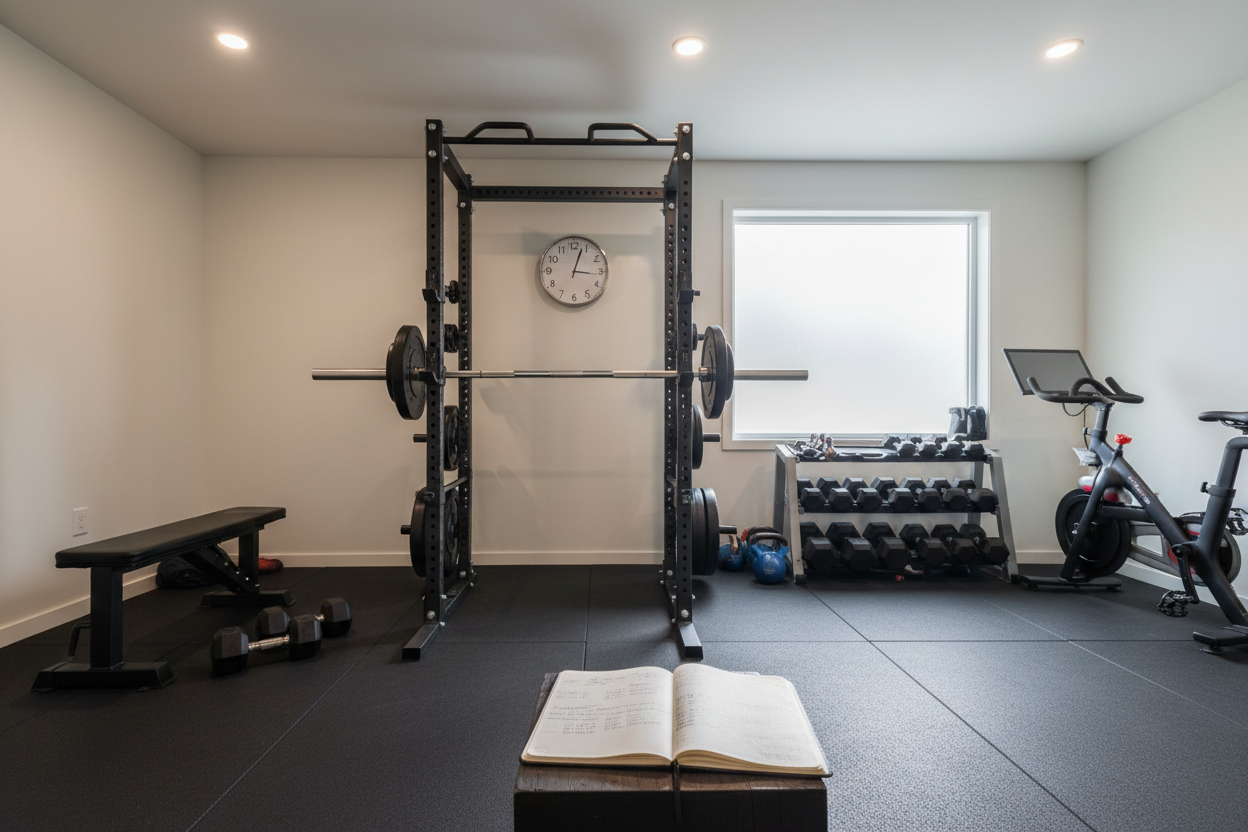
To run a heavy, progressive programme safely, you don't need a 20-piece circuit. You need a rack that won't tip when you re-rack a heavy set of squats and a bar that won't bend under a 400-lb load. If you're tight on space and want to cover all your bases in one shot, the Gxmmat X6 Power Rack Weight Bench Package is a smart move. It gives you the structural integrity of a full rack with the bench already dialed in for the footprint.
You also need plates—real iron or bumpers. I prefer iron for the sound and the thinner profile, allowing you to stack more weight on the sleeves. Don't forget fractional plates. Being able to add 2.5 lbs total to the bar is the secret to breaking plateaus when you can't just jump the 10-lb increments found on most machine stacks.
Why the Bench is Non-Negotiable
You can do a lot on the floor, but a floor press has a limited range of motion. An adjustable bench is what turns a simple rack into a complete upper-body station. It allows for incline work to hit the upper pecs and provides a stable base for seated overhead presses. Honestly, it's a Home Fitness Essential Why Everyone Needs A Weight Training Bench because without it, your chest and shoulder development will eventually hit a ceiling.
How to Structure Your Week Without Machines
I've seen guys spend two hours in the gym doing thirty sets of 'junk volume.' You don't need that. A three-day full-body split or a four-day upper/lower split is more than enough. Focus on one heavy compound lift per session, followed by two or three accessory movements like rows, lunges, or Bulgarian split squats using dumbbells.
Keep the ego out of it and keep the selection tight. As I've argued before, I Refuse to Write a Beginner Weight Training Programme With 10 Exercises because it distracts from the goal. If you do five things perfectly, you'll beat the guy doing twelve things half-heartedly every single time. Use your bench for rows and your rack for pull-ups, and you've covered the entire 'pull' category without a single cable in sight.
Progressive Overload in a Garage
In a commercial gym, progress is moving the pin down one slot. In a garage, it's about the logbook. Because you aren't relying on the mechanical advantage of a pulley system, your strength gains are 'real'—they transfer directly to moving heavy objects in the real world. Track your reps, your sets, and your rest times.
If you find yourself stuck, change the tempo. A three-second eccentric on a barbell squat will feel heavier than an extra 20 lbs on a leg press. You have to be more creative when you don't have a weight stack to hide behind, but that creativity is exactly what leads to a more resilient, stronger body.
My Honest Mistake
When I first started my home gym, I bought a cheap, bolt-together rack from a big-box retailer. It was rated for 300 lbs, and I thought that would be enough. The first time I racked 225 lbs with a bit of momentum, the whole thing swayed like a tree in a storm. I ended up selling it for a loss and buying a proper power rack. Don't cheap out on the structural stuff; it’s the only thing standing between you and a trip to the ER.
FAQ
Can I build big arms without a cable machine?
Absolutely. Barbell curls and heavy weighted dips will do more for your arm thickness than any cable tricep extension. If you really want that 'pump,' use resistance bands—they're cheap, take up zero space, and mimic the tension of a cable.
What if I can't do a pull-up yet?
You don't need a lat pulldown machine. Use your rack's safety pins to set up a barbell for 'inverted rows.' As you get stronger, lower the bar until your body is horizontal. It’s a better back builder anyway because it forces you to stabilize your entire core.
Is a flat bench enough?
It works, but you'll miss out on incline work which is crucial for shoulder health and chest aesthetics. If you're buying once, buy an adjustable bench that can handle at least 600 lbs of total capacity (you plus the weights).