Why Your Full Body Home Workout For Beginners Feels Impossible
I remember staring at a set of cheap, plastic-coated dumbbells in my spare bedroom, feeling like I needed a PhD just to start a session. The internet told me I needed to 'shock' my muscles every day, so I was swapping exercises like a frantic DJ. The result? I wasn't getting stronger; I was just getting frustrated. If you are struggling with a full body home workout for beginners, the problem isn't your willpower. It's the variety.
Quick Takeaways
- Consistency beats variety every single time for a novice.
- Mastering four basic movements provides 80% of your strength gains.
- Your floor space is your most valuable piece of equipment—clear it out.
- Log every rep in a physical notebook to see real, undeniable progress.
The 'Muscle Confusion' Myth Ruining Your Living Room Gains
The term 'muscle confusion' was cooked up by marketing departments to sell DVD box sets. The idea is that if you change your routine every day, your body never adapts, so it keeps growing. In reality, adaptation is exactly what we want. When you're starting out, your brain is learning how to talk to your muscles. This is called neuromuscular efficiency.
If you do a different full body workout for beginners at home every Monday, your body never gets past the 'awkward' phase of the movement. You spend all your energy trying to figure out where your feet go instead of actually pushing your limits. Constant variety leads to poor form and zero measurable progress. You end up tired, but not stronger. Stop trying to confuse your muscles and start trying to master them.
Why Boring is Better When You Are Starting Out
Boring is predictable. Predictable is trackable. If you do the same squat every Monday for four weeks, we can actually see if you're getting better. Maybe in week one, you wobbled at the bottom. By week four, you're hitting depth with your chest up and your heels glued to the floor. That is real progress.
Physiologically, your tendons and ligaments need time to catch up to your muscles. Repeating the same foundational mechanics builds a 'groove' in your nervous system. Once that groove is deep enough, you can add weight or intensity without your form falling apart. Complex circuits might make you sweat, but simple, repetitive movements make you capable. I'd rather see a beginner do 50 perfect air squats than 10 messy 'burpee-to-press' combos they saw on Instagram.
The 4-Move Full Body Workout for Beginners at Home
We are stripping this down to the essentials. You don't need a 50-item list. You need four moves that cover every major muscle group. Perform this circuit three times, three days a week. Rest 90 seconds between sets.
- The Squat: Sit back like you're hitting a chair. Keep your weight in your mid-foot. 12 reps.
- The Push: Standard push-ups. If you can't do one on the floor, use the edge of a sturdy kitchen counter. 10 reps.
- The Hinge: Reach your hips back toward the wall behind you until you feel a stretch in your hamstrings. This is the foundation for every heavy lift you'll ever do. 12 reps.
- The Carry: Pick up something heavy—a gallon of water, a heavy book—and walk for 40 steps while keeping your shoulders level. This builds a bulletproof core.
Execution is the only metric that matters here. Don't rush. Feel the tension in your muscles. If you finish the circuit and feel like you could have done more, don't add a fifth exercise. Just do the four moves better next time.
Tracking Metrics That Actually Matter
Forget the 'calories burned' ring on your watch. Those sensors are notoriously inaccurate, often off by as much as 30-40%. Instead, buy a $2 notebook. Write down the date, the moves, and how many reps you finished. Note your 'Rate of Perceived Exertion' (RPE) on a scale of 1 to 10. If a set of 12 squats felt like a 6 last week but feels like a 4 today, you've officially gotten stronger. That notebook is the only evidence of progress that won't lie to you.
Floor Space Over Fancy Gear: Setting Up Your Zone
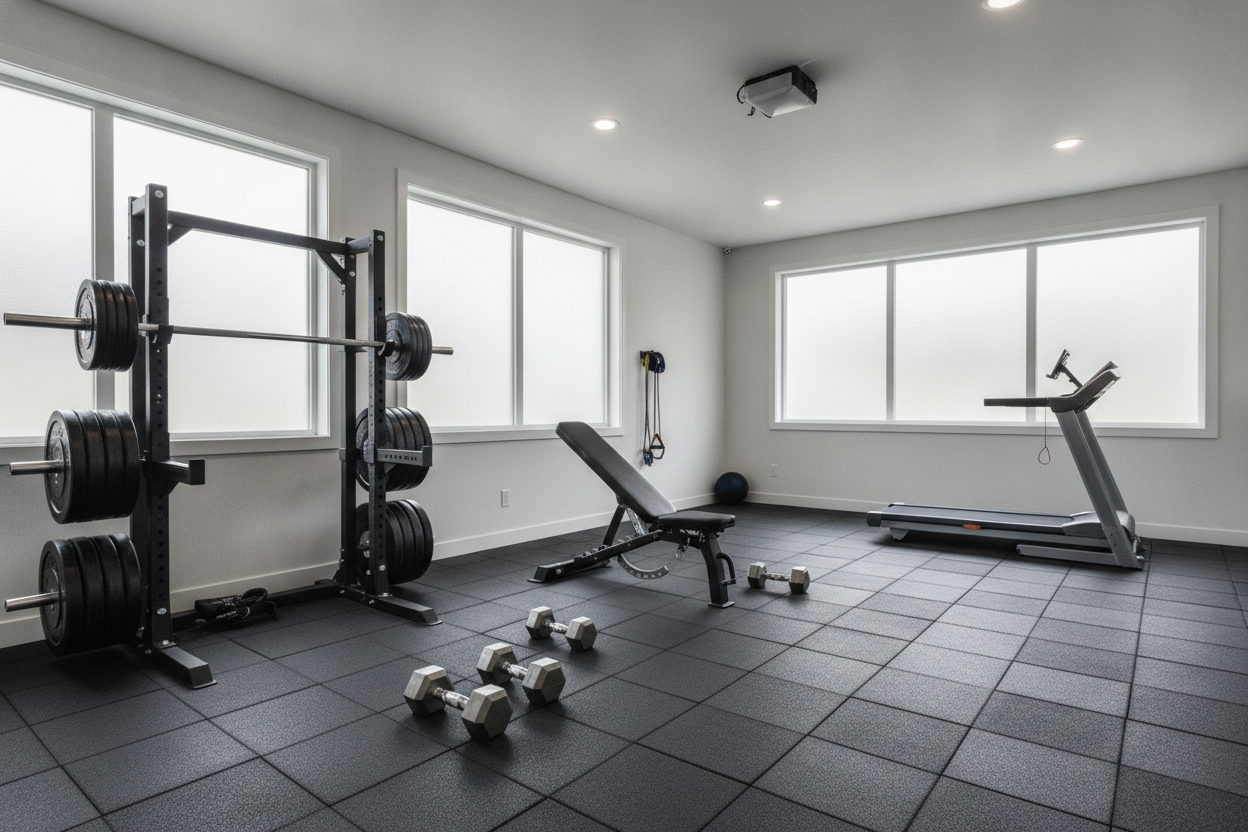
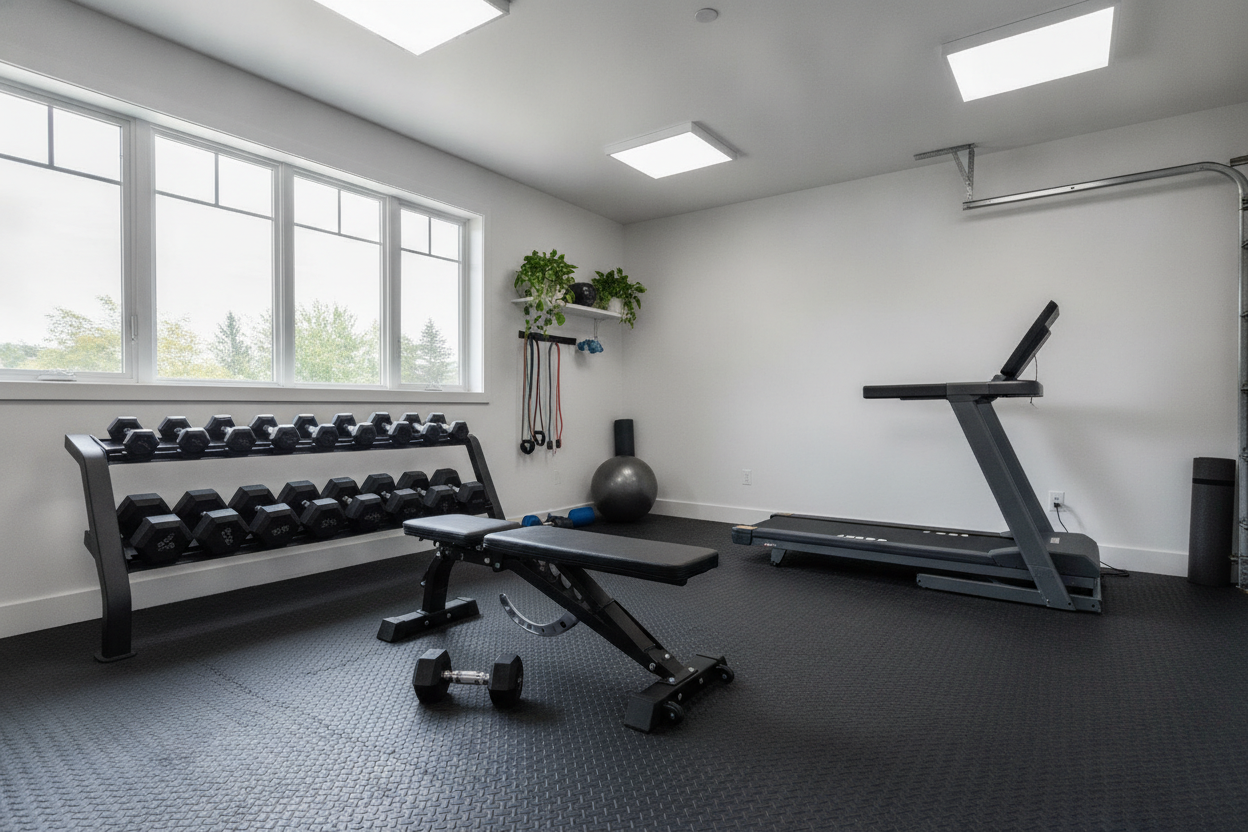
I've seen people spend $2,000 on a treadmill only to use it as a laundry rack because their workout space felt cramped and 'off.' Before you buy a single plate, you need to define your territory. Friction is the enemy of a new habit. If you have to move a coffee table and vacuum the rug just to start, you're going to skip half your workouts.
Clear a dedicated 6x8 ft area. Having a large exercise mat for home gym use is the best first investment you can make. It protects your floors from sweat and gives you a clear mental boundary: when you're on the mat, you're working. I personally recommend a 6x8ft exercise mat because it's big enough to sprawl out for those hinges and carries without slipping on hardwood or getting carpet burn. It turns a corner of your living room into a legitimate training zone.
When Is It Time to Finally Buy Equipment?
You earn the right to buy gear by showing up. I tell people to wait at least 30 days before buying anything heavy. If you can consistently hit your bodyweight moves without missing a session, then you're ready for resistance. Once your air squats feel like a warm-up, it's time to research the best at home exercise machines for your specific goals.
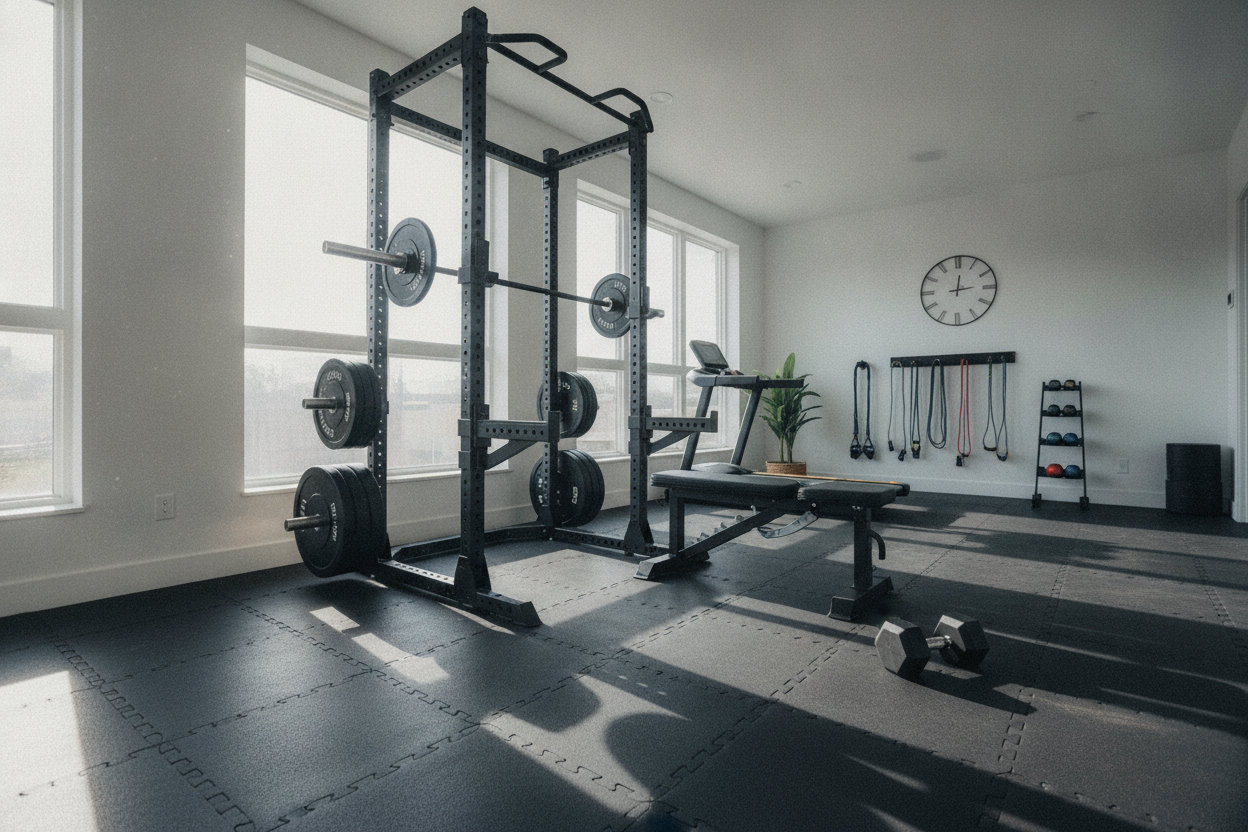
If you have the budget and the space, a single full body workout machine at home can replace a dozen loose dumbbells and keep your space organized. But remember, the gear is just a tool to increase the load. The foundation is the movement. I once bought a fancy power tower before I could even do five proper push-ups. It sat there mocking me for six months. Don't be that guy. Master the floor, then buy the store.
FAQ
Do I need to wear shoes for a home workout?
For bodyweight moves like squats and hinges, training barefoot or in socks can actually help you feel the floor better. However, once you start doing carries or adding weights, put on some flat-soled shoes to protect your feet and provide stability.
How long should a beginner workout last?
If you're doing it right, 20 to 30 minutes is plenty. Quality over quantity. If you're 'working out' for 90 minutes, you're likely spending too much time scrolling through your phone between sets.
What if I can't do a single push-up?
Don't sweat it. Start with incline push-ups against a wall or a high table. As you get stronger, move to a lower surface like a bench or a couch. Eventually, you'll hit the floor. It's all about the progression.