Why Your First Beginner Split Doesn't Need to Be a Math Problem
I spent three hours last Tuesday looking at a spreadsheet a guy on Instagram sent me. It had RPE charts, percentage-based calculations for my warm-ups, and a list of accessory movements longer than my grocery list. If you are looking for a beginner split, that kind of noise is exactly what keeps people out of the gym. I’ve seen guys spend three grand on a Rogue rack only to let it collect dust because their 'optimal' program was so boring they quit by week three.
The truth is, your body doesn't know if you're following a Russian Olympic protocol or just lifting heavy stuff in your garage. It only knows tension and recovery. Most people fail because they try to start at level 100 when they haven't even mastered the level 1 basics. Stop trying to find the 'perfect' routine and start finding the one you won't skip when it's raining and you're tired.
Quick Takeaways
- Frequency beats intensity for new lifters every single time.
- If your program takes more than five minutes to explain, it is too complex.
- Full body or Upper/Lower splits are the gold standard for a reason.
- Consistency is the only metric that actually builds muscle in the first year.
The Internet Is Lying to You About Programming
Fitness influencers have a vested interest in making things look complicated. If a beginners workout split was as simple as 'pick up heavy things three times a week,' they couldn't sell you a $97-a-month coaching app or a 50-page PDF. They want you to think you need a PhD in kinesiology and a specialized spreadsheet just to grow your biceps. It’s gatekeeping, plain and simple. They use terms like 'periodization' and 'systemic fatigue' to make you feel like you’re missing a secret ingredient.
I’ve tested hundreds of bars and plates, and I can tell you that the equipment doesn't care about your 'optimal' volume. What matters is that you show up. When you're a novice, your central nervous system is learning how to move. You don't need a specialized 'arm day' because your whole body is a weak point. The internet wants you to believe you're an advanced athlete who needs to isolate every fiber, but for the first six months, just getting under a bar and moving through a full range of motion is 90% of the battle.
The more complex the program, the more likely you are to find an excuse. If you miss one 'prescribed' percentage-based set, you feel like the whole week is a wash. That’s a mental trap. A real workout split beginner needs a plan that allows for life to happen without the whole system collapsing. You don't need a spreadsheet; you need a habit.
What Actually Makes a Good Split?
A solid split workout routine for beginners follows three non-negotiable rules. First: high frequency. You need to hit each muscle group at least twice a week. Why? Because as a beginner, your muscles recover fast, and you need the practice. Lifting is a skill. You wouldn't try to learn the guitar by playing for six hours once a month; you’d play for 30 minutes every day. The same logic applies to the squat rack.
Second: low complexity. You should be able to write your workout on a sticky note. If you're scrolling through your phone to remember what 'Tempo 3-1-2' means, you're not focused on the lift. You want big, compound movements like rows, presses, and squats. These give you the most bang for your buck. Before you get buried in technicalities, browse our Workout Hub for templates that don't require a scientific calculator to understand.
Third: manageable volume. Most beginners do too much. They think 20 sets of chest is better than 5. It’s not. It just makes you so sore you can't lift again for a week. You want to finish your workout feeling like you could have done one more set. That 'leftover' energy is what fuels your recovery and keeps you coming back on Wednesday. A good split is about staying in the game, not winning a trophy on day one. If you can't finish the session in 60 minutes, you're doing too much fluff and not enough work.
The 'Bro Split' vs. Upper/Lower vs. Full Body
The 'Bro Split'—hitting chest on Monday, back on Tuesday, legs on Wednesday—is the most common beginner bodybuilding split, and it’s usually a total disaster for novices. It’s designed for high-level bodybuilders who need massive volume to spark growth in specific areas. For you, it means you're hitting your chest once every seven days. If you miss Monday, you've now gone two weeks without a bench press. That is a recipe for stagnation and 'Monday-only' gym syndrome.
Instead, you need a realistic workout schedule beginner fix that prioritizes frequency. A 3-day Full Body split or a 4-day Upper/Lower split is almost always superior. In a full body routine, you're hitting everything three times a week. That’s three times the growth signals and three times the practice on the big lifts. If you miss a day, it doesn't matter, because you're hitting those muscles again in 48 hours anyway.
An Upper/Lower split is the middle ground. It allows for a bit more focus on specific movements without the burnout of a 5-day-a-week grind. I’ve found that most people who stick with lifting for more than a year started with one of these two. They don't get the 'pump' of a 20-set arm day, but they get the strength gains that actually change how they look in a t-shirt. Bro splits are for the ego; frequency-based splits are for the results. Don't fall for the trap of thinking you need a dedicated day for your calves when your deadlift is still under 200 pounds.
How to Set Up Your First 30 Days
Your first month is about one thing: showing up. Don't worry about how much weight is on the bar yet. Just get through the door. Schedule your rest days like they are appointments. If you're doing a 3-day split, Monday-Wednesday-Friday is the classic for a reason. It gives you the weekend off and recovery time between every session. You will be sore. Day two soreness (DOMS) is a beast, but the best cure for it is actually moving.
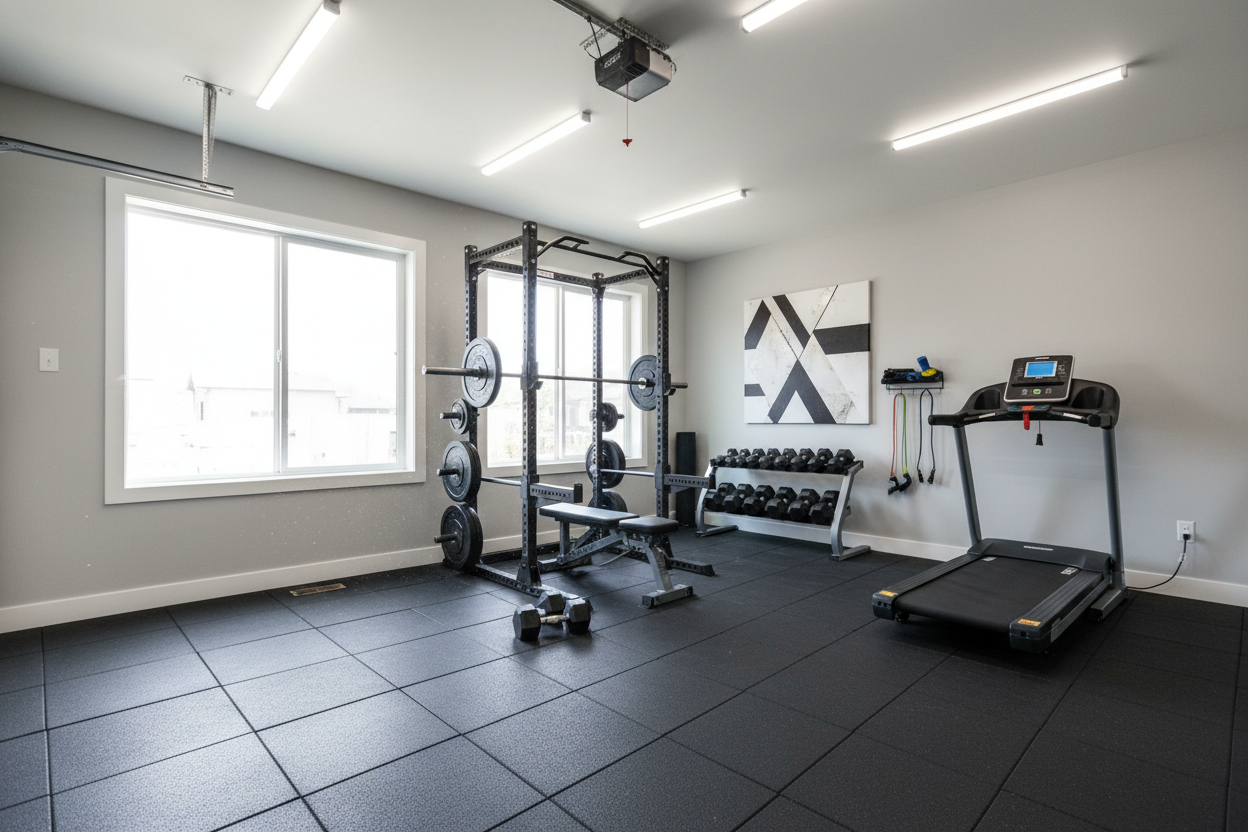
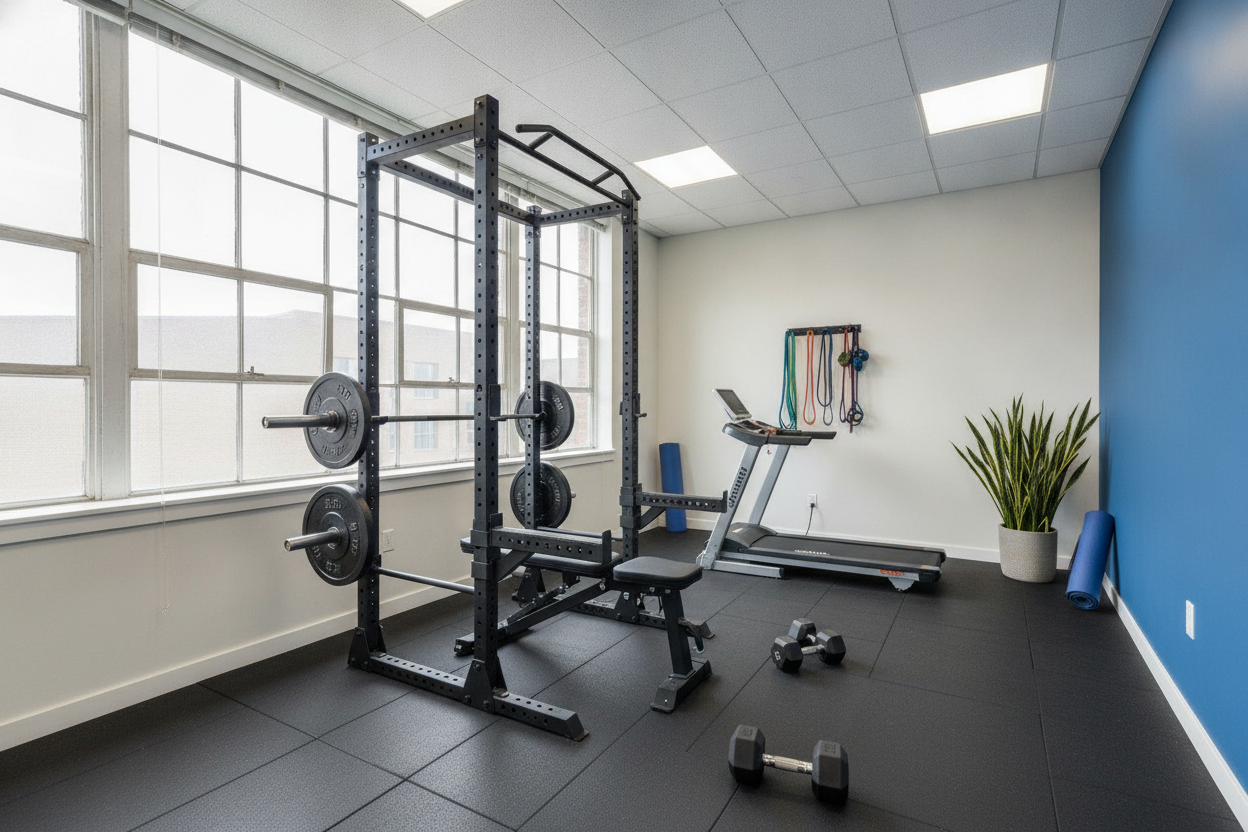
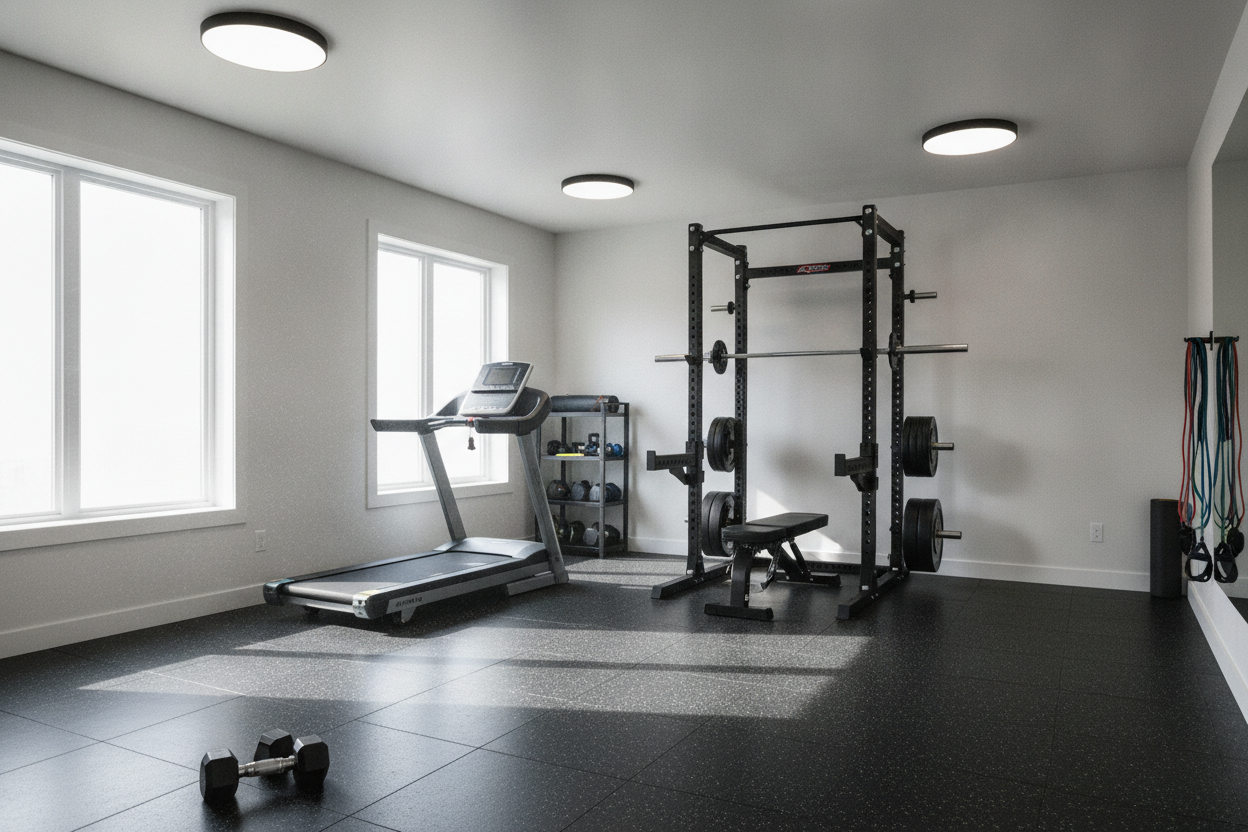
On your off days, don't just sit on the couch. Get some blood flowing. I recommend setting up a dedicated spot in your house where you can do some basic movement. Rolling out on a quality exercise mat gym flooring for ten minutes can be the difference between feeling like a tin man and actually being able to squat on Wednesday. Use that space for core work or just some light stretching to keep the habit alive without the heavy load.
Track your lifts, but keep it simple. Use a notebook. Write down the weight, the reps, and how it felt. If you did 100 pounds last week and 105 this week, you're winning. That's it. Don't over-analyze the data. If the numbers are generally going up over the course of a month, the program is working. If you feel like death, pull back the volume. The first 30 days are about building the 'gym version' of yourself, not breaking your personal records every afternoon.
My Golden Rule: If You Dread It, It's the Wrong Split
I’ve tried every program under the sun. I’ve done Smolov (don't do it), I’ve done 20-repetition squat programs, and I’ve done high-volume bodybuilding routines. The ones that worked weren't the most 'scientific' ones—they were the ones I actually liked doing. If you wake up and dread your workout, you are going to quit. It might take a week or a month, but the end is inevitable. A beginner split should make you feel capable, not defeated.
If you really have the itch to be in the gym five days a week because you love the environment, don't just wing it. You need a specific 5 day workout split for beginners that is designed to manage that frequency without frying your joints. But for 90% of you, three or four days is the sweet spot. Consistency is the 'secret sauce' that everyone is looking for. Find a rhythm that fits your life, buy some decent gear that doesn't frustrate you, and just keep showing up. The results follow the habit, not the other way around.
My Personal Experience
When I first started, I fell for the 'more is better' trap. I followed a pro bodybuilder's 6-day-a-week routine I found in a magazine. I bought all the supplements, spent two hours in the gym every night, and by week three, my elbows hurt so bad I couldn't hold a coffee cup. I was doing 12 different exercises for back and still couldn't do a single pull-up. I felt like a failure because I couldn't keep up with the 'optimal' plan. I quit for two months. It wasn't until I stripped everything back to a basic 3-day full body routine that I actually saw my strength move. I realized that doing less, but doing it better and more often, was the only way I was ever going to get anywhere.
FAQ
How many days a week should a beginner train?
Start with 3 days. It’s enough to see massive progress but easy enough to fit into a busy schedule. You can move to 4 days once you haven't missed a workout for two months straight.
Can I do cardio on my rest days?
Yes, and you should. Light cardio like walking or easy cycling helps recovery by getting blood into the muscles without adding more structural stress. Just don't run a marathon on your 'off' day.
What if I miss a workout?
Don't double up the next day. Just pick up where you left off. One missed session won't ruin your progress, but trying to do a 'mega-workout' to make up for it usually leads to injury.