Why Plate Math Is Ruining Your Full Body Home Gym Workout
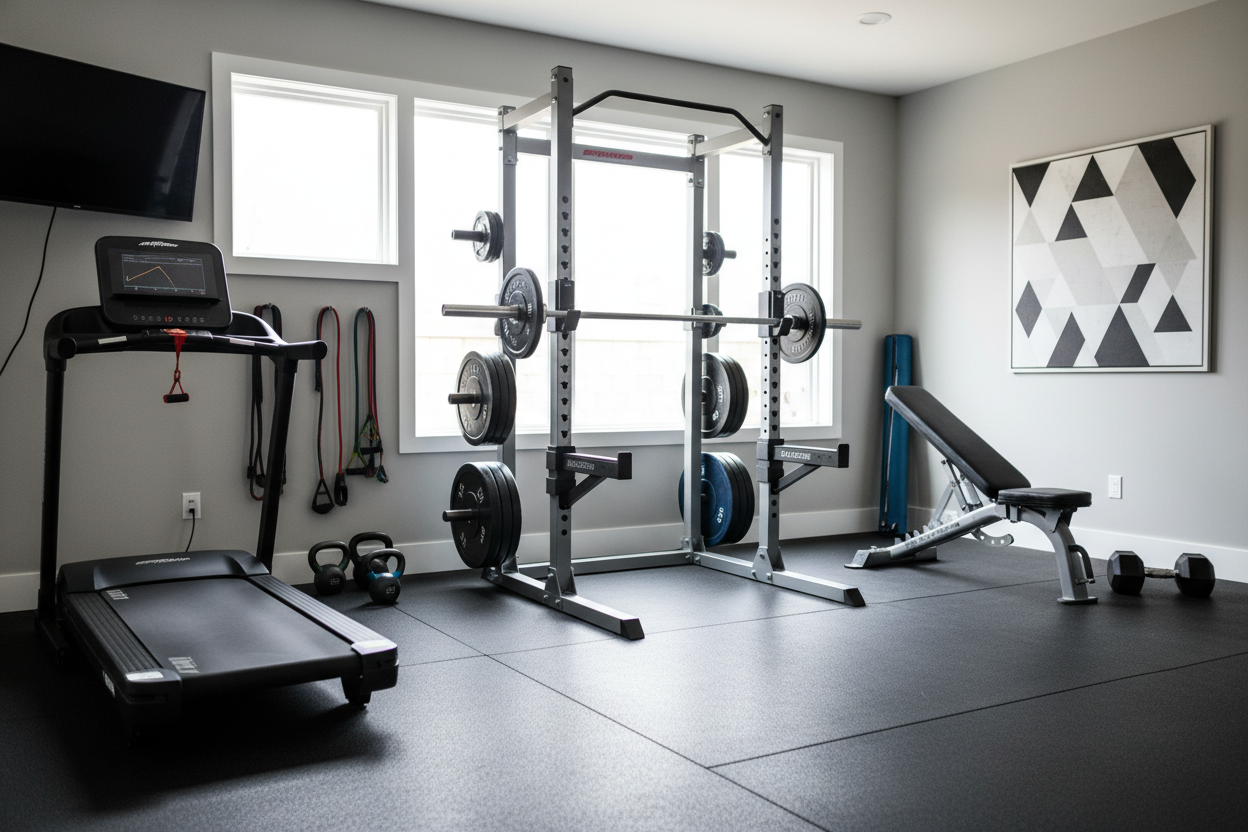
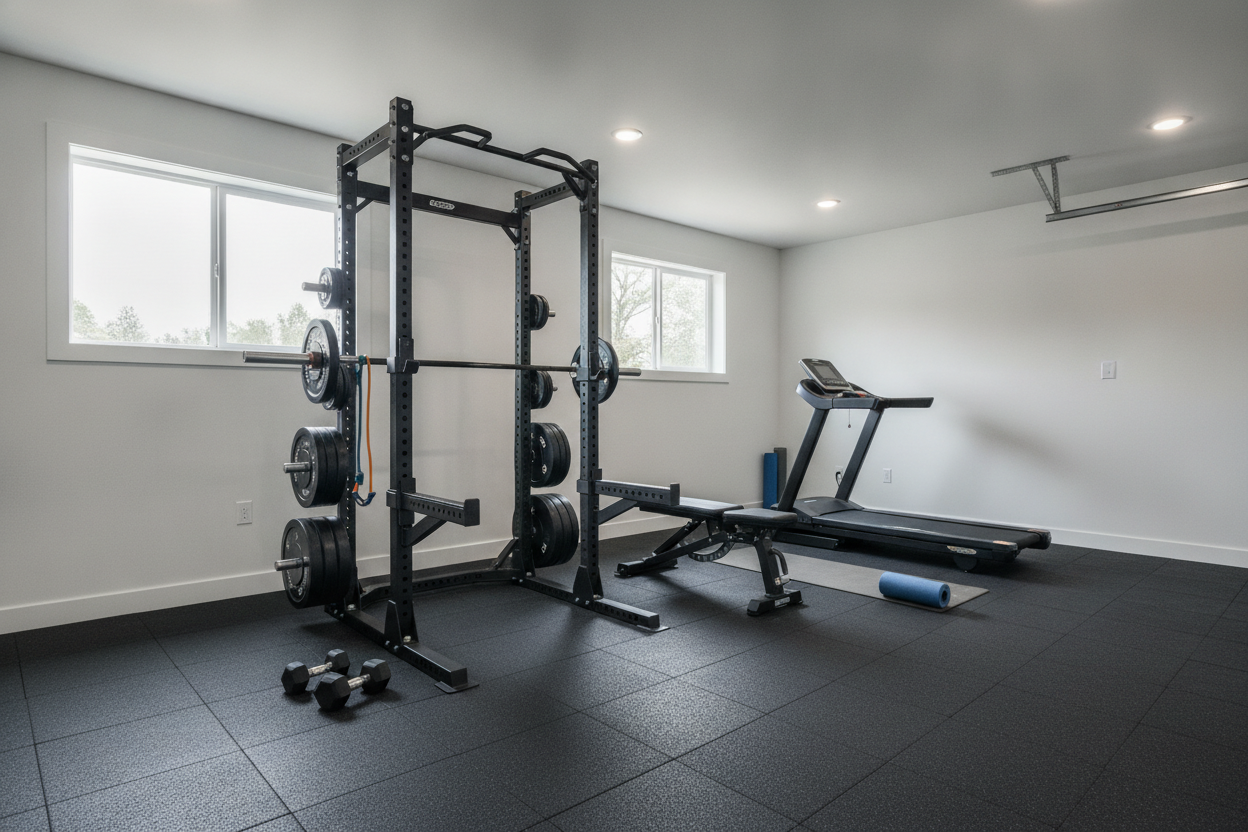
I’ve spent more Tuesday nights than I care to admit standing in my garage, staring at a 315-pound barbell, and realizing I have to strip every single plate just to do a set of overhead presses. It’s the ultimate buzzkill. You’re mid-session, the heart rate is up, the playlist is hitting, and then you spend four minutes wrestling with stubborn iron and spring collars. By the time you’ve adjusted the J-cups and recalculated your percentages, the fire is gone.
The dream of the full body home gym workout is efficiency—hitting everything in one shot so you can get back to your life. But without a plan, that efficiency dies a slow death by plate math. If you’re training in a 200-square-foot box with one rack and one bar, you can’t train like the guys at the local powerhouse gym who have twelve different stations at their disposal. You have to be smarter about how you move the metal.
Quick Takeaways
- Sequence exercises by weight, moving from heaviest to lightest to avoid adding plates back on.
- Group movements by physical location—finish all rack work before moving to the floor.
- Use micro-stations to eliminate equipment bottlenecks during supersets.
- Know when a barbell is actually slowing you down and consider cable alternatives.
The Hidden Friction of Training Everything at Once
In a commercial gym, the 'cost' of switching exercises is just the time it takes to walk twenty feet to the next machine. At home, that cost is physical labor. If your full body home gym workout involves moving from heavy back squats to a standing barbell press, you aren't just changing exercises; you’re performing a manual labor task in the middle of your aerobic window.
I’ve seen guys lose ten minutes of a forty-minute session just moving plates. That friction is a silent killer of consistency. When you know a workout is going to be a logistical nightmare of sliding 45s across a floor that isn't perfectly level, you’re more likely to skip it. You need to treat your equipment layout like a factory floor. Every unnecessary trip to the plate tree is a waste of your peak output. Limited gear doesn't have to mean limited results, but it does require you to stop thinking like a bodybuilder with a dedicated leg day and start thinking like a logistics manager.
The 'Descending Weight' Sequencing Trick
This is the single most effective way to save time in a garage gym: never put a plate back on the bar once it’s been taken off. I call it the Descending Weight Method. Most people program based on muscle groups or 'push-pull' splits, but they don't account for the load on the bar. If you start with a heavy compound movement, your goal for the rest of the session should be to gradually strip the bar down until it’s empty.
Take a typical full-body day. Instead of bouncing between heavy and light, try this flow: Heavy Back Squats first. When you’re done, strip a plate and go straight into Romanian Deadlifts. Done there? Pull another 25 off each side and move into Barbell Rows. Finally, strip it down to the big wheels or just the bar for your Overhead Press. You’ve hit legs, posterior chain, back, and shoulders without ever having to go back to the plate tree to find that missing 10-lb plate. It keeps your heart rate elevated and ensures you spend your energy on the lift, not the setup. It sounds simple, but it’s the difference between a 45-minute session and an hour-long slog.
Floor Work vs. Rack Work: Stop Pacing Your Garage
Another massive time-sink is 'the shuffle.' This is when you do a set in the rack, then move to the floor for some core work, then go back to the rack for pull-ups, then back to the floor. Every time you move, you’re adjusting your headspace and your equipment. If you have a dedicated space, stay in the 'high zone' for the first half of your workout. This means anything that requires the rack, the pull-up bar, or standing movements.
Once the heavy lifting is done, transition to the 'low zone.' I personally like to roll out a large exercise mat specifically for this block. By moving all your floor-based accessories—think bird-dogs, weighted sit-ups, or dumbbell chest presses—to a single dedicated mat session at the end, you eliminate the constant up-and-down. It keeps the sweat contained to one area and lets you finish your session in a focused, grounded state. Plus, if you’re training on cold concrete, having that mat already laid out makes you much more likely to actually finish your accessory work instead of cutting the session short because you don't want to lie down on the grit.
The Micro-Station Alternative for Faster Sessions
If you’re lucky enough to have more than just a barbell, you should be using the micro-station method. The idea here is to set up two distinct zones that don't share equipment. If you try to superset a barbell squat with a barbell row, you’re going to spend the whole time changing weights and rack heights. It’s exhausting and pointless.
Instead, pair a barbell movement with a dumbbell or band movement. For example, do your heavy sets of bench press in the rack, and while you’re resting, walk over to your 'dumbbell station' for goblet squats. By separating the equipment used in your supersets, you eliminate the 'reset' time. You can move from one to the other in five seconds. This is especially vital if you’re using adjustable dumbbells; set them to your accessory weight before you even touch the barbell. You’ll find that you can cram 20% more volume into the same time window just by removing the equipment bottleneck.
When Freeweights Are Too Slow: The All-In-One Argument
I’m a barbell guy through and through, but I’ll be the first to admit that freeweights are the slowest way to train. If you’re a busy parent or someone who only has 30 minutes before a commute, the barbell might actually be your enemy. There is a strong argument for incorporating full body workout machines or cable systems into a home setup. A functional trainer or a high-quality multi-gym allows you to change the weight by moving a pin in two seconds. No plates, no collars, no math.
If you find that you’re constantly skipping the 'full body' aspect of your program because the setup is too daunting, it might be time to look at a cable-based system. You can move from a lat pulldown to a cable crossover to a leg extension in the time it takes to catch your breath. For pure hypertrophy and metabolic conditioning, the speed of a selectorized stack is hard to beat. You lose some of the raw stabilization of the barbell, but you gain a level of consistency that 'plate math' usually destroys.
My Personal Lesson: The 10-Pound Hunt
A few months ago, I was trying to hit a specific percentage for a heavy triple. I had the 45s on, the 25s on, and I just needed two 10-lb plates. I searched for six minutes. I checked behind the mower, under the workbench, and eventually found one of them wedged behind a stack of winter tires. By the time I found the second one, my heart rate had dropped, my joints felt stiff, and I was annoyed. I missed the lift. That was the day I realized that organization isn't just about being neat—it's about performance. Now, I keep my plates strictly organized by weight on the tree, and I never start a session without knowing exactly where my 'change plates' are. If you can't find your 2.5s in five seconds, your gym setup is failing you.
FAQ
Is it okay to do all my heavy lifts at the start?
Yes, and you should. From both a safety and an efficiency standpoint, hitting your heaviest movements when your CNS is fresh makes the most sense. It also fits perfectly into the descending weight strategy.
What if my RDL is heavier than my Squat?
Then you’re a freak of nature, but the rule still applies: order your lifts by the total weight on the bar. If you have to add weight back on, try to make it a small jump that only requires adding a single pair of plates rather than a total rebuild of the bar.
How big of a mat do I really need?
For a standard garage gym, a 6x4 foot mat is the sweet spot. It’s enough room to do a full range of motion for lunges or core work without your hands or feet slipping off onto the concrete.
Can I do a full body workout with just dumbbells?
Absolutely. In fact, it’s often faster. The only downside is that you’ll eventually 'outgrow' standard dumbbell sets for movements like squats and deadlifts, which is when the barbell becomes a necessary evil.