Which of the following is a full-body exercise? The Truth
If you've ever stared at a fitness quiz or a workout program and wondered, which of the following is a full-body exercise, you aren't alone. When building a home gym in a tight garage or basement, maximizing your time and space is critical. You don't have room for ten different bulky isolation machines. You need movements that deliver the absolute highest return on investment.
In this guide, we break down exactly what qualifies as a total-body movement, identify the best equipment options for your home setup, and help you program these lifts effectively to shatter your workout plateaus.
Key Takeaways
- True full-body exercises engage the upper body, lower body, and core simultaneously in a single fluid motion.
- Top examples include barbell thrusters, kettlebell swings, burpees, and indoor rowing.
- Compound movements require significantly less equipment, making them ideal for budget-conscious home gyms.
- Isolation exercises (like bicep curls or leg extensions) do not qualify as full-body movements.
Defining a True Total-Body Movement
To answer the question of what constitutes a full-body lift, we have to look at biomechanics. A true full-body exercise bridges the gap between lower-body power and upper-body execution. It forces your core to stabilize while multiple major muscle groups contract simultaneously.
Compound vs. Isolation
An isolation exercise targets a single joint and muscle group. A compound movement, however, crosses multiple joints. While squats and bench presses are fantastic compound lifts, a true total-body movement takes it a step further by integrating pushing, pulling, or hinging from head to toe.
The Best Total-Body Exercises for Home Gyms
The Barbell Thruster
Combining a front squat with an overhead press, the thruster is the undisputed king of total-body conditioning. It requires a barbell and bumper plates, fitting perfectly into any standard garage gym setup. It taxes your quads, glutes, core, shoulders, and triceps all at once.
The Rowing Machine (Erg)
If you are looking at cardio equipment and asking which of the following is a full-body exercise, indoor rowing is your definitive answer. A proper rowing stroke is 60% legs, 20% core, and 20% arms. Investing in a quality erg saves space by storing vertically while delivering an unmatched conditioning stimulus.
The Kettlebell Swing
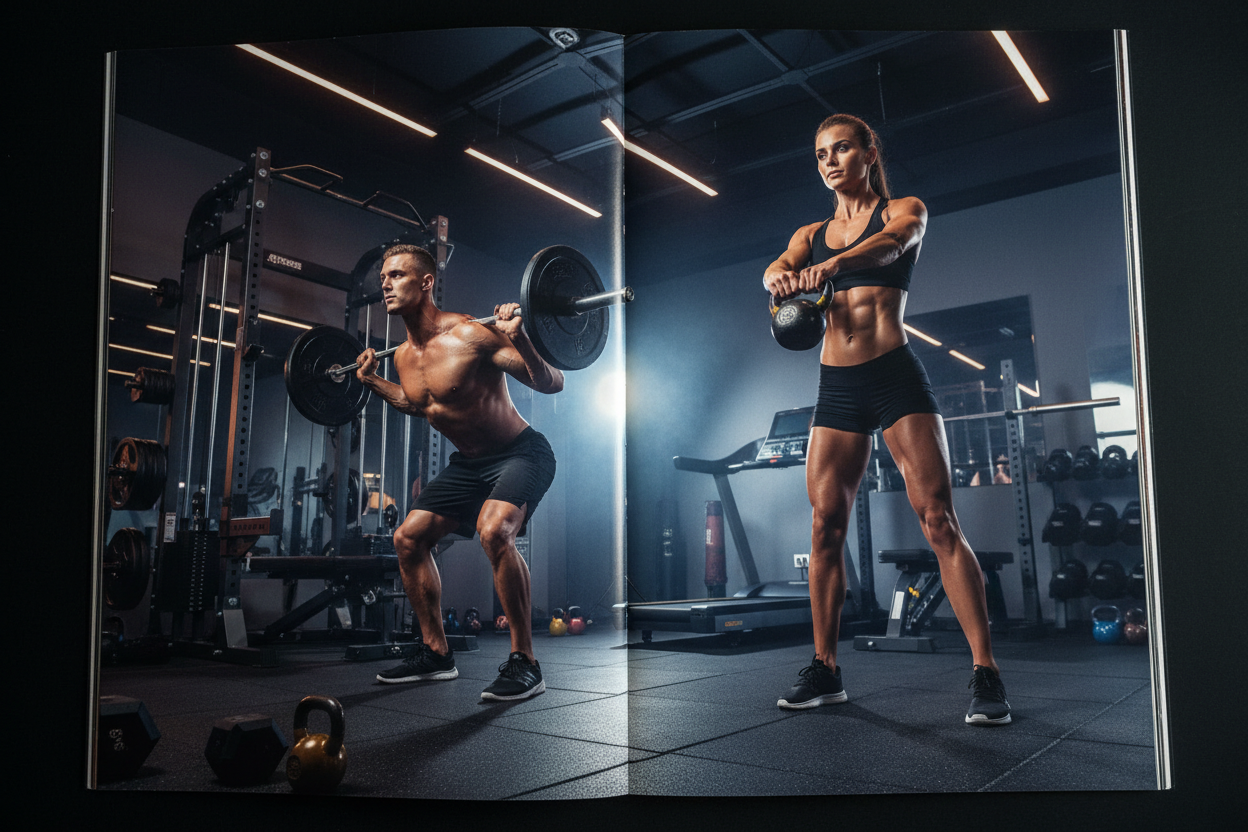
For apartment dwellers or those with severe space constraints, the kettlebell swing is a powerhouse. It develops explosive hip hinge mechanics, working the hamstrings, glutes, lats, and core. Plus, a single heavy kettlebell takes up less than a square foot of floor space.
From Our Gym: Honest Take
When I first moved my training from a commercial facility to a 10x10 spare bedroom, I panicked about losing access to specialized machines. I had to rethink my entire routine. I swapped my isolated shoulder and leg days for heavy barbell thrusters and kettlebell complexes.
The result? My conditioning skyrocketed, and my workouts dropped from 90 minutes to just 45 minutes. I will admit, doing thrusters with a standard 28.5mm barbell featuring aggressive knurling tore up my collarbones at first. I highly recommend using a bar with a passive or smooth center knurl if you plan on making high-rep front-rack movements a staple in your home gym programming.
Frequently Asked Questions
Is a deadlift considered a full-body exercise?
Yes and no. While the deadlift is a massive compound movement that heavily engages the posterior chain (hamstrings, glutes, back) and requires intense core and grip strength, it doesn't involve an active upper-body push or pull through a full range of motion like a thruster or a burpee.
Can I build muscle doing only total-body workouts?
Absolutely. Full-body routines allow you to hit muscle groups more frequently throughout the week. By focusing on heavy compound lifts, you stimulate maximum muscle fiber recruitment and hormonal response, which is highly effective for natural lifters.
What is the most space-efficient equipment for full-body training?
A pair of adjustable dumbbells or a single heavy kettlebell offers the best space-to-value ratio. You can perform snatches, swings, goblet squats, and devil presses in a footprint no larger than a standard yoga mat.